The Seller Who Isn't in the Room: What Remote Closings Actually Fix in Title and Escrow


A seller at Homestead Title & Escrow was scheduled to spend two months working on an oil boat in the Mediterranean.
Everything else about the deal was ordinary. The buyer was ready, the file was clean, the date was set. One person needed to sign in front of a notary, and that person was going to be somewhere in the middle of a sea for the next eight weeks. Without a remote option, a closing that is otherwise finished waits until he gets back.
Every title company has a version of this seller.
Key takeaways
- Average closing speed is at a record high. The cost in title and escrow lives in the exceptions.
- The out-of-state seller is a standing condition in title and escrow, and at Preferred Title the share grows every summer.
- The old workaround handed identity verification to a notary you never vetted, in an industry where seller fraud is a known risk.
- UWM reached 30,000+ eclosings on Proof in 2025.
By every industry measure, closings are getting faster. The average purchase loan closed in 36.8 days in March 2026, the fastest average closing time since ICE began tracking the metric in 2019.
So why does the week still feel like a scramble?
Because nobody's week is made of averages. A closing officer's week is made of the seller who already moved to another state, the signer whose only free hour is 7pm on a Tuesday, and the package that has to be overnighted twice because the first one came back missing an initial. The mean gets better while the tail stays exactly as expensive as it always was.
What was actually inside the overnight envelope
At Preferred Title, that tail is a large and predictable share of the business. The firm handles a high volume of transactions involving sellers who have already relocated and can't make it to the closing table, and every summer that share grows.
For years the sequence was fixed. Print the documents. Overnight them to wherever the seller now lived. Hope they could find a notary nearby, and one willing to see them. Overnight everything back before the deadline.
The cost everyone could see was time, measured in days, with a courier's schedule sitting in the middle of a closing calendar.
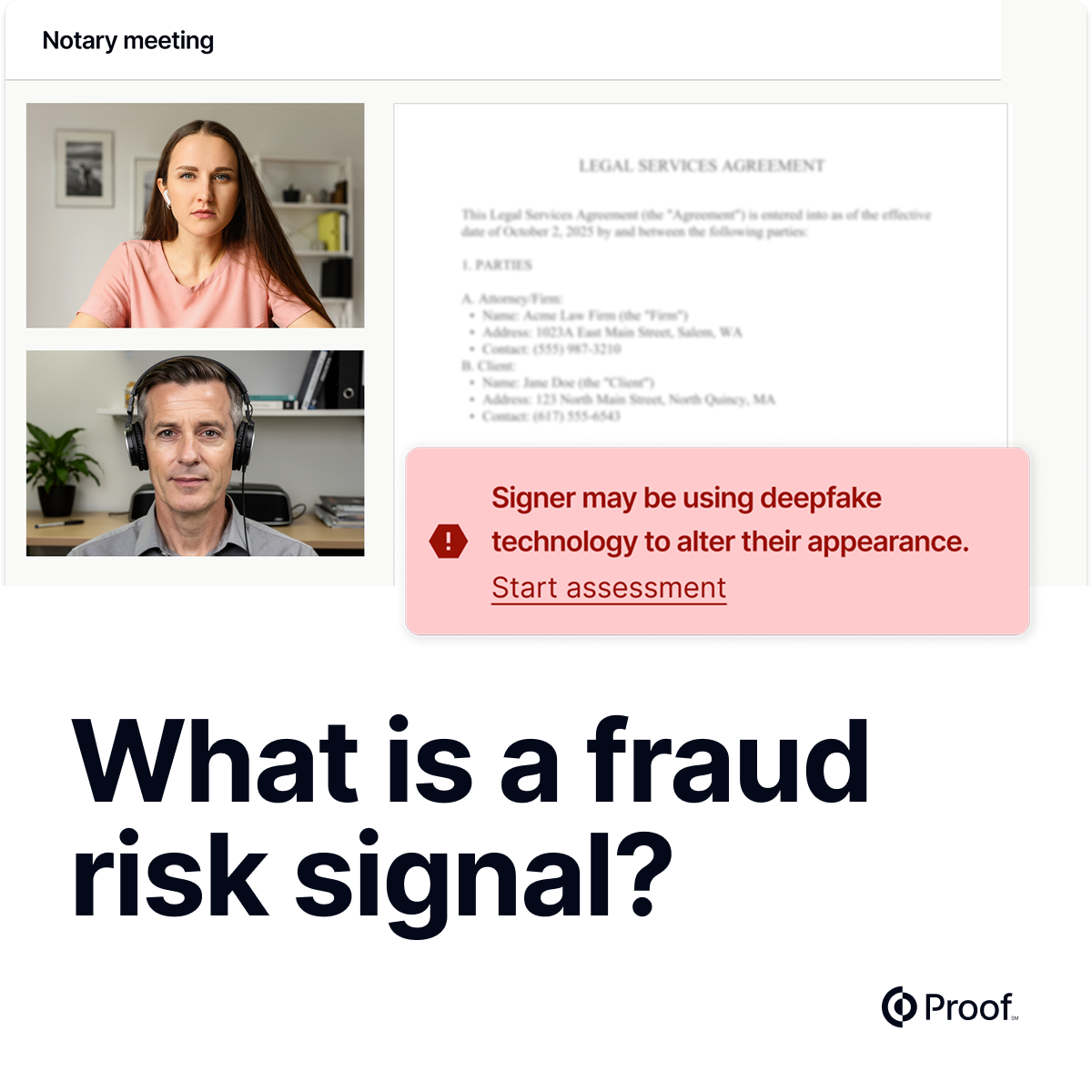
The cost underneath it took longer to surface. Seller fraud is a persistent risk in title and escrow, and that envelope was carrying the single most security-sensitive moment in the transaction, the moment someone confirms this is really the person who owns the property, out to a notary the firm had never met, never vetted, and would never see again.
The slow option and the risky option turned out to be the same option.
A second version of the problem sat right alongside it. Preferred Title operates through several affiliate companies, and paperwork from any of them arrived looking like it came from "Preferred Title." A seller who had spent weeks working with one office would receive closing documents from a company name they didn't recognize, in an industry where everyone is already primed to worry about being defrauded, and reasonably wondered whether they were being scammed. The firm's own paperwork was tripping its customers' alarms.
Both problems came apart at the same time. Closers now upload and tag the documents, then connect the seller to a notary without either of them leaving where they are. Sellers stopped having to hunt for one, which mattered most for the ones with day jobs: closing officer Wes Shaughnessy says those sellers "didn't always have time to find their own notary," and now they "hop online, before or after their shift, and get it done in a 10 to 15 minute window."
Documents that once took days now move in under 30 hours from send to signed. Notary wait times average 1.8 seconds, meetings run about 10 minutes, and 98% of them finish. Across its offices, the firm handles more than 100 closings a month this way. Documents now carry the correct affiliate name too, and the confusion that had been generating fraud concerns among its own customers went with it.
The gain that never makes it onto a business case
Before Kyle Thacker was RON certified at Home Services Title, he had two options, and both of them put the closing on somebody else's clock. He could "overnight documents and provide a shipping label so that clients could mail the documents back in time," or he could "drive to the customer's location which could be over an hour away." Either way, he says, his options "were limited and not convenient."
Closings that once hinged on courier timelines now finish in under 15 minutes, with support answering in under 10 seconds when something goes sideways mid-session. The platform walks each participant through their part, so the missing notarization and the incomplete signature, the two errors that used to send a whole file back to the start, mostly stopped happening.
Thacker describes what used to feel like a last-minute scramble as "a smooth, predictable process."
Speed shows up in a report at the end of the quarter. Predictability shows up on a Thursday afternoon, when the file that would have blown up the week quietly doesn't.
What teams do once the constraint lifts
Canyon Title has been running this way since early 2022, across more than 1,500 transactions, with document setup down to 5 to 10 minutes and 20 to 30 minutes saved per transaction. Their sellers are packing, moving, or already gone, and branch lead Shanda Gray points at everything else those sellers are carrying. They're "juggling so much," she says, and now "they can close when it works for them."
Then the firm went further. With vacant land fraud on the rise, Canyon started layering the platform's identity verification with checks of its own, including physical mail verification, so that confirming a seller's identity became a deliberate step the firm ran itself. Team lead Jennifer Reynolds describes running Proof alongside their own tools "to make sure we know who we're dealing with."
At UWM, the constraint that lifted was regulatory. After California recognized out-of-state RON transactions and enabled digital recording through a disinterested custodian, brokers there began closing remotely as a matter of routine. More than 20% of UWM's Proof-powered closings now originate in California, part of the more than 30,000 closings and refinancings UWM brokers completed in 2025 with signers in almost every state.
None of that came from a mandate. Brokers reached for remote closings on tight deadlines, travel conflicts, work-hour constraints, and multi-party signings, and the training went into workflows they were already using, including UWM's TRAC+ refinance process. COO Melinda Wilner gives the brokers the credit, saying they "lead the way" and that when they "see something that makes closings easier, they run with it."
Making closings easy, no matter where the seller is traveling
Homestead's seller signed from the Mediterranean. The documents were notarized remotely, and the closing stayed on schedule.
What Homestead changed was a single assumption, buried so deep in the process that nobody had thought to question it, which is that the person signing has to be somewhere in particular. The workflow, the team, and the timeline all stayed as they were.
That assumption is still sitting in most closing calendars, and it surfaces the same way every time: as the handful of files each month that consume a wildly disproportionate share of the week, the relocated seller, the signer whose free hour falls outside yours, the package that goes out twice. Those are the files costing you the most, and most title operations have never added them up.
Proof closes that gap without touching the rest of the workflow. Sessions run with your own notaries or the Notarize Network, 24/7 in all 50 states, and they run inside the systems your team already uses, from Encompass to Resware. Every session produces verified identity and a tamper-evident audit trail, so checking the seller stops being something a stranger does on your behalf.
If you’d like to learn more about how title and mortgage companies are closing these operational gaps, check out our field report >






































.jpg)





















































.jpg)