How to Evaluate eClosing Platforms

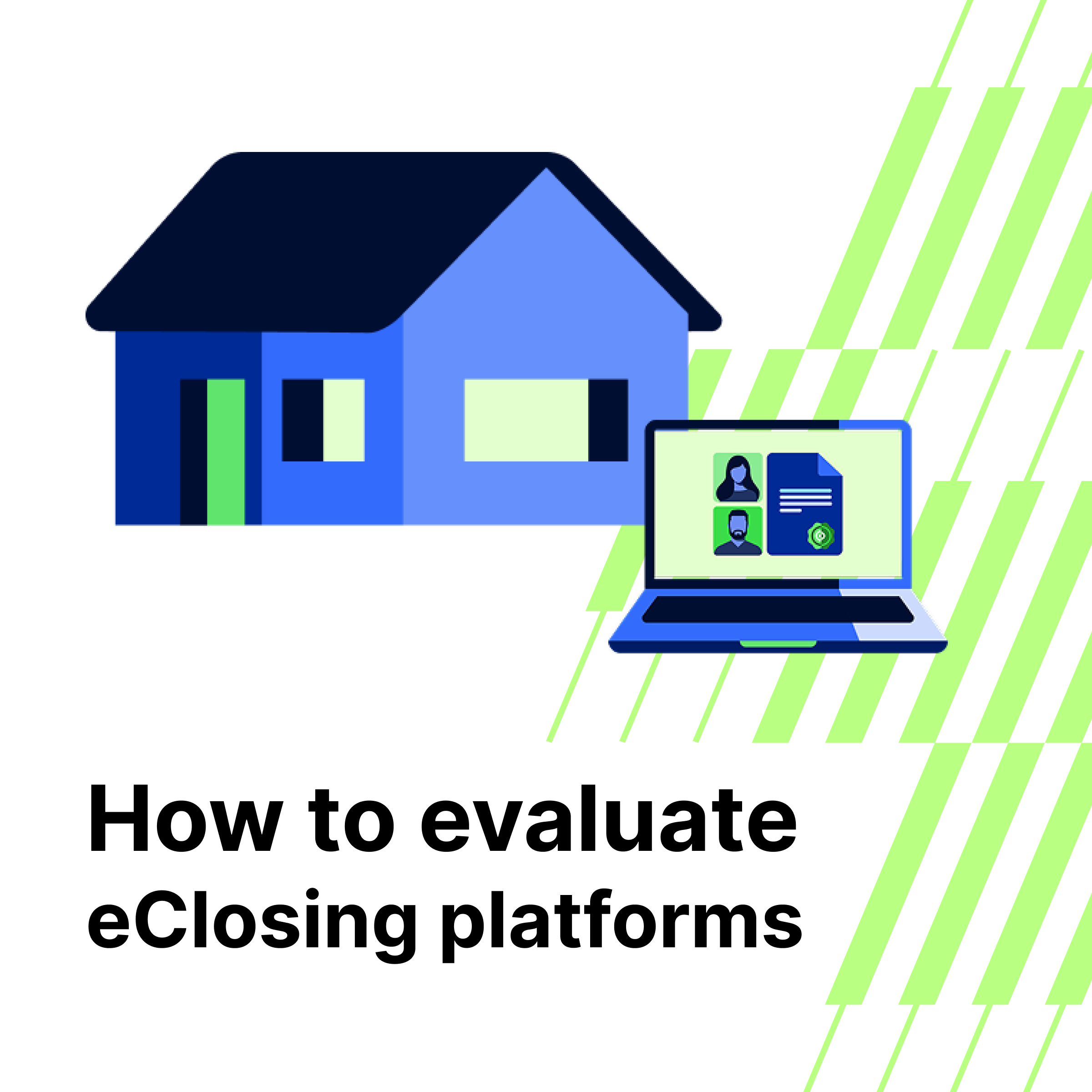
Every eClosing platform claims to be the fastest, most secure, and easiest for borrowers to use, and most of them are telling the truth about at least some transactions in some states.
Choosing well means matching closing type, investor acceptance, integration depth, and identity rigor to what you actually close: cash refinances in one state, or loans sold to Fannie Mae and Freddie Mac across forty.
Here’s a guide to evaluating which eClosing platform is right for you.
Key takeaways
- Confirm GSE and investor acceptance first. Fannie Mae and Freddie Mac only accept RON-closed loans when the property's state permits it and the platform meets MISMO RON Standards, eliminating more vendors than any other single criterion.
- Decide whether you need hybrid, full RON, or both: Freddie Mac reports that most eMortgage originations today still happen through the hybrid model, even as full RON keeps gaining ground.
- Test integration before you test the notary session. ALTA's survey data ranks lack of lender acceptance and insufficient testing with lending partners as the top barriers to expanding digital closings, well ahead of anything tied to the notarization technology itself.
Decide whether you need hybrid, full RON, or both
Not every closing needs the same amount of "digital." Freddie Mac draws a useful distinction: in a hybrid eClosing, borrowers sign some documents electronically and wet-ink sign the rest in the physical presence of a notary; in a complete eClosing, every document, including the notarized ones, is signed electronically, either in person or through a secure video session with a remote notary.
A title company closing a refinance for a repeat customer might only need a hybrid flow: sign most paperwork ahead of time, reserve the notarized documents for a short in-person session. A first-time homebuyer relocating on a tight timeline, with no local notary relationship, often needs full RON just to close at all. A platform worth evaluating handles both cleanly; if a vendor only does one, find out what happens the day you need the other.
Confirm GSE and investor acceptance before anything else
This single criterion eliminates more vendors than anything else, and it belongs before any conversation about user experience. Fannie Mae's Selling Guide states that the agency will accept delivery of RON-closed loans only if the property's state expressly permits RON, or expressly accepts a compliant out-of-state RON, and only when the vendor complies with the applicable MISMO RON Standards. Freddie Mac mirrors this through its own Seller/Servicer Guide, and both agencies have revised RON requirements more than once since the pandemic accelerated adoption.
Ask a vendor to show you, not just tell you, how fast they adapt when guidance shifts; a platform that treats GSE guidance as fixed rather than moving will eventually put a closing at risk of delayed funding.
Getting this right pays off: Freddie Mac reports eMortgage registrations reached close to 7% of all residential registrations in MERS systems in 2023, up from 5% in 2021, with cash-window lenders saving an average of four days on delivery time. A MarketWise study cited by Proof found that full eClosings eliminate roughly 7.16 days from a loan's funding timeline compared to paper closings, saving title agents around $97 per transaction. Those savings only show up when the platform is acceptable to the investor buying the loan.
Map state eligibility precisely, not generally
"RON is legal in most states" is true and not especially useful, since your closings happen in specific counties. The California Secretary of State confirms California remains the sole holdout, but even where RON is settled, e-recording is its own gate: Freddie Mac notes that more than 2,400 counties, covering close to 95% of the U.S. population, accept electronic recording. A platform can be fully RON-compliant and still hit a wall at the recorder's office if it hasn't built for your specific jurisdictions.
Test integration with your title and settlement systems
Legal eligibility gets a closing in the door; integration determines whether it moves any faster once it's there. ALTA's own survey research puts hard numbers on this: title and settlement companies cite lack of lender acceptance (84%), insufficient testing with lending partners (79%), and limited consumer technology capability (78%) as their top obstacles to expanding RON, well ahead of anything tied to the notarization technology itself.
Instead of asking a platform to demo its notary session, ask it to demo how a document flows from your production system into its environment and back, with the data intact and no manual re-entry. A workaround at that step slows down every closing you run, not just the occasional edge case.
Scrutinize the audit trail and identity verification rigor
Digital closings create a different kind of evidence than paper ones, and it has to hold up years later under scrutiny from an investor, an auditor, or a court. Freddie Mac points out that eClosings generate an electronic audit trail that makes it easier for lenders to demonstrate regulatory compliance than reconstructing a paper file. Ask any platform what it captures: verification steps, session metadata, document versioning, retention length, and format.
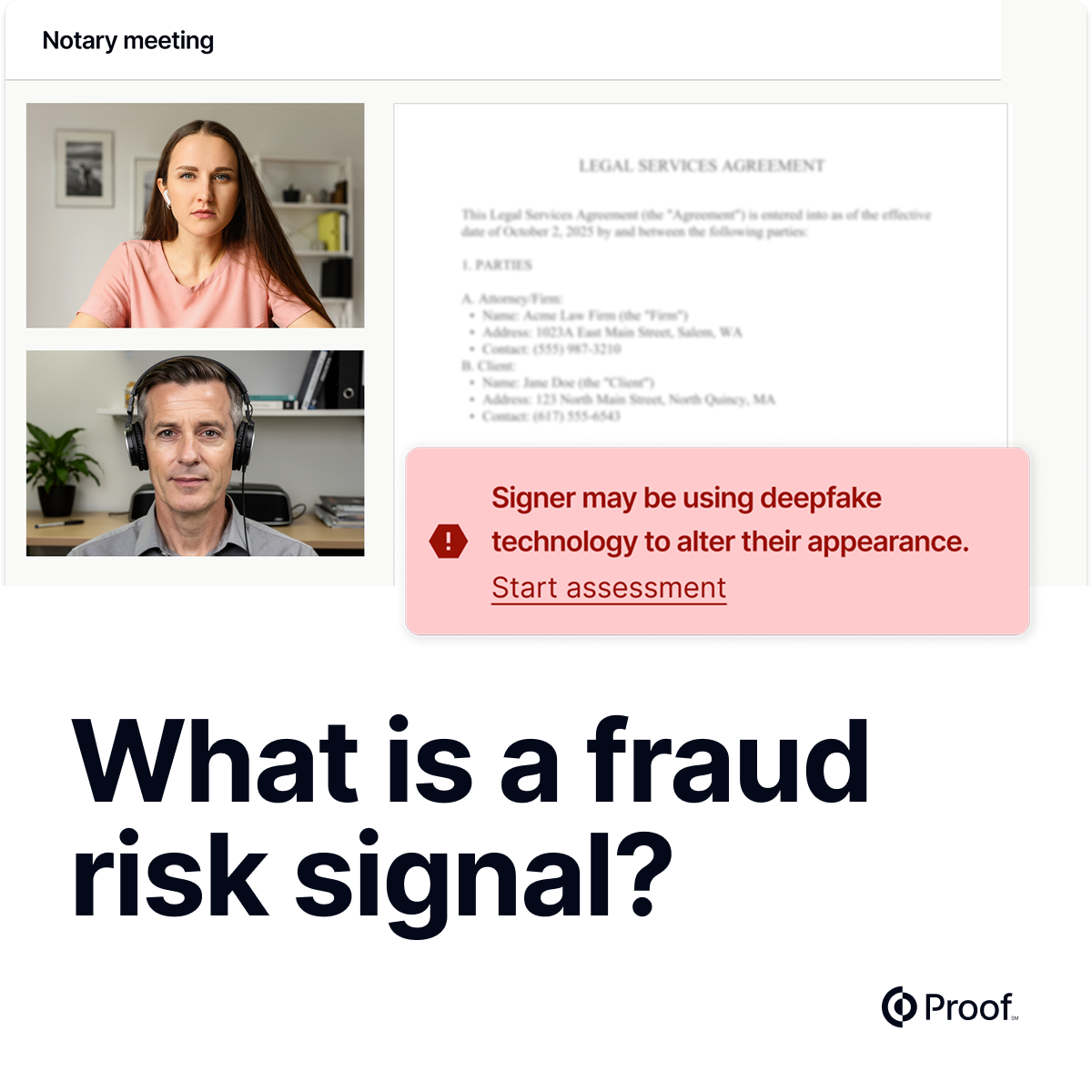
Every eClosing platform authenticates signers, but the rigor varies widely, and the gap matters most where fraud risk is highest: a cash-out refinance on a property with an absentee owner, or a power-of-attorney closing where the signer isn't the person on title.
Ask how the platform verifies government-issued ID, whether it runs credential analysis beyond a visual check, and how it handles a borderline match. A platform that treats identity verification as a checkbox rather than a layered process is taking on risk your business will eventually inherit.
Put it all together
None of these criteria work in isolation. Excellent identity verification means nothing if the loan can't be sold to Fannie Mae or Freddie Mac. Broad state coverage stops helping the moment a platform can't talk to your production system, and staff end up re-keying data by hand. Evaluate closing-type support, GSE and investor acceptance, county-level eligibility, integration depth, audit trail rigor, and identity verification as one system, because that's how they function once you're live.
Proof is built to clear that bar across the board: it supports hybrid and full RON closings, runs on MISMO-compliant infrastructure with national RON eligibility, and integrates directly with the title and settlement systems lenders and title agents already use.
See how Proof handles RON eligibility, GSE acceptance, and settlement-system integration together, instead of as three separate vendor conversations.























.jpg)


































.jpg)