Why Equipment Finance Teams Can't Afford a Manual POA Process


Updated July 8, 2026
Equipment financing moves fast, or it is supposed to. A customer is ready to sign. The deal is structured. The equipment is available. And then the paperwork catches up to the momentum, and everything slows down while someone chases a notarized POA through fax machines and overnight envelopes.
For equipment finance companies managing high volumes of leases and loans, manual POA workflows are a persistent drag on deal velocity. But the problem runs deeper than slow turnaround. The documentation burden in equipment financing is heavier than most industries, the fraud exposure at key handoff points is real and growing, and the typical paper-based process leaves significant gaps at exactly the moments they matter most.
Key takeaways
- A single equipment financing transaction can require 8 to 15 separate documents, and manual document verification carries a 4–8% human error rate — meaning errors compound quickly across any meaningful portfolio volume.
- Equipment finance has two distinct high-stakes identity moments — signing and equipment pickup — and manual workflows leave both largely unverified.
- 43% of equipment finance professionals report being either somewhat or not at all confident in their ability to detect false identities, according to ELFA's 2026 risk landscape analysis.
- AI-generated invoices, identity spoofing, and deepfake-enabled social engineering are now documented fraud tactics in equipment finance — a paper POA offers no defense against any of them.
- Digitizing the manual POA process for equipment finance with verified identity at signing and delivery is both an operational improvement and a fraud risk management decision.
- LeasePath, using Proof as part of its customer-facing workflow, achieved a 99% documentation success rate — compared to the 4–8% manual error rate industry baseline.
What does the manual POA process for equipment finance actually look like?
The manual POA process for equipment finance typically involves a paper document that authorizes someone to act on behalf of the lessee — often to facilitate the lease execution itself. It has to be notarized, executed correctly, and routed to the right parties before funding can proceed.
In practice, that means:
- The lessee receives physical documents by mail or fax
- The lessee locates a notary, schedules an appointment, and executes the POA in person
- The signed, notarized document is returned by mail or overnight courier
- Staff reviews the document for errors — name mismatches, incorrect dates, expired certificates
- If errors are found, the process restarts
At any meaningful volume, this creates a persistent drag on deal velocity. And the problem doesn't stop at slow turnaround.
The documentation weight of a single deal
A single equipment financing transaction can require anywhere from 8 to 15 separate documents, according to industry data from CheckFile.ai. That stack typically includes the POA, the bill of sale, lien releases, and in many cases UCC filings. Each document has its own signature requirements, its own notarization rules depending on the state, and its own chain of custody that matters if a dispute surfaces later.
When that documentation travels through a paper process, the error rate is significant. Research on document verification workflows in leasing and finance puts the human error rate at 4 to 8 percent on verifications involving things like expired certificates, name mismatches, and incorrectly dated financials. At any meaningful volume, that error rate translates directly into delayed funding, re-executed documents, and deals that stall while staff chase corrections.
The POA sits at the center of that documentation burden. It is the document that authorizes someone to act on behalf of the lessee, often to facilitate the lease execution itself, and it has to be right. A defective POA can unwind a transaction that was otherwise clean.
Two moments where things go wrong
Equipment financing has a documentation risk profile that is different from auto lending or credit union transactions in one important way: the deal has two high-stakes identity moments, not one.
The first is at signing.
The POA and lease documents need to be executed by someone with the authority to bind the lessee. For individual borrowers that means verifying the person is who they claim to be. For business lessees, it means confirming both the individual's identity and their authority to sign on behalf of the entity. Paper processes handle neither particularly well.
The second moment is at pickup.
When the equipment is ready to be released, the person taking possession needs to be verified against the signed documentation. This step is frequently informal in manual workflows: a matching name, a physical signature, sometimes nothing more than a handshake. If the person who shows up to collect the equipment is not the authorized party, there is often no mechanism to catch that before the asset leaves the lot.
This is where equipment finance fraud increasingly operates. A signed document created with a stolen or synthetic identity, released to whoever presents themselves at delivery, is a known and documented attack vector. And the equipment finance industry is aware of the gap: 43% of equipment finance professionals surveyed said they were either somewhat or not at all confident in their ability to detect false identities.
The fraud environment is getting more sophisticated
The identity verification problem is compounding. AI-generated invoices, identity spoofing, and deepfake-enabled social engineering are now documented tactics in equipment finance fraud, according to ELFA's 2026 risk landscape analysis. The industry has also seen increases of more than 10% in identity theft and first- and third-party borrower fraud over the last two years.
A paper POA offers no real defense against any of these. It is a static document that verifies nothing at the moment of signing and nothing at the moment of pickup. The notary stamp on a paper form proves a human was in the room with the document; it does not prove that human was who they claimed to be, and it certainly does not extend any verification to the moment equipment is released.
How Proof closes both gaps
Proof built its equipment financing workflow around both identity moments: signing and handoff. That is what distinguishes it from a simple eSign or RON solution.
Here is how the process works:
- When a lease is ready for execution, the lessee receives a mobile-friendly link.
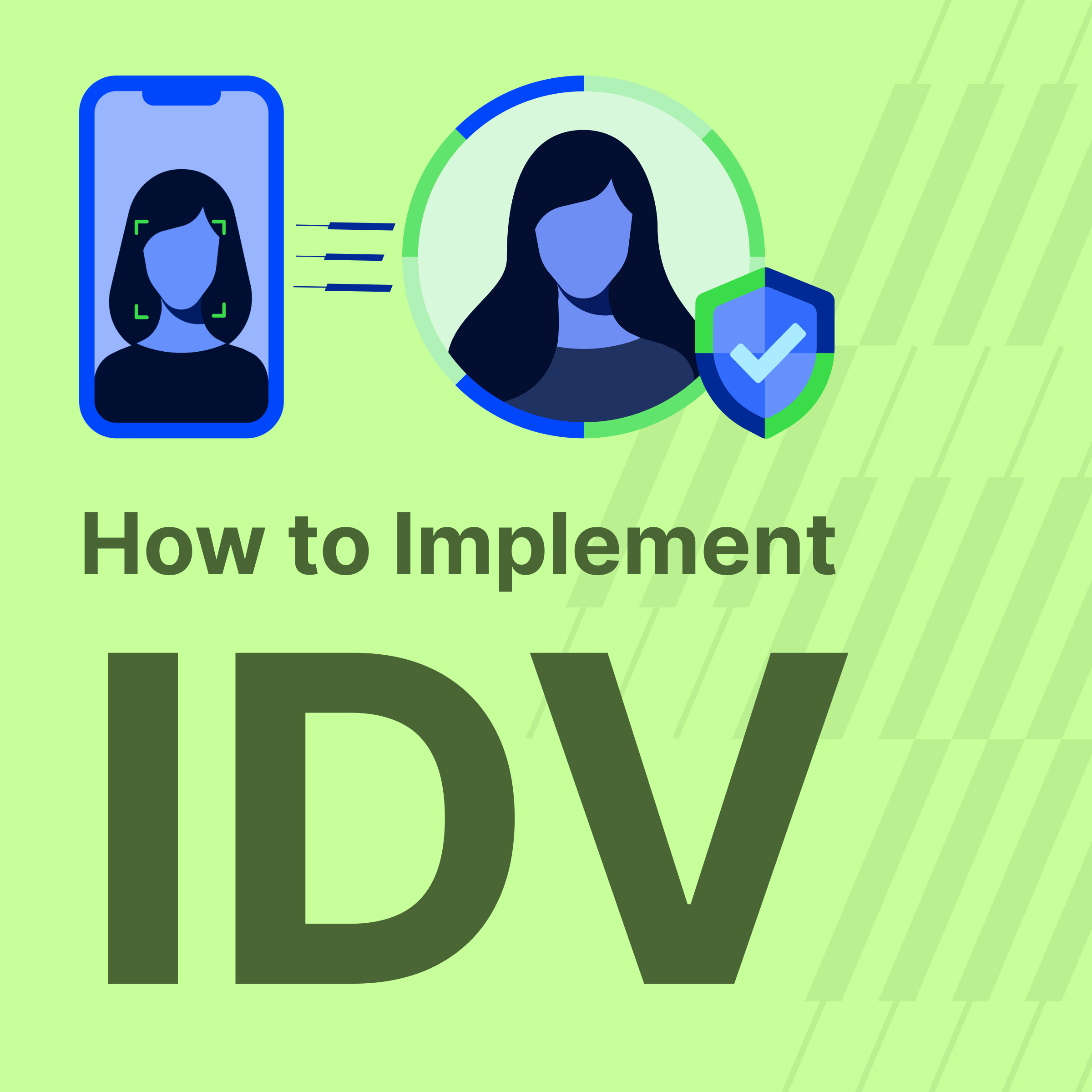
- Before any document is presented, Proof verifies identity using a government-issued ID matched against a facial biometric, with liveness detection and real-time fraud signals running in the background. For business lessees, the platform verifies both the individual signer and their authority to act for the entity.
- Notarization happens via remote online notarization, using either the lessor's in-house notaries or Proof's on-demand network, which is available 24/7.
- The completed POA, bill of sale, and any associated documents are sealed with a tamper-proof audit trail and routed instantly to the leasing team.
- Then, before the equipment leaves, Proof re-verifies the identity of the person taking possession. The same government ID and biometric check that authenticated the signer at execution is repeated at delivery. If the person at pickup does not match the authorized party, that flag surfaces before the asset is released, giving the leasing team the information they need to hold the transaction.
Every step, from initial verification through final delivery, is time-stamped and stored in a searchable, tamper-sealed audit trail that is accessible for compliance reviews, UCC filings, or any future dispute. Proof supports both individual and business signer verification and meets NIST IAL2 compliance standards for identity assurance.
What this looks like in practice
LeasePath, which provides lease management software to equipment finance companies, uses Proof as part of its customer-facing workflow. The results were concrete enough that Jeffrey Bilbrey, President and GM of LeasePath, put it plainly: "When you can tell a customer that their deal will be signed, sealed, and delivered in under an hour with a 99 percent success rate, it changes the relationship. Instead of worrying about delays, our clients are free to focus on service and growth."
A 99% success rate on documentation is a meaningful benchmark in an industry where the manual error rate on document verification runs between 4% and 8%. That gap compounds quickly across a full lease portfolio.
The business case is straightforward
The equipment finance industry is on a growth trajectory, projected to reach nearly $1.5 trillion over the next three years according to Wolters Kluwer. As volume scales, the operational cost of a manual POA process scales with it. Every document re-execution, every delayed funding cycle, every identity gap at pickup is a line item that compounds.
A digital POA workflow with verified identities at signing and delivery is both an operational improvement and a risk management decision. The companies that address it now are the ones that close deals faster, carry less documentation risk, and build the kind of customer experience that brings lessees back for their next transaction.
Ready to transform your workflow? Explore how Proof supports equipment finance teams >

















.jpg)

































.jpg)