Authentication Verifies What You Have, Not Who You Are


Stolen credentials are involved in 32% of all breaches, according to the 2025 Verizon Data Breach Investigations Report. Most organizations respond with more MFA, stricter password policies, faster credential rotation, and better detection tooling. The instinct is right, but the investment treats the symptom not the gap underneath it.
The gap is architectural. It sits between authentication and authorization..
Key takeaways
- The authorization gap is the space between confirming someone has a credential and confirming they are who they say they are. Most enterprise identity infrastructure has no architecture for the second question.
- Authentication was designed for routine access. At account recovery, workforce onboarding, and high-stakes financial authorization, it cannot answer the identity question that actually matters.
- Knowledge-based authentication (security questions, callback verification) has been made unreliable by dark web data markets, where personal records sell for less than a dollar.
- A cryptographic credential is categorically different from a check: it persists, is independently verifiable by any party at any future time, and carries the weight of a recognized certificate authority trust hierarchy.
- Closing the authorization gap requires infrastructure that produces credentials rather than checks, and that fits above the authentication stack already in place.
What is the authorization gap?
Authentication was built to answer one question: does this person have the right credential?
Password, token, certificate - the answer is binary. For routine access, that question is exactly right. The system needs to know that the person logging in has what they are supposed to have, and authentication provides a fast, scalable answer.
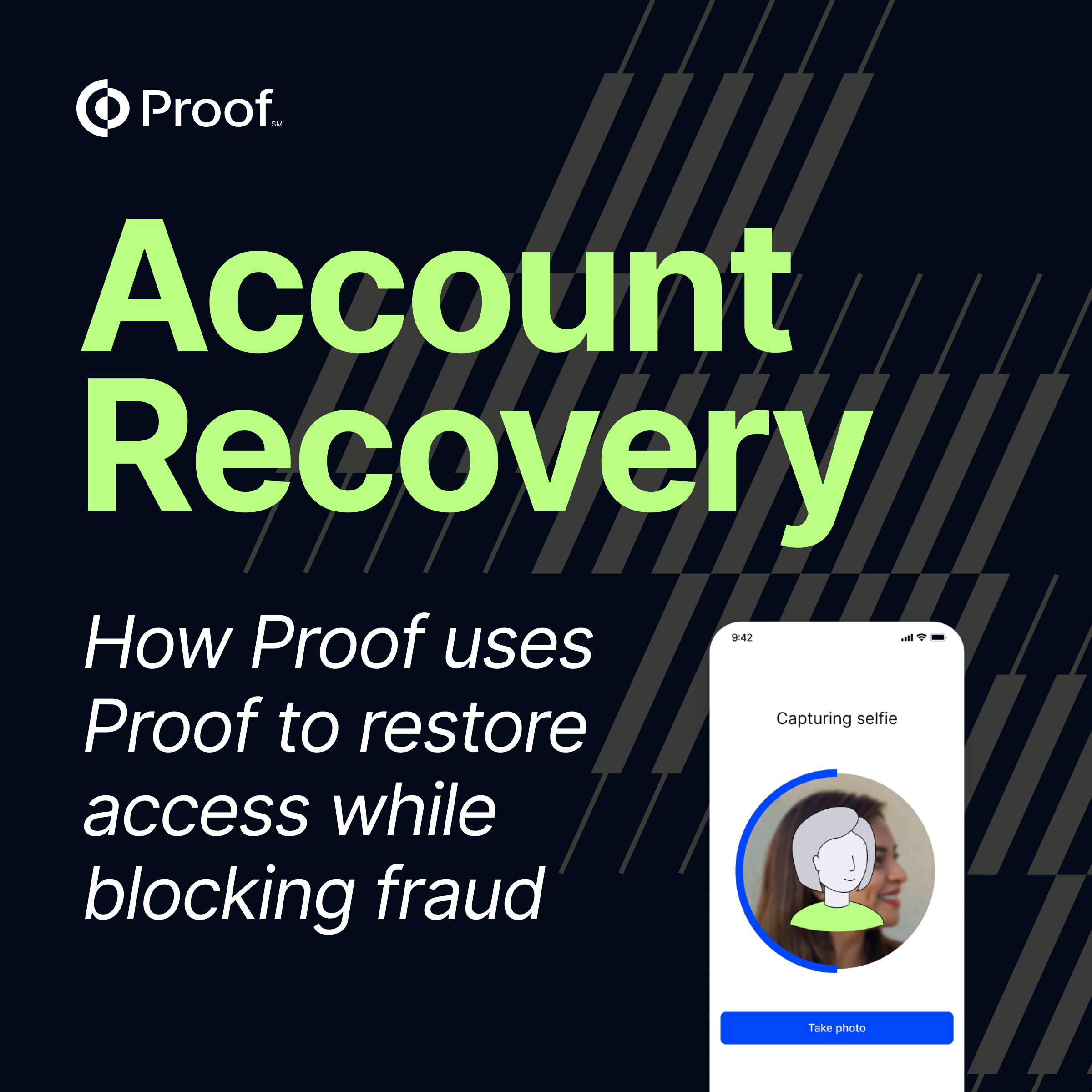
The problem surfaces at the moments authentication was never built for: when an employee loses their password and calls the help desk, the credential is already gone. Authentication cannot tell the agent whether the caller is actually the employee they claim to be. When a candidate shows up for onboarding, the credential has not yet been issued. When a wire transfer is initiated by an AI agent on behalf of a human, the session token proves the agent has access, but says nothing about who authorized the action.
At each of those moments, the question shifts from whether someone has a credential to whether they are actually who they say they are. This is the authorization gap, and most enterprise identity stacks have no architecture for closing it.
Why existing identity tools don't close the gap
The obvious instinct is to reach for existing enterprise identity infrastructure. The identity provider handles provisioning. The MFA vendor adds a second factor. The risk engine flags anomalous behavior. These are the right tools for the problem they were built to solve. The authorization gap persists because none of them produce a verifiable record of who a person actually is, only whether they have the right credentials, tokens, or behavioral patterns at a given moment.
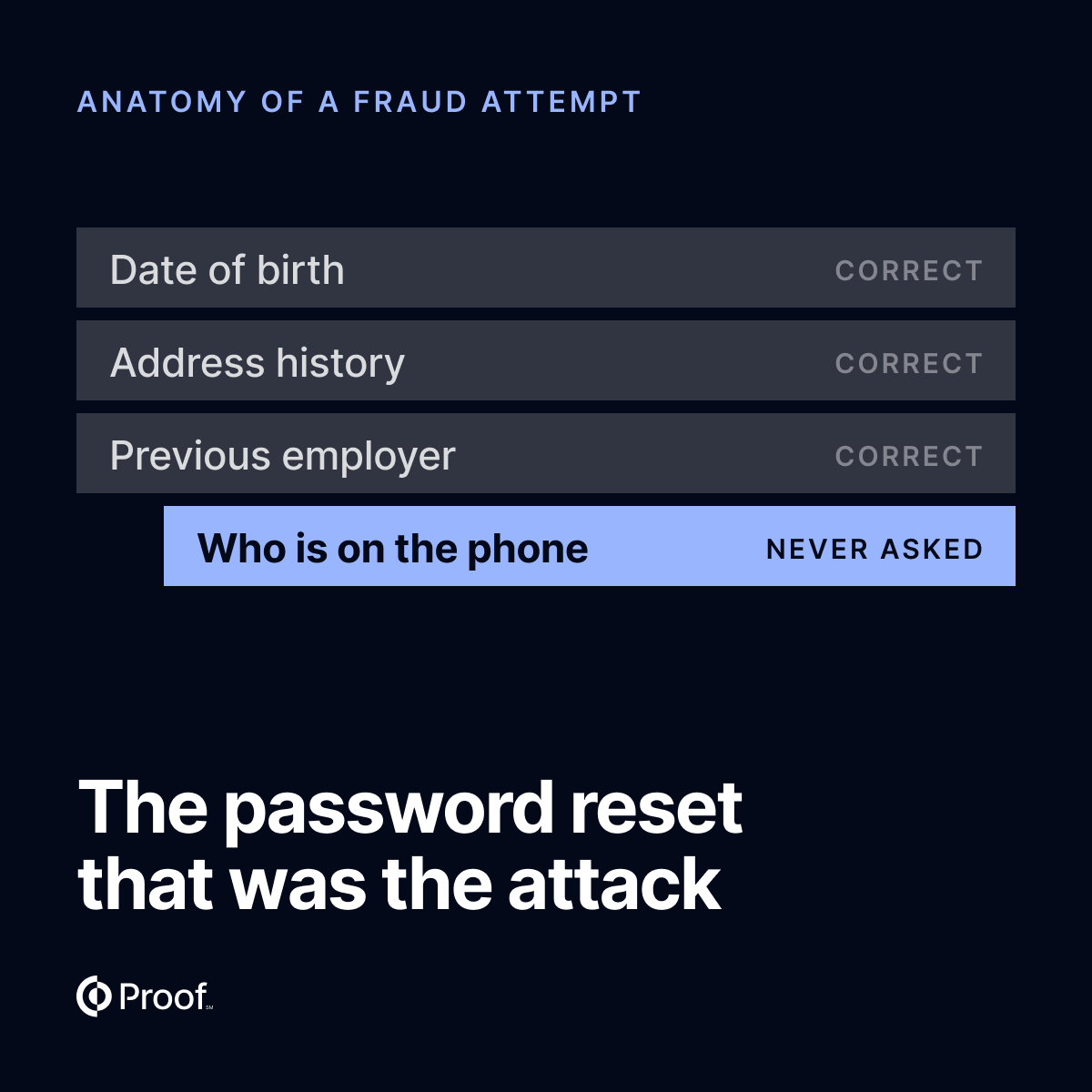
Knowledge-based authentication (the security questions, callback verification, and personal history checks that most help desks still rely on) fails for a specific reason: the answers are available. Personal data sells for less than a dollar per record on dark web markets. The attacker who social engineered their way into MGM Resorts in 2023 did so by calling the help desk, providing the right answers, and receiving a credential reset. The authentication system worked as designed. The authorization gap was the entry point.
What cryptographic identity infrastructure does differently
Closing the authorization gap requires a different kind of output: a cryptographically signed credential that binds a verified identity to a tamper-evident record, rather than a probability score, a risk signal, or a log entry that says verification occurred.
A credential differs from a check in three fundamental ways:
- It persists: a check answers a question at a specific moment and expires as circumstances change, while a credential remains verifiable by any system at any future time without re-running the underlying verification from scratch.
- It is independently verifiable: where a risk score carries the weight of one vendor's model, a cryptographically signed credential carries the weight of the certificate authority that issued it, verifiable by any party with access to the CA's public key.
- It is portable: a credential established at onboarding can be surfaced at account recovery, referenced by provisioning systems, and revoked at offboarding, producing a single auditable identity record across the full workforce lifecycle.
What changes when the gap is closed
The authentication layer still handles routine access. The identity provider still manages provisioning. Cryptographic identity infrastructure activates at the moments those systems hand off. When the credential is gone, when the person has not yet been issued one, or when the stakes of an authorization decision require more than a session token.
Account recovery becomes an identity verification event instead of a help desk judgment call. Onboarding produces a credential that provisioning can reference, rather than assuming the person on day one matches the HR record. High-stakes financial authorizations become tamper-evident, and offboarding produces a revocation record with an audit trail that any party can verify, held at the identity layer rather than just the application layer.
The authorization gap exists in every enterprise that relies on authentication alone at moments authentication was never designed to handle, and closing it requires infrastructure that produces credentials rather than checks, backed by a trust hierarchy that holds under regulatory scrutiny, legal dispute, and breach forensics.



































.jpg)















































.jpg)