The Messy Identity Verification Stack Behind Most Online Gaming Platforms

Updated September 30, 2026
Ask what identity verification online gaming platforms use and the honest answer is six methods, added one at a time, usually after something went wrong.
That is why the stack is messy rather than layered. Almost nobody designed it. A bonus abuse problem got a device fingerprinting tool bolted on. A chargeback spike added a document check at signup. Five years later you have six controls, dense at the front door and thin everywhere a player can actually move money.
Each of those six answers a different question, and a few answer a much narrower question than their name suggests. That is where players lose balances and platforms eat the cost.
Key takeaways
- Most online gaming platforms run six identity verification methods that were added reactively over time, creating a stack that is heavy at signup and thin at the moments when fraud actually strikes.
- Credential analysis with a selfie comparison is the only check that genuinely establishes who someone is, but it is also the check under the most attack right now, with injection attacks up 200% in 2023 according to Gartner.
- Account takeover losses exceeded $15 billion in 2025, hitting six million consumers, an 18% jump year over year. The accounts worth stealing are the ones holding balances, saved cards, and tradeable inventory.
- A real identity check at the moments value moves, combined with continuous behavioral monitoring everywhere else, is the architecture that closes the gaps a patchwork stack leaves open.
1. Email and phone confirmation
The floor of the stack, and the one most often mistaken for more than it is. A code sent to an inbox or a handset tells you someone had access to that inbox or handset a moment ago.
Fast, nearly free, and useless the instant a number gets ported or an inbox gets popped. Treat it as a way to reach a player, not a way to know one.
2. Credential analysis with a selfie comparison
This is what most people mean by KYC. A player holds up a government ID, the system reads its security features and machine-readable data looking for signs of tampering, and compares the portrait to a live image of whoever is holding it.
This one genuinely establishes who someone is, and it is taking the heaviest fire right now. Gartner documented a 200% rise in injection attacks during 2023, where synthetic video gets fed straight into the capture pipeline instead of being held up to a camera. If your check only looks at the image that comes out, it has no way of knowing a camera was never involved.
3. Knowledge-based authentication
Questions pulled from public and credit records. Easy for players with long records, and undermined by the fact that the answers are sitting in breach dumps. KBA also locks out people who did nothing wrong: players without a U.S. Social Security Number, thin-file players, anyone who moved twice last year.
4. Device, location, and behavioral signals
Device fingerprints, IP and geolocation consistency, email age, velocity, impossible travel. These are very good at catching bot farms and multi-accounting at scale, and they are the cheapest thing in the stack per check.
Here is the catch. They tell you how likely it is that an account is behaving normally. They cannot tell you who is holding the phone. That difference costs you nothing until a player disputes a $4,000 withdrawal and the strongest thing in your file is a risk score.
5. Liveness and deepfake detection
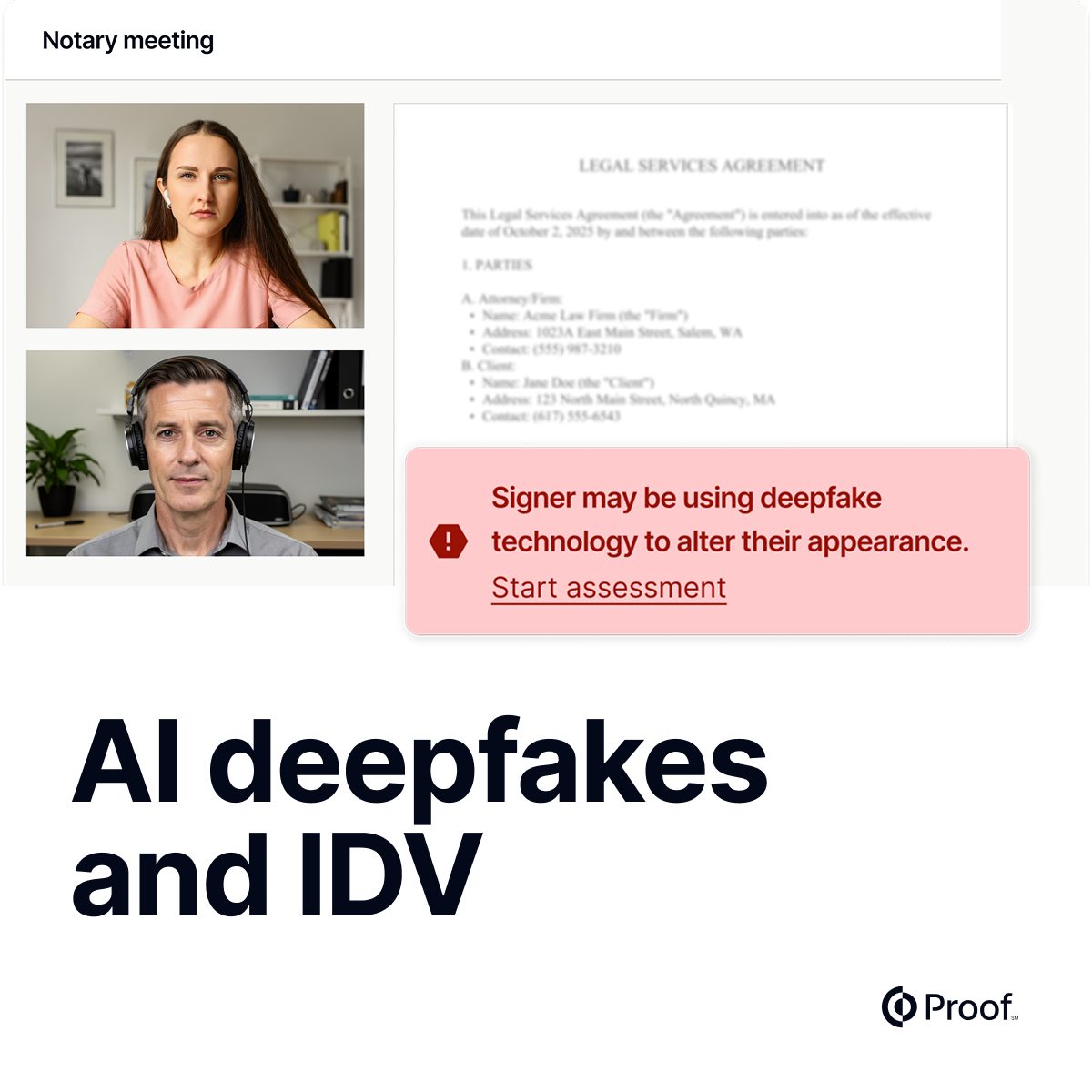
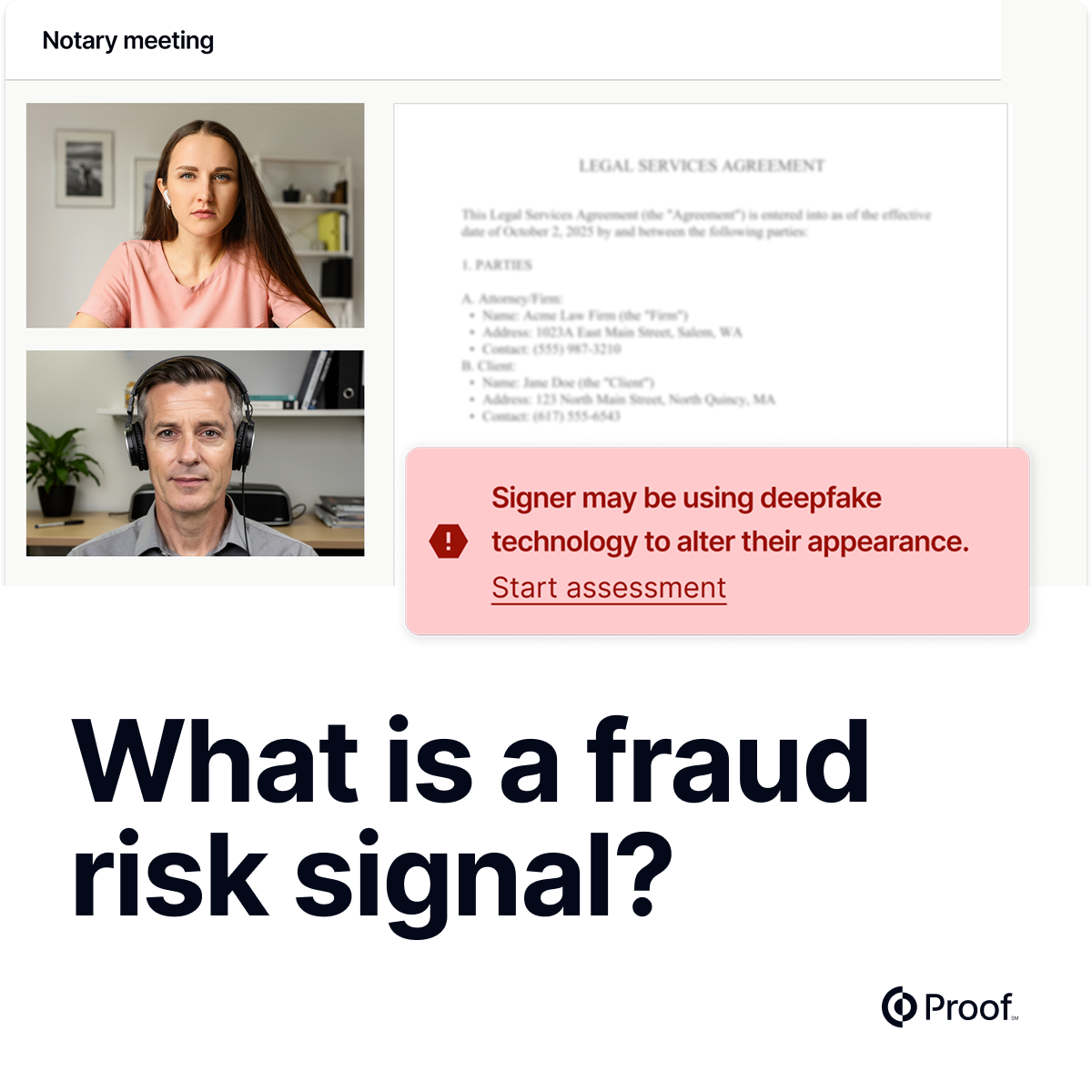
Liveness confirms a real person is physically there rather than a photo, a screen, or a rendered face. Deepfake analysis asks whether the video feed itself is real.
These are separate from biometric matching, and buying one while thinking you got the other is a common and expensive mistake. A biometric match asks whether the face matches the ID. Deepfake and injection analysis ask whether anyone was ever in front of the camera. You need both answers, and passing the first tells you nothing about the second.
6. Live human review
A trained agent on a video call with the player. The most expensive check per session, and the only one that can sort out a genuinely ambiguous case instead of forcing a yes or no on bad evidence.
Where this leaves you exposed
Line those six up against a real player's journey and the problem is easy to see. The cheap checks pile up at signup. The check that actually proves who someone is almost never runs at the moment value leaves.
That is backwards, because signup is the cheapest moment in a player's life on your platform. The expensive moments come later: a balance cashed out to a new payment method, a rare item traded to an account created yesterday, a support ticket from someone who says they are locked out of an account they never owned.
Gaming carries one of the highest suspected fraud rates in digital commerce.
TransUnion's most recent fraud trends analysis put the suspected digital fraud attempt rate for U.S. gaming transactions at 9.8%, close to one in ten transactions assessed.
Your players are also moving between legal and illegal operators more than they used to, and bringing habits with them. The American Gaming Association estimates Americans wager $673.6 billion a year with illegal and unregulated operators, 31.9% of the total U.S. gaming market. The share of online casino players sticking to legal sites only has dropped from 52% in 2022 to 24% today, while the share playing both nearly tripled to 49%. Credential reuse and mule accounts travel along those routes.
Account takeover is where it gets expensive. Javelin Strategy & Research reported account takeover losses above $15 billion in 2025, hitting 6 million consumers, an 18% jump in people affected year over year. The accounts worth stealing are the ones holding balances, saved cards, and tradeable inventory, which describes most of your best players.
Putting a real check where the money moves
None of these six methods is wrong. But a messy stack leaves holes fraud will find and bypass without hesitation. That’s why a more holistic solution that covers the two things a player economy actually needs is the right approach: a real check at the moments that matter, and constant watching everywhere else.
Proof starts with the check. You send a player an Identify request, they complete the steps you selected for that workflow, and you get back a Proof identity report showing indicators of success and of potential fraud. Requests can go out by QR code so a player finishes on the phone already in their hand. Proof runs checks at every step, validating that the credential and the selfie are what they claim to be, and the verification is certified to NIST Identity Assurance Level 2 by the Kantara Initiative, so someone other than the vendor assessed it.
The part that matters most for gaming is what happens when a player fails. If someone cannot clear IAL2 verification, Identify routes them to an on-demand fraud agent who works out whether the identity is genuine. A legitimate player with a passport instead of a license, or a name your checks keep mangling, is still a legitimate player, and dead-ending them at a withdrawal is how you lose the customers you most want to keep.
And behind every transaction, Defend is watching with 400+ behavioral risk signals. Its fraud detection model runs silently in the background while the player completes whatever they are doing, with every interaction scored low, medium, or high risk. The player does nothing extra for any of it, which is the whole point: you get a read on all of them and only interrupt some of them.
Behind Defend sits OmniTrust, Proof's fraud model, trained on more than 600,000 hours of face-to-face video from live authorization sessions. In Proof's published benchmarking, the Defend Risk Engine caught 630% more fraud than an industry benchmark model at a 0.25% intervention rate, flagging 48% of known fraudulent transactions while touching one player in four hundred. Completion rates stayed above 90%.
That last number is the one to look at if your objection is friction. A real check at account creation, recovery, transfer, and cash-out, with silent scoring in between, is how you get certainty where it counts and leave everybody else alone.
See how Proof secures high-risk player actions with verified identity >

























.jpg)







































.jpg)