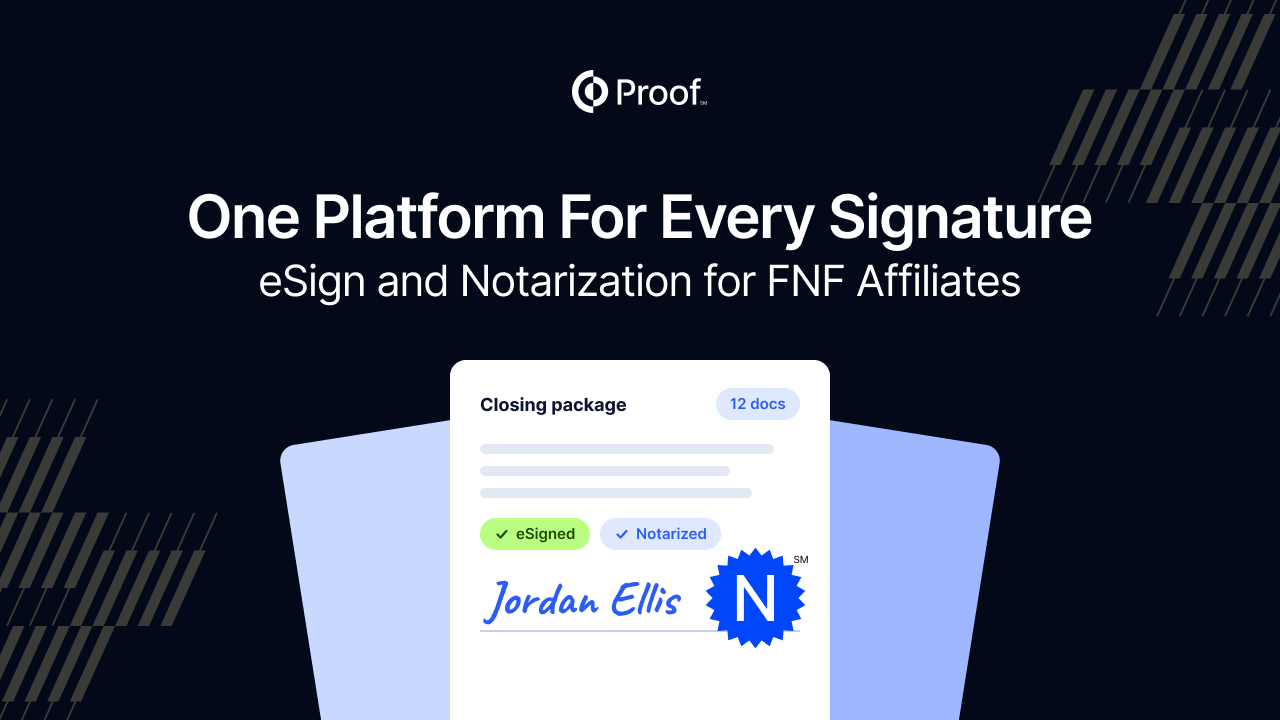
Your team already uses Proof for notarization. But documents that only need a signature are probably still going through a separate eSign tool. Join us to see how Proof's eSign offering handles those documents too - whether a document needs notarization or just a signature.
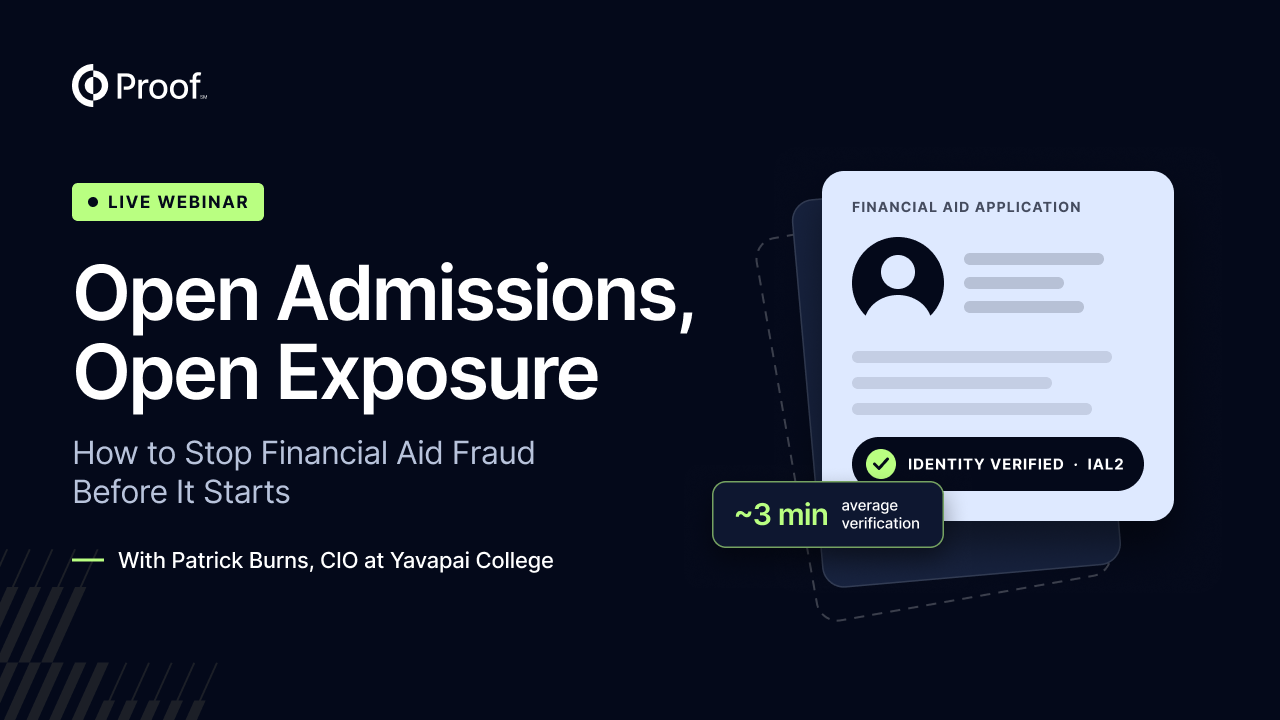
In this session, we'll be joined by Patrick Burns, CIO at Yavapai College, to walk through how his team runs roughly 5,000 IAL2 identity checks a year across admissions, financial aid, and the IT service desk.
Cryptographic identity infrastructure is a distinct category from IAM: a persistent, verifiable identity layer that travels with a person across systems.
IRS proposed regulations would open remote notarization to spousal consents. The operational question is how recordkeepers run it at distribution volume.
Self-tagging removes the queue between preparing a document and sending it. Covers multi-signer, notary transactions, splits, merges, and conditional fields.
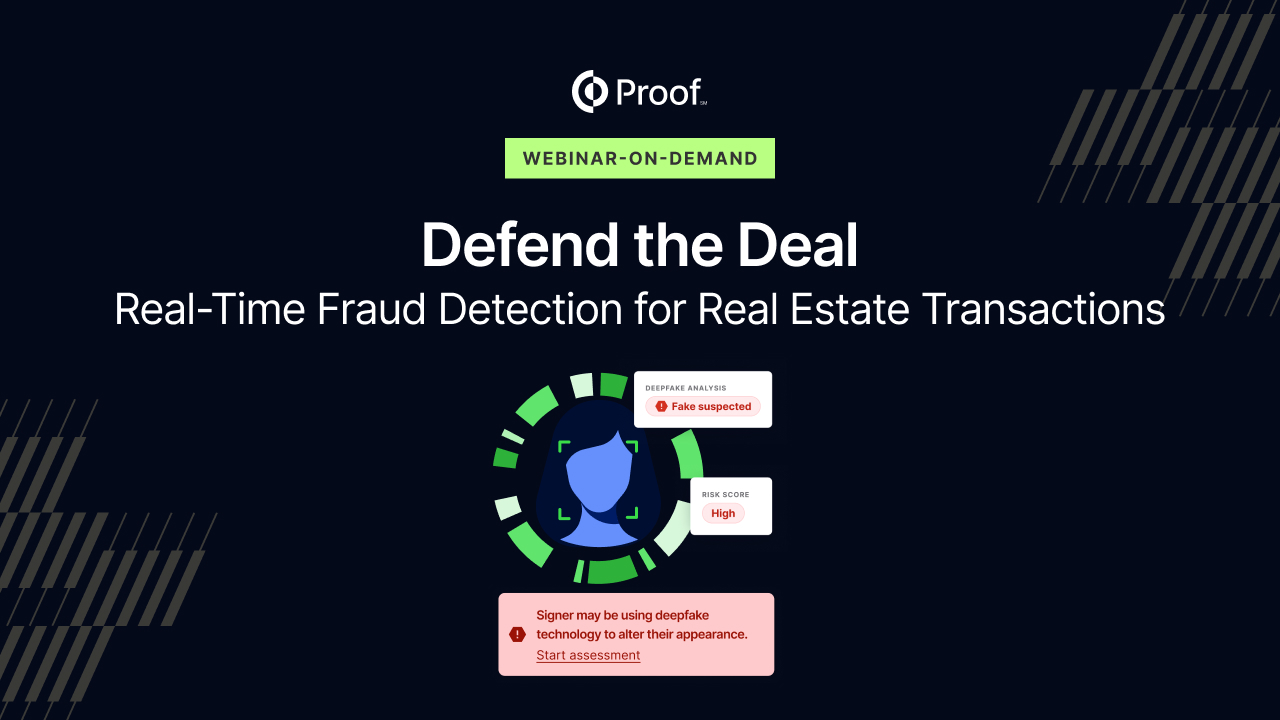
Most platforms check for deepfakes once, at onboarding. Continuous session monitoring is what catches virtual camera injection and mid-session signer swaps.
A returning customer re-verifies because verification results do not travel. Verifiable credentials let identity be proven again without storing the PII.
Remote hiring verifies a résumé rather than a person. Identity proofing at application and again at onboarding confirms the hire is who you interviewed.
Jumpstart your National Notary Day celebrations with Proof. Join us for a spotlight on the Notarize Affiliate Program - a simple way for notaries to earn extra income by sharing the platform they trust most.
Identity verification inside SoftPro lets title teams verify a seller at order entry rather than at the closing table, without leaving their production system.
Deepfake detection and identity verification answer different questions. Verify runs both inside one live session for support calls and high-value requests.
Defend scores over 400 fraud risk signals on every notarization, verification, and eSignature, flagging high-risk transactions while they are still open.
KYC verifies a customer once, at onboarding. False records and identity theft happen at transaction time, which calls for a different control entirely.
As of January 1, 2024, California properties can close entirely online. For real estate professionals, this means you can now help buyers and sellers in the nation’s largest real estate market complete their closings – entirely online.
High-volume notarization needs what consumer tools lack: on-demand notary capacity, identity assurance certified at IAL2, and an API into existing systems.
Generative AI made deed fraud cheap to attempt at volume. The defense is verifying the seller before the file moves, rather than inspecting documents after.