What is Remote Online Notarization?

Updated July 9, 2026
The traditional notarization process has a well-known rhythm: print the document, find a notary office, drive there, show your ID, wait for the stamp. The whole thing can take the better part of a morning, and if anything goes wrong (wrong document, wrong ID, wrong office), you start over.
Remote online notarization was built to replace that.
Same legal result, without the overhead.
Key takeaways
- Remote online notarization (RON) is a legally recognized method of notarization conducted entirely online via live video, digital identity verification, and an electronic notary seal — no in-person visit required.
- A RON session on Proof has a median end-to-end time of less than 30 minutes, with the live notary session itself taking a median of 3.5 minutes.
- RON is legal in 49 states and the District of Columbia as of 2026, with California's permanent statute set to take effect in 2030.
- Identity verification during a RON session uses knowledge-based authentication (KBA) or biometric verification — not just a visual ID check — making RON more rigorous than most in-person notarizations.
- The top document categories notarized remotely include legal documents, real estate transaction documents, financial services documents, government records, and construction documents.
- Completion rates on Proof averaged 91.9% bundle conversion in 2025, with larger, more complex document packages completing at higher rates than single-document transactions.
The short definition
Remote online notarization (RON) is a legally recognized method of notarization performed via live video connection between a signer and a commissioned notary. The signer verifies their identity digitally, reviews and signs documents electronically, and the notary applies an electronic seal and digital certificate.
The resulting document is tamper-evident and legally valid in every jurisdiction where RON has been enacted.
It is worth being precise about what RON is not. E-signature platforms allow documents to be signed electronically, but without a notary. That works for agreements that do not require notarization, and it falls short for those that do. Remote ink-signed notarization (RIN) involves a wet-ink signature that is later uploaded, which is still a paper process, just photographed.
RON is the only method where both the signing and the notarization happen entirely online, in real time, with a live credentialed notary present.
How does remote online notarization work?
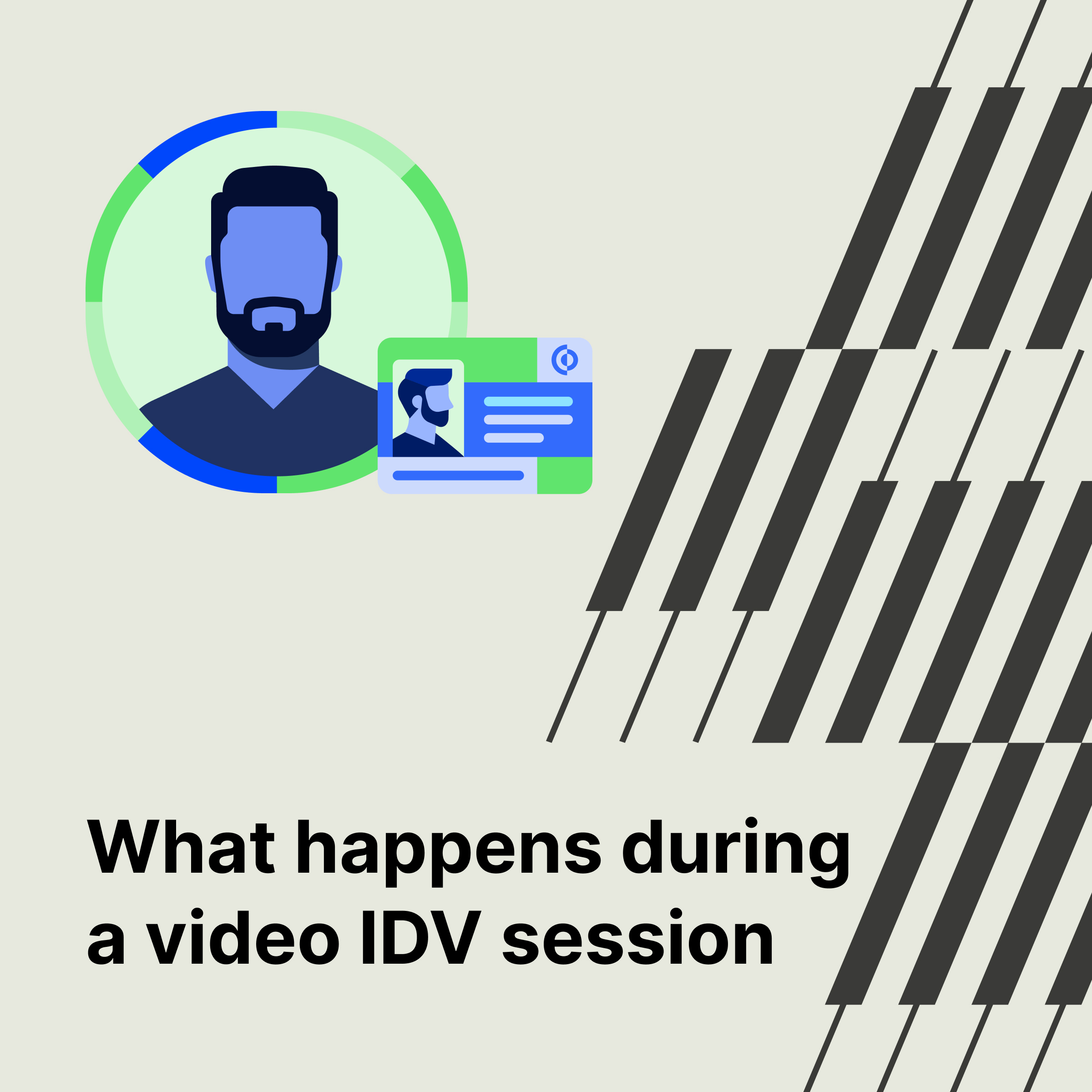
From the signer's perspective, a RON session involves four steps.
- First, the organization that needs the document notarized sends a secure link to the signer.
- Second, the signer verifies their identity, typically through knowledge-based authentication (KBA), which asks questions drawn from their credit and public records history. When KBA is not available, biometric verification using a photo ID and a selfie provides a second path.
- Third, the signer connects via video call to a live, credentialed notary, reviews the documents, and signs electronically.
- Fourth, the notary applies their electronic seal and digital certificate. The completed document is stored securely and returned to the sending organization.
On Proof, that entire sequence has a median end-to-end time of less than 30 minutes. The live notary session itself takes a median of 3.5 minutes.
What can you notarize with remote online notarization?
RON sees use across legal services, construction, financial services, healthcare, and government, wherever documents require a notary's seal. In 2025, the top document categories by volume on Proof were:
- Legal documents (POAs, affidavits, settlement agreements)
- Government and vital records
- Construction documents (lien releases, contractor agreements, Notices of Commencement)
- Real estate transaction documents
- Financial services documents
That breadth matters for organizations evaluating RON: the technology is not purpose-built for a single use case, and the notary network has handled everything from single-page affidavits to multi-document real estate closings at production scale.
Where is remote online notarization legal?
RON authorization is enacted at the state level, and the map has expanded substantially since 2020. Proof processes notarizations across 51 US jurisdictions and operates in every state where RON has been enabled.
The specifics vary by state. Some require notaries to be separately commissioned for RON; others specify technology standards, identity verification requirements, or recordkeeping rules. For current state-by-state eligibility, see Proof’s RON legislation hub.
Is remote online notarization reliable?
Speed gets attention. The more important question for organizations running high-stakes document workflows is what actually happens when a signer shows up.
Based on more than 1.5 million notarizations on the Proof platform last year alone, the answer is that it works consistently. Proof's meeting success rate averaged higher than 85% across all 12 months of 2025. Bundle conversion, which captures every transaction that ultimately reached completion including those where a signer returned after an initial failed attempt, was 91.9%. Notary customer satisfaction averaged 4.95 out of 5.0.
In fact, larger, more complex document packages complete at higher rates than single-document transactions. The explanation is straightforward. High-document transactions tend to involve motivated signers in high-stakes situations: real estate closings, legal filings, contractor agreements that are holding up a project.
Those signers arrive prepared, and the platform performs best when the stakes are highest.
Plus, more than 250,000 notarizations occurred on the Proof platform outside core business hours last year, covering evenings, overnight sessions, and early mornings. That is roughly 1 in 6 transactions completing when a traditional notary office would be closed. So not only can you access a notary wherever you are, you can also access one whenever you need to.
How can I start notarizing remotely?
Ready to see what remote online notarization can do for your organization? Request a demo to see Proof in action.
Plus, you can check out our 2026 guide to remote online notarization for a deeper look at the data behind RON's growth and reliability.










































.jpg)

















































.jpg)