The Fraud Files: Fraud Rings, AI Scams, and the Signals to Watch | April 2026


Updated July 10, 2026
Fraud trends rarely change all at once. More often, the signals appear gradually across research reports, news stories, and the operational reality of how organizations process digital transactions.
Industry data shows fraud attempts continuing to rise. News coverage highlights how artificial intelligence is accelerating impersonation scams. And investigations into global scam networks show just how coordinated modern fraud operations have become.
Individually, these developments might seem unrelated. Taken together, they point to a clear shift. Fraud is becoming more organized, more automated, and more persistent than many traditional defenses were designed to handle.
Here are five signals from the past month that fraud and risk teams should be paying attention to.
Key takeaways
- Fraud is becoming industrialized. Fraud rings test identity systems repeatedly, rotate infrastructure, and automate attacks at scale — making single-transaction detection insufficient.
- AI has lowered the barrier to impersonation. Tools that once required significant technical skill now allow attackers to produce convincing deepfakes, synthetic identities, and social engineering scripts at volume.
- Coordinated attacks leave cross-transaction signals. The patterns that reveal fraud rings rarely appear in a single interaction — they emerge when identity, behavioral, and transaction data are analyzed together across the full lifecycle.
- Global scam networks are structured like businesses. Operations in Southeast Asia and elsewhere run scripted campaigns, manage victim outreach, and reuse infrastructure across platforms — this is not amateur activity.
- The industry is responding collectively. Major technology companies are now sharing fraud intelligence across platforms, recognizing that attackers operate across systems and isolated defenses are no longer enough.
- Detection must move beyond the transaction. Organizations that connect signals across onboarding, account changes, and payment activity will detect coordinated fraud earlier than those relying on point-in-time checks.
Fraud is increasing and becoming operational
The latest State of Fraud Report from Alloy confirms what many fraud teams already experience day to day. Fraud attempts are rising, and criminals are increasingly using artificial intelligence to carry out attacks.
What stands out is not just the volume of fraud attempts. It is the way those attacks are structured.
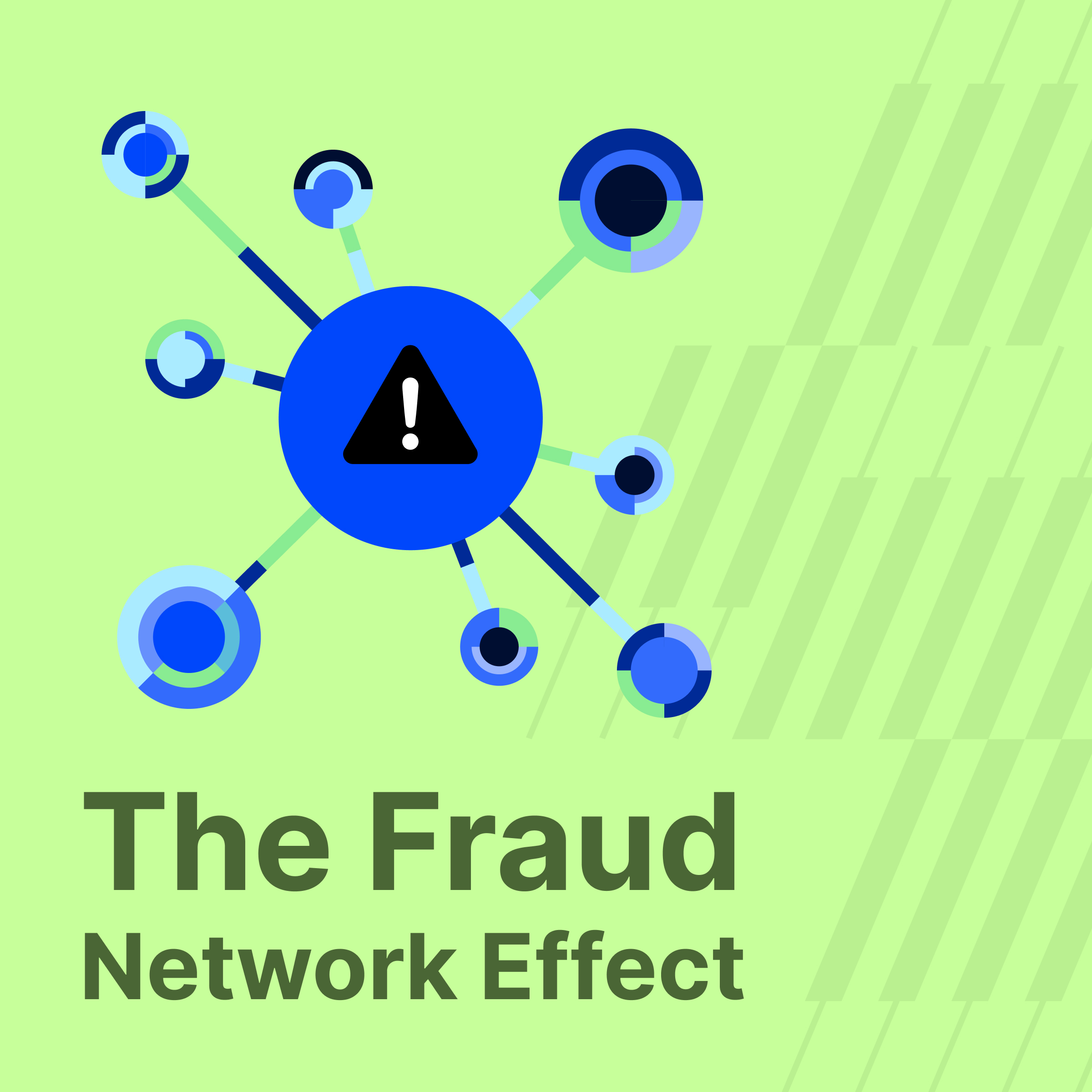
Fraud used to look more opportunistic. Someone found a vulnerability and attempted to exploit it. Today it often looks more coordinated. Fraud rings test identity systems repeatedly, rotate identities and infrastructure, and automate large numbers of attempts until they find a weakness.
That shift has important implications for fraud detection. When attackers operate this way, the risk rarely appears within a single transaction. It becomes visible only when patterns emerge across many attempts.
AI is accelerating impersonation scams
Another signal this month came from reporting on the growing role of artificial intelligence in financial scams.
Investigations into tax-related fraud showed attackers using AI tools to produce convincing impersonations and automate social engineering tactics. What once required significant technical skill can now be done with widely available tools.
This shift lowers the barrier to entry for fraud. It also allows criminals to scale attacks quickly.
For organizations handling sensitive transactions, the challenge is not just detecting a single fraudulent interaction. It is recognizing coordinated campaigns where the same actors test multiple approaches until one succeeds.
AI-driven fraud is reaching record levels
Evidence of this scaling effect is also appearing in fraud statistics.
Recent reporting on fraud data from CIFAS found that fraud cases in the UK reached record levels last year, with many incidents tied to scams that use artificial intelligence tools.
While the data comes from the UK, the broader pattern is familiar across digital services. As the cost of producing convincing identities and communications decreases, fraud becomes easier to scale.
Organizations that rely on digital onboarding, account access, and remote transactions are seeing the effects first.
Global scam networks are operating at scale
April also brought new attention to the scale of organized fraud networks.
Investigations into scam centers operating in Southeast Asia revealed large coordinated operations responsible for running fraud campaigns across messaging platforms and social media. In response, Meta removed more than 150,000 accounts linked to these activities.
These networks operate with surprising structure. Teams manage scripts, coordinate victim outreach, and reuse infrastructure across campaigns.
The takeaway for fraud teams is clear. Many attacks are not isolated incidents. They are part of coordinated efforts that probe systems repeatedly in search of vulnerabilities.
Detecting that activity requires looking beyond individual transactions.
Fighting fraud is becoming an industry effort
Finally, April also showed how the technology industry is responding to these challenges.
Several major technology companies announced a new initiative aimed at sharing intelligence and coordinating efforts to combat scams across platforms.
The effort reflects a growing recognition that fraud is not confined to a single system or product. Attackers operate across platforms, services, and identity systems.
Organizations face a similar challenge internally. Fraud signals often appear across different parts of a transaction lifecycle, from identity verification to account changes and payment activity.
Connecting those signals is becoming essential for detecting coordinated fraud.
What these signals mean for fraud and risk teams
Taken together, the signals from the month point to a clear trend.
Fraud is becoming more automated, more coordinated, and more scalable. Attackers can test identity systems repeatedly using automation, AI tools, and shared infrastructure.
That environment exposes the limits of fraud controls designed to evaluate transactions one at a time.
Increasingly, organizations need visibility across identities, devices, and behaviors over time. The patterns that reveal coordinated fraud campaigns often appear only when multiple transactions are analyzed together.
Detecting fraud across transactions
At Proof, we work with organizations responsible for some of the most sensitive digital transactions in financial services, real estate, and other regulated industries.
Across those environments, one pattern is consistent. Fraud rarely reveals itself within a single interaction. It appears when signals are connected across the lifecycle of a transaction.
The Proof platform helps organizations surface those patterns by analyzing identity, behavioral, and transaction signals across activity. This gives fraud teams the context they need to detect coordinated attacks earlier and protect legitimate customers.
Learn more about how organizations are identifying fraud patterns across transactions >



























.jpg)





















































.jpg)