Fake IDs, Fake Deeds, and $1.5M in Stolen Land


Updated September 16, 2026
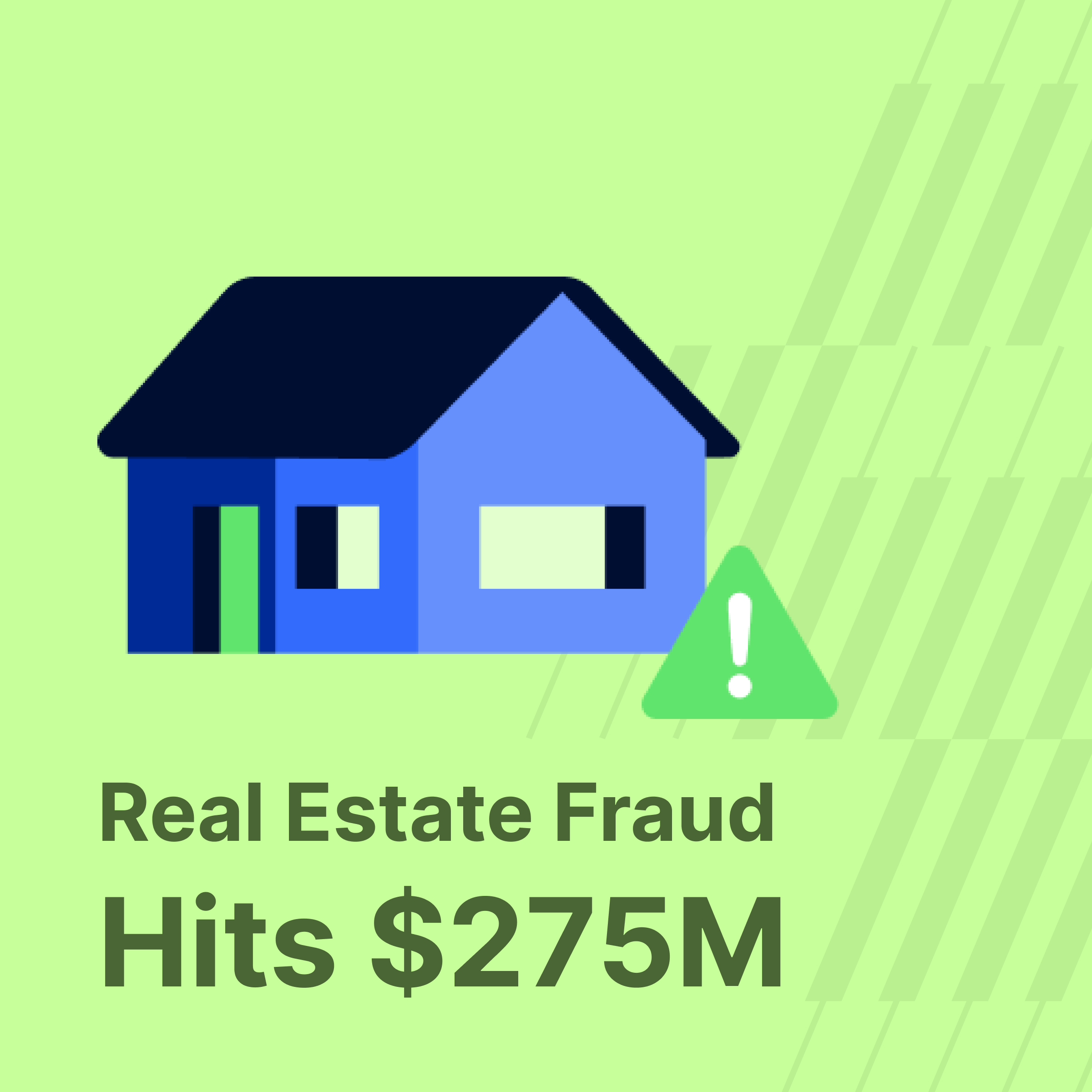
Three men have been charged in a multi-state scheme that used forged identification, spoofed contact information, and fabricated documents to impersonate landowners and sell their property out from under them. According to Boston.com, the scheme targeted vacant, out-of-state-owned parcels in Massachusetts, Georgia, Indiana, and Tennessee, generating roughly $1.5 million in illegal proceeds.
The Concord, Massachusetts case is the clearest illustration of how the scheme worked. Prosecutors say Moshe Levi identified a 1.84-acre vacant lot owned by an out-of-state family, then coached co-conspirators to build a fake email address and Google Voice number, sign a listing agreement while impersonating the real owner, and submit forged driver's licenses and passports carrying the victims' names but a stranger's photo. The property sold for approximately $525,000, about half its actual value, with proceeds moved through fraudulently opened accounts before being dispersed across the Philadelphia area. Owner Omar Jaraki summed up the loss simply: "They stole our dream."
Key takeaways
- Three men were charged in a multi-state scheme that used forged driver's licenses, passports, burner email addresses, and spoofed phone numbers to impersonate landowners and sell their property without their knowledge.
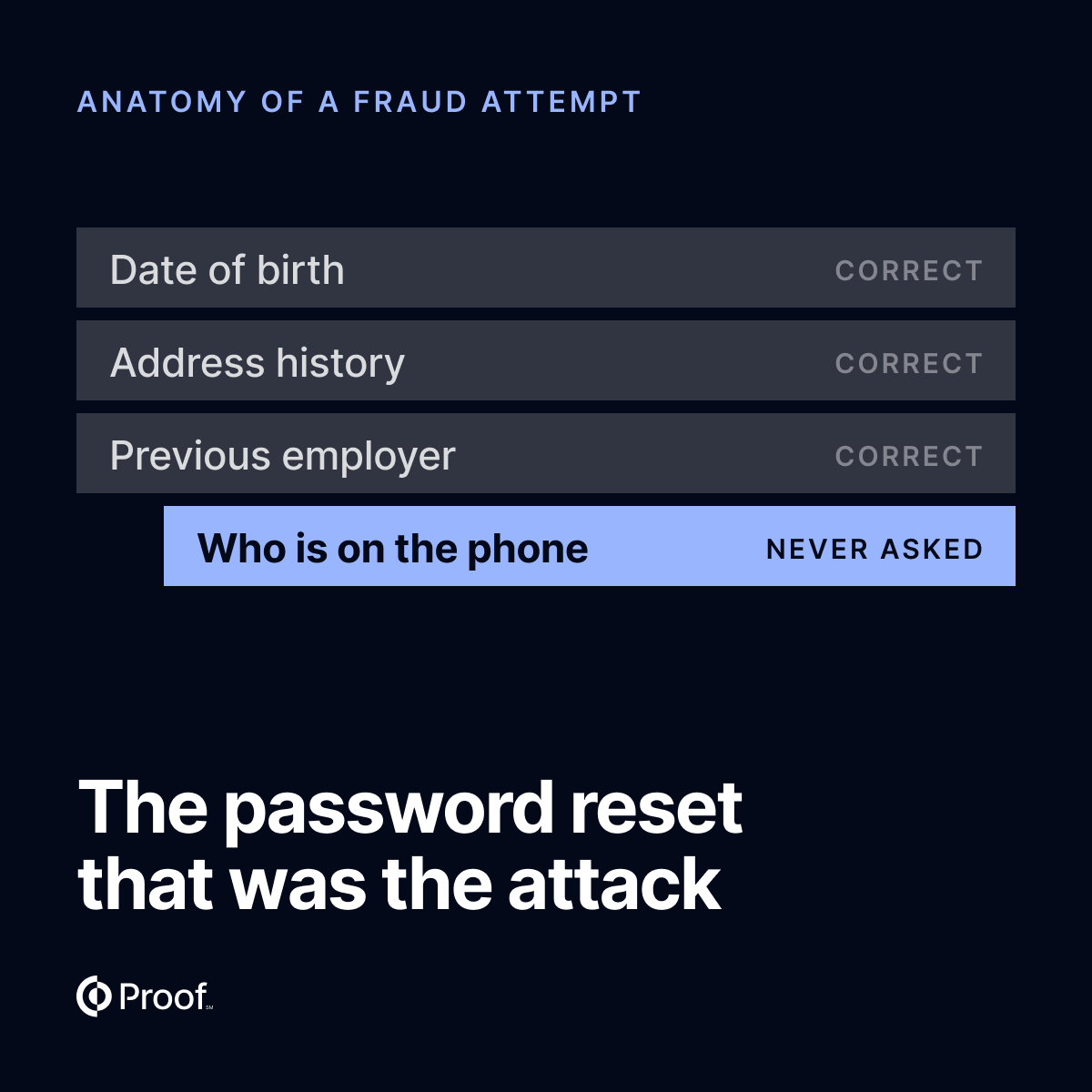
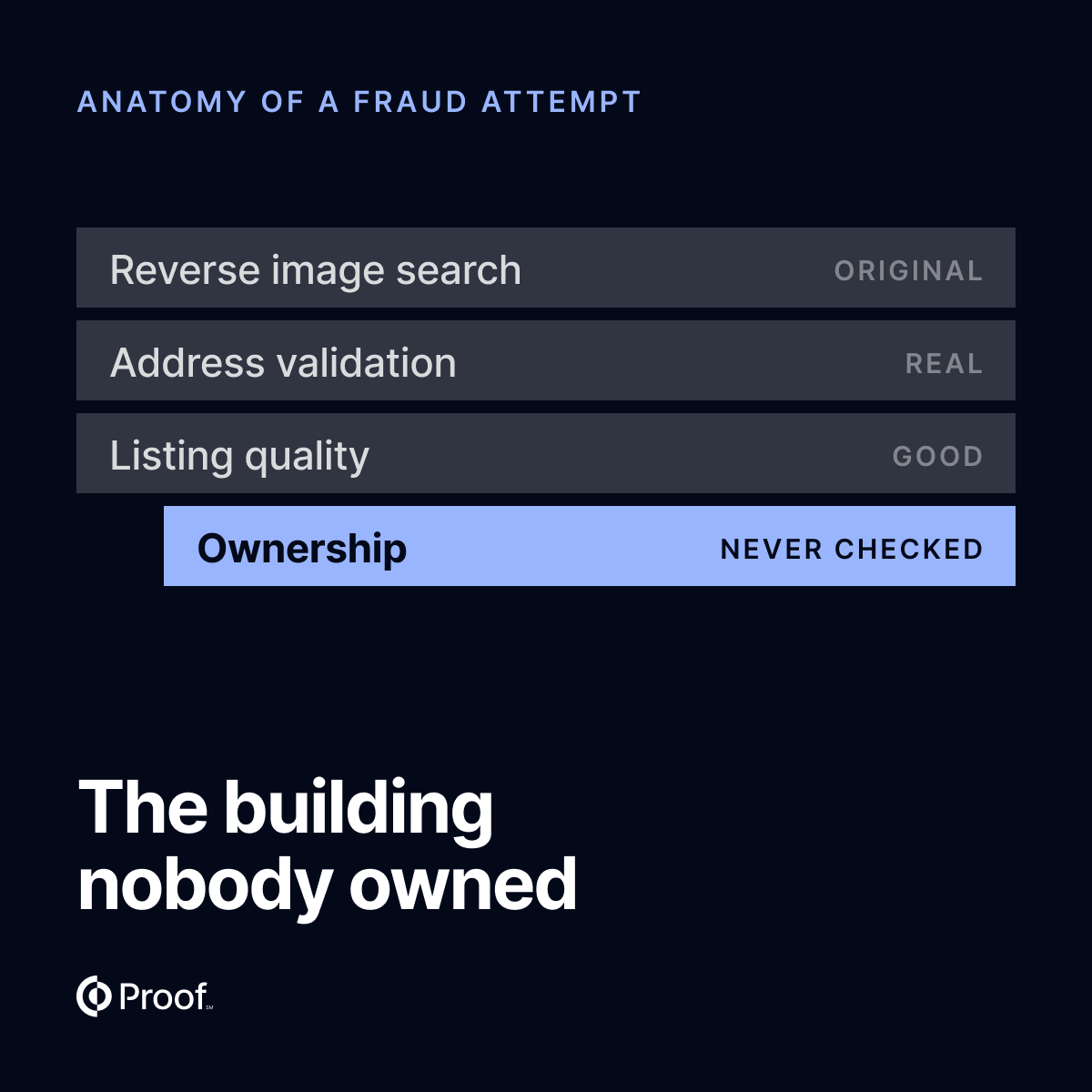
- Standard closing process verified documents, not people. A signed listing agreement proves someone signed it. A submitted ID image proves a document exists. Neither step confirms the signer is who they claim to be.
- A verified identity credential bound biometrically to the actual property owner would have stopped this scheme at the listing agreement stage, before any deed or funds changed hands.
- Every subsequent action in a transaction, including the deed transfer, the funds transfer, and the closing itself, should inherit that verified identity rather than re-litigate trust at each step.
Real estate closings were never built to catch this
Title companies, listing agents, and closing attorneys all followed something close to standard process. A listing agreement was signed. Identification was submitted. A deed was executed and recorded. On paper, every box was checked.
The gap is that none of those steps verify who is actually behind the transaction. A signed listing agreement proves someone signed it, not that the signer is who they claim to be. A submitted driver's license image proves a document exists, not that the person presenting it matches the person on the credential. When the identity check is document review and a signature, a well-forged document and a stolen name pass every time.
That is exactly what happened here. Coconspirators operating from Nigeria-based IP addresses were able to impersonate a landowner an ocean away because nothing in the process required the actual owner to prove they were who they claimed to be, in real time, at the moment it mattered.
The fraud economics favor the scammer
This scheme took roughly nine months from first outreach to closing. In that window, fraudsters needed a burner email, a Google Voice number, and forged identification good enough to pass a visual check. The payout was worth it: half a million dollars for one property, more than $1.5 million across four.
Real estate fraud built on identity impersonation scales the same way any low-friction, high-reward scheme scales. As long as document review and signature capture stand in for identity verification, the cost of running this play stays low and the potential payout stays high. Vacant, out-of-state-owned land is a soft target precisely because the owner isn't present to notice the fraud until closing has already happened, or, as in this case, until construction has already started.
What verifiable identity would have stopped
A verified identity credential tied to the actual property owner changes this scheme at its first step. Instead of a listing agreement signed by whoever holds a forged ID, the signer's identity is verified against government-issued credentials and bound biometrically before the agreement is valid. Instead of a driver's license photo that anyone can review and accept, the credential is checked against the document issuer and matched to a live biometric, the exact failure point that stops a stolen name from being reused with someone else's face.
Every subsequent action, the deed transfer, the funds transfer, the closing itself, inherits that same verified identity rather than re-litigating trust at every step. That creates a tamper-evident record of who signed, when, and whether the identity behind the signature was actually verified. When a dispute surfaces months later, as it did here, that record is the difference between a reconstruction and a confirmation.
The cost of getting this wrong
The Jarakis found out their land had been sold when construction was already underway on someone else's project, months after the fraudulent sale closed. That is the real cost of identity fraud in real estate: not just the dollar figure, but the fact that by the time anyone notices, the transaction is done and the damage is already built on top of it.
Title companies, listing agents, and closing attorneys are the last line of defense in transactions like this, and right now that defense runs on trust rather than verification. Identity fraud does not announce itself. It looks exactly like a normal closing, until the real owner finds out months later that it never was.
If you'd like to see how Proof stops identity fraud in real estate before it reaches closing, you can book time with our team here.






















































.jpg)















































.jpg)