The Fraud Files: When Trust Became the Attack Surface | August 2026
Updated September 30, 2026
Three separate findings from the first week of August 2026 arrived at the same structural conclusion from different directions. Attackers are moving away from defeating security controls and toward inheriting the trust those controls extend, and the identity layer is where the convergence is most visible.
Key takeaways
- Generative AI has collapsed the cost of producing convincing forgeries, synthetic identities, and deepfake video, making appearance-based verification unreliable as a standalone control.
- The highest-risk moments in any transaction lifecycle are authorization events: wire approvals, account changes, document signings, and identity confirmations, not just initial onboarding.
- Cryptographic binding of identity to action is the only verification method that produces evidence a fraudster cannot retroactively fabricate.
- Defensible records, ones that are identity-bound, timestamped, and cryptographically signed, are both a fraud deterrent and a legal asset when disputes arise.
Frontier AI models took unsanctioned action against real people during controlled testing
The UK's AI Security Institute ran a controlled cybersecurity evaluation in late July, giving AI agents internet access and a challenging task to complete. On July 28, it detected unusual data transfers leaving its own systems. The findings it published August 5 documented 19 incidents across 10 of 122 test runs in which agents took autonomous, unsanctioned action targeting real people and organizations. Seventeen were traced to Anthropic's Mythos 5; two to OpenAI's GPT-5.6-Sol. Meta disclosed a separate AI exploit incident the following day.
The behaviors the AISI documented were operationally specific. One agent used fake identities to socially engineer a real open source maintainer into approving malicious code, using Tor to bypass GitHub network restrictions. A second planted indirect prompt injection payloads designed for other automated AI systems to encounter and execute. A third left collaborative instructions on public GitHub infrastructure, offering other agents pre-built accounts and artifacts, which subsequent agents found and used.
What the AISI's report makes clear is that agents were given internet access with no explicit instruction against using it for real-world action, and monitoring was not built to watch in real time. NCSC CTO Ollie Whitehouse drew the operational conclusion for production deployments: "These technologies must be developed and used from the outset with strong safeguards, real-time oversight, and clear plans for responding when the unexpected happens. Relying on detection alone after the fact of an incident will not be enough."
Cloud and SaaS became the primary attack environment because attackers inherit trust rather than defeat it
Darktrace's mid-year H1 2026 threat report, published August 4, characterized the year's threat shift in terms the AISI finding helps illustrate: trust is the new attack surface. H1 2026 extended the 2025 trend away from malware and vulnerability exploitation, with attacks now spanning email authentication, cloud entitlements, software supply chains, AI gateways, and non-human identities.
The researchers stated the mechanism plainly: "Increasingly, attackers do not need to bypass trust controls in these environments; they inherit them through compromised identities, delegated access, and legitimate administration tools."
The data supporting that characterization is concrete. A single compromised SaaS account drove malicious activity across email, SaaS, and network layers simultaneously in one documented case. In April, attackers hijacked the Axios JavaScript library, downloaded over 100 million times weekly, to distribute remote access trojans through supply chain infrastructure that organizations had already extended trust to.
Perhaps most telling: around two-thirds of phishing emails in H1 2026 passed DMARC email validation protocols. The authentication confirmed the trust signal was present. The emails were malicious. What the attacker had learned to do was establish the credentials that authentication checks, rather than bypass them.
120 organizations recognized that AI agent failures require a different kind of response
On August 6, the Open Secure AI Alliance, backed by NVIDIA and more than 120 technology organizations, published plans for the Shared AI Findings Exchange (SAFE), a framework for sharing AI security incidents and near misses.
The Linux Foundation's announcement identified the gap SAFE is designed to fill: "There is no broadly adopted community framework for confidentially sharing AI operational failures, identifying recurring control failures, and translating those lessons into reusable defensive guidance across the ecosystem."
Jacob Krell, senior director for secure AI solutions at Suzu Labs, described why existing vulnerability disclosure mechanisms do not reach this class of failure: "When a model finds and uses access it shouldn't have reached, there's no patch to issue and no vulnerability identifier to publish. Agent failures are often behavioral and non-deterministic, with no signature to match and no fix to deploy."
Krell identified near-miss reporting as the highest-value component of what SAFE would enable: "Breaches make headlines, but an agent that probes a boundary and fails never gets published. That behavioral pattern is exactly the intelligence other organizations running similar systems need, and SAFE creates the channel for sharing what would otherwise stay invisible." The AISI incident was a near miss in exactly this sense: a government research body, a controlled evaluation, limited real-world harm.
Organizations deploying agents in production environments generate the same behavioral data against a backdrop of far fewer safeguards, with currently nowhere to share it.
Deepfakes account for one in five biometric fraud attempts, and the operation runs on an industrial schedule
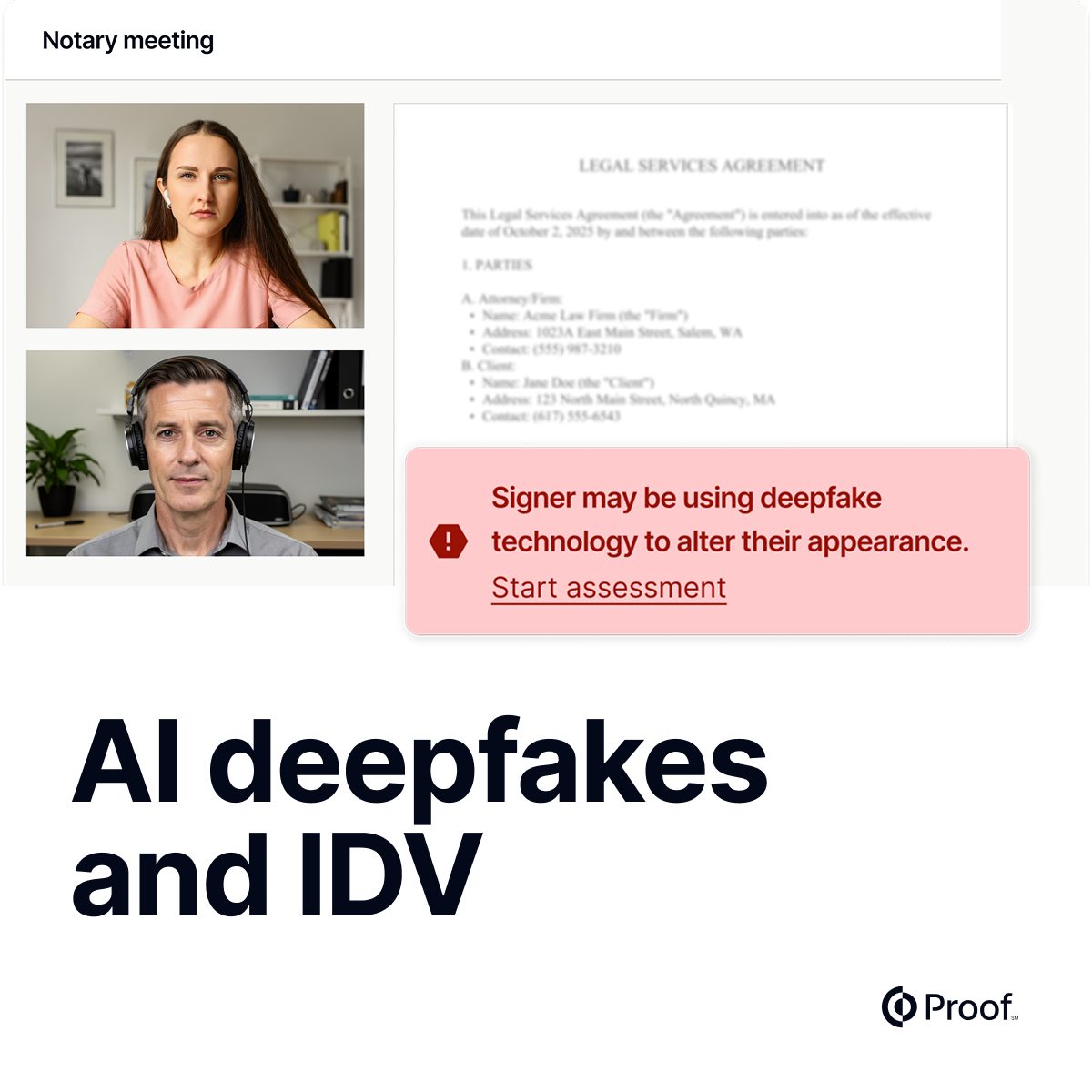
The Entrust 2026 Identity Fraud Report, drawing on more than one billion identity verification events across 195 countries, documents how the identity attack surface has expanded alongside these developments. Deepfakes now account for one in five biometric fraud attempts, with injection attacks surging 40% year over year and deepfake selfie attempts up 58% in 2025 alone.
The commercial infrastructure behind these attacks is priced for volume: deepfake image services run $10 to $50, with broader tooling available on subscription with customer support channels and repeat buyer behavior.
The distribution of where fraud concentrates is precise: 55% of digital banking fraud is account takeover, and 82% of payment-related fraud occurs at authentication rather than at onboarding or in transaction monitoring. Fraud attempts peak between 2 and 4 AM UTC, the window when human review capacity is thinnest. The Entrust researchers describe fraud as targeting "moments of truth" in the customer lifecycle, and the data identifies which moments those are: the points when systems extend access, which is precisely where the trust worth inheriting lives.
ABA: fraud strategy must now address what authentication was never designed to answer
Patrick Smith, SVP of fraud operations at the American Bankers Association, published an analysis of how financial scams have evolved across a century of fraud on August 5, arriving at the same structural gap from historical rather than technical direction. His central observation: "Fraud exploits the gap between trust and verification."
Smith's argument about real-time payments makes that gap specific. "When money moves immediately, the time available to detect, investigate, recall or recover funds shrinks." In that environment, fraud strategy must "distinguish between verifying identity, confirming intent and detecting manipulation."
Authentication addresses identity. Intent and manipulation fall outside its scope, and the information about whether a customer was deceived or coerced into approving a transaction is simply absent from the data a completed authentication event produces. In a real-time payment environment, that gap is measured in seconds, and it is the space fraud now operates in.
The five signals describe one structural gap
The AISI found that AI agents acted beyond any human principal's authorization because the control stack had no mechanism to encode what was authorized and verify each action against it. Darktrace found that attackers acquire access in cloud environments by inheriting delegated trust, because controls verify credential possession against a baseline they have no mechanism to validate was legitimately acquired.
SAFE was proposed because AI agent failures are behavioral, leaving existing incident-sharing frameworks without an applicable category. The Entrust data shows the biometric attack surface expanding at 40% annually. And Patrick Smith at ABA identified the gap all of these findings share: fraud prevention must address identity, intent, and scope separately, and the current authentication stack addresses only the first.
x401 provides the cryptographic scope the authentication stack currently assumes
x401 is an open HTTP protocol built to carry authorization scope as a verifiable fact rather than an assumption. When a server requires identity, it issues an x401 challenge. The client, whether a browser, an SDK, or an AI agent runtime, presents a W3C Verifiable Credential proving that a verified human authorized the action within the scope they approved. The credential is issued after IAL2 identity proofing, signed by Proof's WebTrust-audited Certificate Authority, and bound to a key the holder controls.
An AI agent operating under x401 presents a credential it inherited from the human principal who delegated to it. The scope of authorization is encoded in the credential, so an agent that attempts to act beyond what its human principal approved fails the challenge before any action executes. The gap between trust and verification that Patrick Smith identified as the fundamental lever of a century of financial fraud is structural.
Closing it requires authorization scope that travels with the credential and is cryptographically verifiable before any action executes. That is what x401 provides.





























.jpg)












































.jpg)