From Escrow to Closing: Securing Every Step of the Home Purchase Lifecycle


Updated July 10, 2026
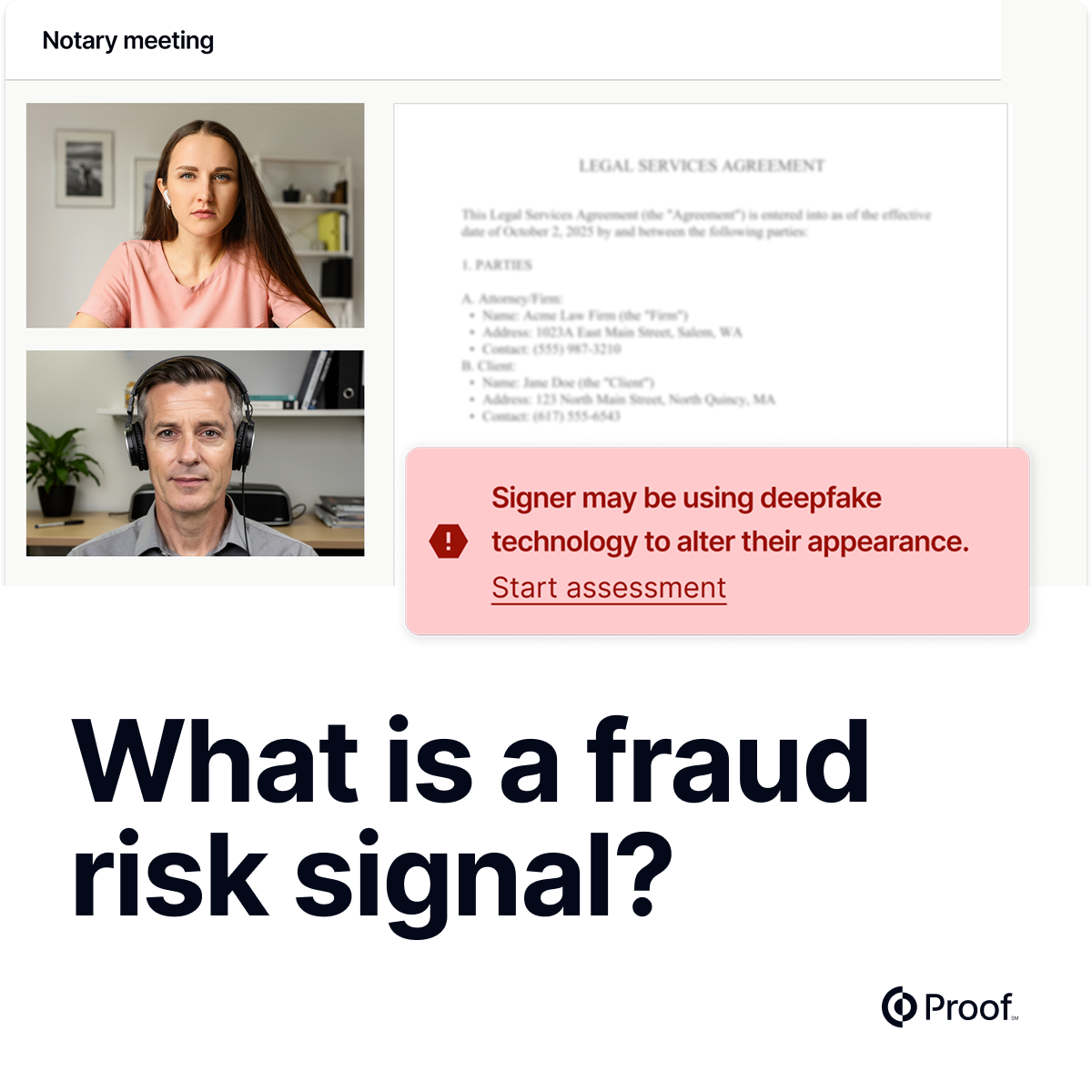
Real estate fraud is no longer confined to wire scams or last-minute payoff changes. It is increasingly embedded inside legitimate transactions, carried out by individuals impersonating real buyers, sellers, and property owners.
In response, the American Land Title Association (ALTA) updated its Best Practices Framework (v4.2), calling on agencies to implement formal Identity Fraud Prevention Programs supported by layered verification practices. The accompanying guidance discourages reliance on single-factor checks and emphasizes verifying participants earlier in the transaction, not just at notarization.
That shift reflects how modern closings actually unfold.
Funds move before signing day. Documents circulate weeks in advance. Participants join remotely across multiple touchpoints. Identity risk enters the process long before the final notarization ceremony.
To align with this reality, identity must extend across the full closing lifecycle, not live at a single checkpoint.
Key takeaways
- Identity risk enters the transaction at escrow opening, not at closing — a fraudulent participant admitted at intake contaminates every downstream step, from wiring instructions to signed documents.
- ALTA Best Practices v4.2 now require formal Identity Fraud Prevention Programs that use layered verification methods, discouraging single-factor checks at any stage of the transaction.
- Notarization is a lifecycle control, not just a closing milestone — curative documents, corrections, and compliance artifacts may require notarization well before the final signing ceremony.
- Verified identity should travel with the documents — sign-ahead workflows that tether signatures to a confirmed identity record close the gap between intake verification and document execution.
- A lifecycle approach to identity verification reduces both fraud exposure and operational friction, supporting faster closings, fewer errors, and defensible audit trails at every stage.
Opening escrow: Establishing verified participants
Every transaction begins with escrow.
Buyers, sellers, and borrowers enter the process. Information is collected. Documentation begins moving. This is also the moment identity risk first appears.
If a fraudulent participant enters the transaction at intake, every downstream step inherits that exposure, from wiring instructions to signed documents.
Establishing verified identity at escrow opening creates a confirmed participant record before sensitive activity begins. Layered verification methods such as credential analysis, database validation, and biometric confirmation strengthen participant assurance beyond visual ID inspection alone.
Trust is established before the transaction gains momentum.
Disclosures & ancillary documents: Signing ahead with confidence
As escrow progresses, documents begin circulating.
Disclosures, purchase agreements, and ancillary forms often require signatures well before closing day. Historically, these documents were signed without strong identity continuity, creating gaps between intake verification and document execution.
Sign-ahead eSignature closes that gap.
Participants execute eligible documents asynchronously while remaining tethered to their verified identity record. This reduces closing-day compression while preserving confidence that the individual signing is the same verified participant who entered the transaction at escrow.
Identity moves with the documents, not separately from them.
Wire instructions: Verifying authorization before funds move
One of the most sensitive moments in the transaction occurs when funds are authorized.
Requests to issue, change, or confirm wire instructions carry significant fraud exposure. If identity is not verified at the moment authorization occurs, funds can be redirected by an impersonating party.
Embedding identity verification into wire authorization workflows helps ensure that the individual requesting fund movement is confirmed before destination details are acted upon.
This extends identity assurance beyond documents and into financial execution points within the transaction.
Curative: notarization before closing
Notarization does not only occur at closing.
Curative documents, corrections, and compliance artifacts may require notarization in advance of the final signing ceremony. Treating notarization as a single closing event overlooks these earlier execution points.
Applying secure notarization practices to curative documents ensures identity verification and document execution remain consistent even when issues are resolved mid-process.
Notarization becomes a lifecycle control, not just a closing milestone.
Closing day: Executing the final package
By the time closing arrives, most of the transaction has already unfolded.
Funds are staged. Documents are finalized. Participants are scheduled. The closing becomes the formal execution of work completed across the escrow lifecycle.
Remote online notarization enables participants to complete the final closing package within a secure, recorded digital environment. Because identity was verified at the start of the transaction and carried forward through document execution, notarization reinforces an existing trust foundation rather than introducing a last-minute checkpoint.
Participants, documents, and identity assurance converge in a controlled closing experience.
Identity across the lifecycle, not just the closing table
When viewed step by step, the shift becomes clear.
Identity is established at escrow. Maintained through disclosures and document execution. Verified during wire authorization. Extended through curative notarization. Reinforced at closing.
Fraud prevention is no longer confined to the notary moment. It is embedded across the transaction itself.
This lifecycle approach aligns identity controls with how modern closings actually operate, supporting both risk reduction and operational efficiency.
See how Proof supports the digital closing lifecycle
From early participant verification through sign-ahead document execution and secure digital notarization, Proof enables title teams to carry verified identity across every stage of the closing process.

Explore how Proof supports secure, fully digital real estate transactions >


































.jpg)













































.jpg)