Anatomy of a Fraud Attempt: the Photograph of a Building Nobody Owned

The building was real. The photographs were real. The person who took them had walked up to a property they did not own, photographed it, and listed it for rent. Everything a listing check looks at came back clean, because everything a listing check looks at was genuine.
Key takeaways
- Listing fraud passes listing checks by design. The lie is in the claim of ownership, which no listing check tests.
- The scheme scales because one afternoon of photography supports many simultaneous victims.
- The damage lands on both sides. A renter loses a deposit, and a real landlord finds their property advertised by a stranger.
- Avail moved verification to the person posting and now sees fraud indicators on about 1% of listings, below the industry average.
How the scheme works
- Pick a property that will attract applicants. Desirable, well-photographed in the real world, and ideally vacant so nobody notices the traffic.
- Get original images. Photograph it from the street, or copy a genuine listing and swap the contact details. The FTC describes the second method plainly: scammers work by "copying legit listings, changing the contact information."
- Open an account. Any identity will do, because at this stage nobody is checking who is behind it.
- Post below market. The price does the recruiting.
- Collect from several applicants at once. Deposits, application fees, holding fees. The same unit supports many victims in parallel, which is where the economics come from.
- Leave. The listing comes down, the account goes quiet, and the real owner learns about it when someone arrives expecting keys.
Why it gets past normal checks
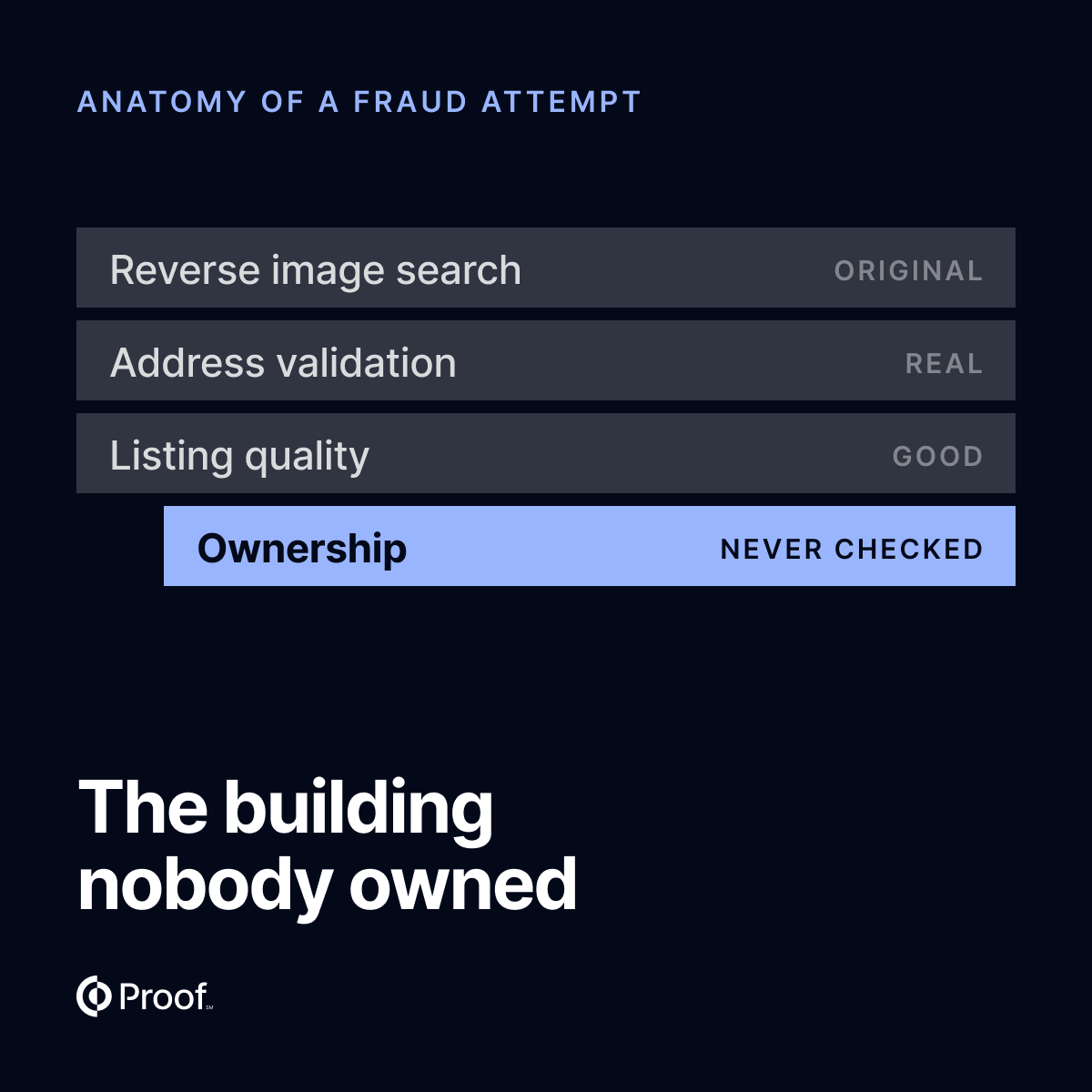
The fraud is not in the listing. It is in the gap between the listing and the person.
Reverse image search fails, because the photographs are original. Address validation passes, because the address is real. Listing quality scoring passes, because the listing is good. Even a careful human reviewer looking at the post sees nothing wrong, since there is nothing wrong with it.
The only question that surfaces this scheme is whether the person posting has any relationship to the property. That question sits outside every check aimed at the content.
Avail, for example, was reviewing every listing by hand, which got harder to sustain as the platform scaled. Payment Specialist Walker T. described the gap: the company "needed a way to confirm identity earlier and with more clarity, while keeping the experience easy for the thousands of honest users who rely on us every day."
How Proof disrupts the fraud scheme
Proof moves the check from the listing to the lister, and does it before money can move:
Verify the person, early.
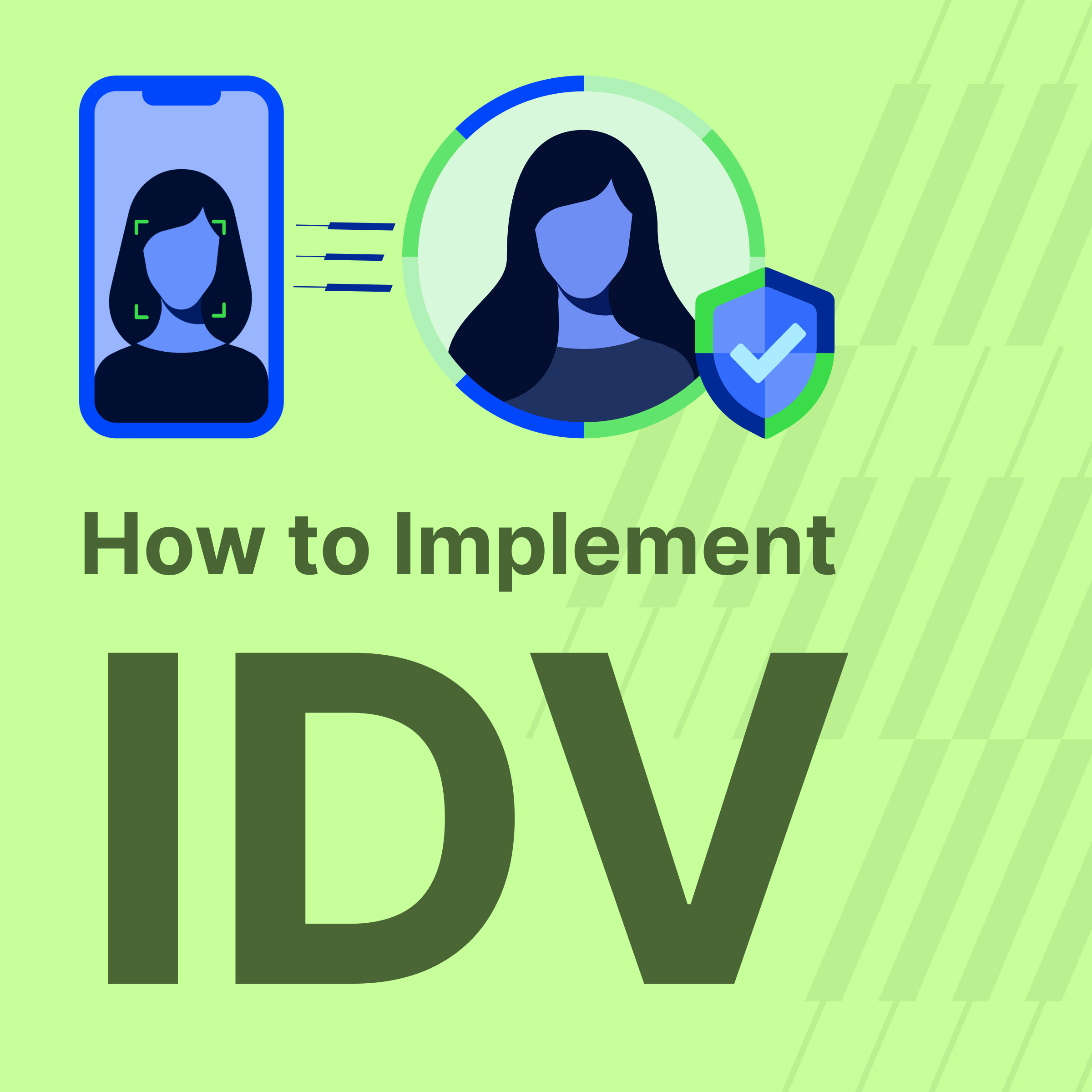
Identify puts a government-issued ID and a live biometric capture in front of the account holder, so the claim being tested is who they are, and no longer whether their post looks plausible. A fraudster working at volume has to defeat that check on every account, which is what kills the economics.
Watch the document itself.
Submitted documents are screened for whether they "appear to be photos of photos or AI-generated images," which catches the reuse of a stolen ID image before it becomes a verified account.
Score risk in the background.
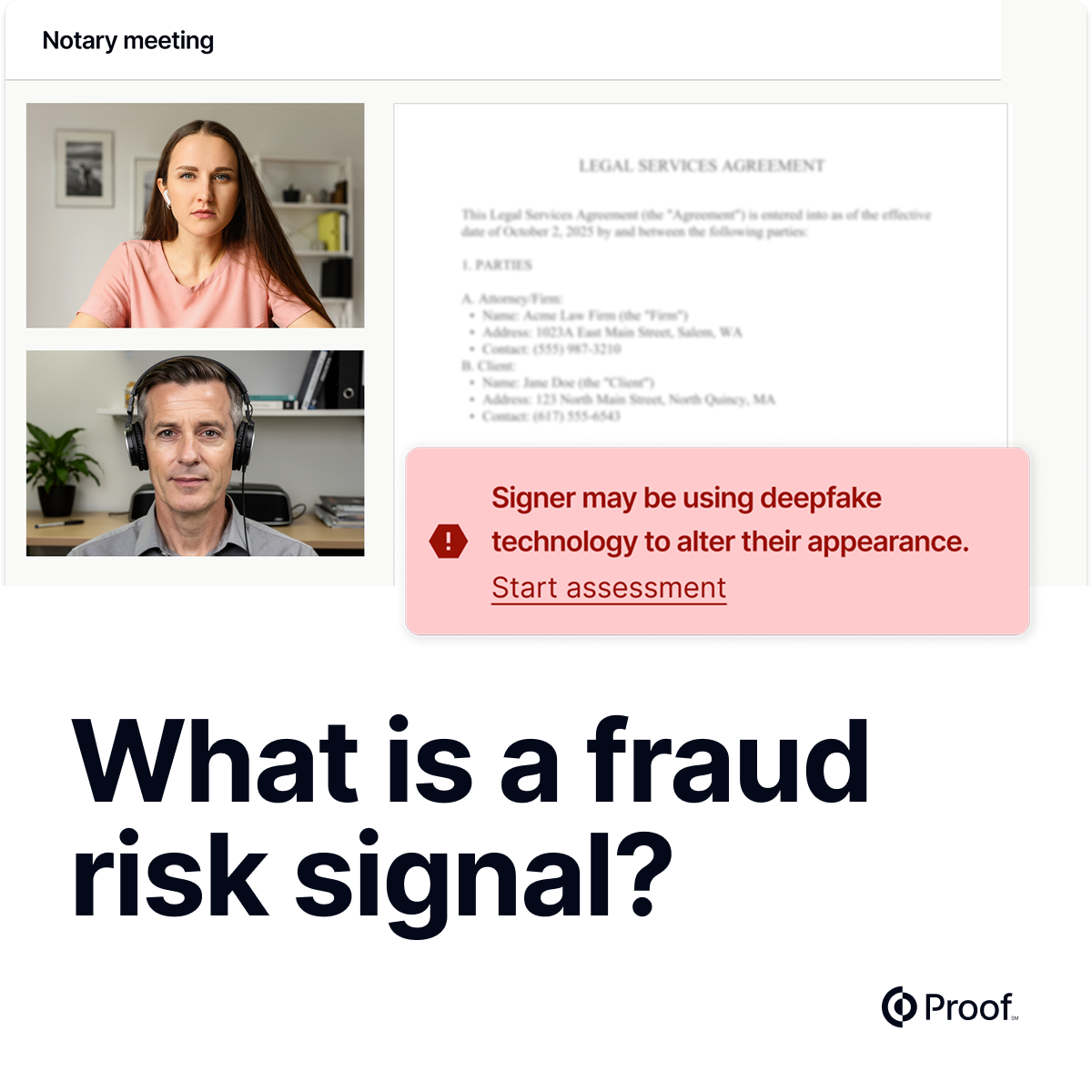
Defend runs behavioral and device signals silently during the transaction, so patterns that no single listing reveals become visible across accounts.
Step up when it matters.
When signals warrant it, the session routes to a human in the loop, and no longer resolves on a score alone.
With Proof, Avail now sees "only about 1% of listings with potential fraud indicators," which the company notes is below the industry average: "Defend helped us identify a fraudulent user and stop several thousand dollars from being lost."
The question to ask
How many of your fraud reports name a listing that turned out to be entirely genuine? If that number is high, your checks are aimed at the half of the transaction that was never the problem.
To learn more about the fraud patterns we see emerging in 2026, check out our field guide.
























.jpg)




































.jpg)