The Fraud Files: When Fraud Went Corporate | October 2026


Agentic AI is expected to cut the cost of running a fraud operation by 90% within two years, according to BCG's June 2026 analysis, triggering a twofold surge in volume at minimum. In the same period, Fraud-as-a-Service platforms gave criminal networks subscription tiers, customer support channels, and the ability to rent SIM cards across 80 countries.
Fraud got cheaper this month.
For years, financial fraud required specialized skill, insider access, or both. October's research makes clear that neither is a prerequisite anymore. The criminal ecosystem has professionalized around the same economic logic as legitimate software: buy what you need, rent what you do not want to build, and scale on demand.
Fraud-as-a-Service gives criminal networks the economics of a software business
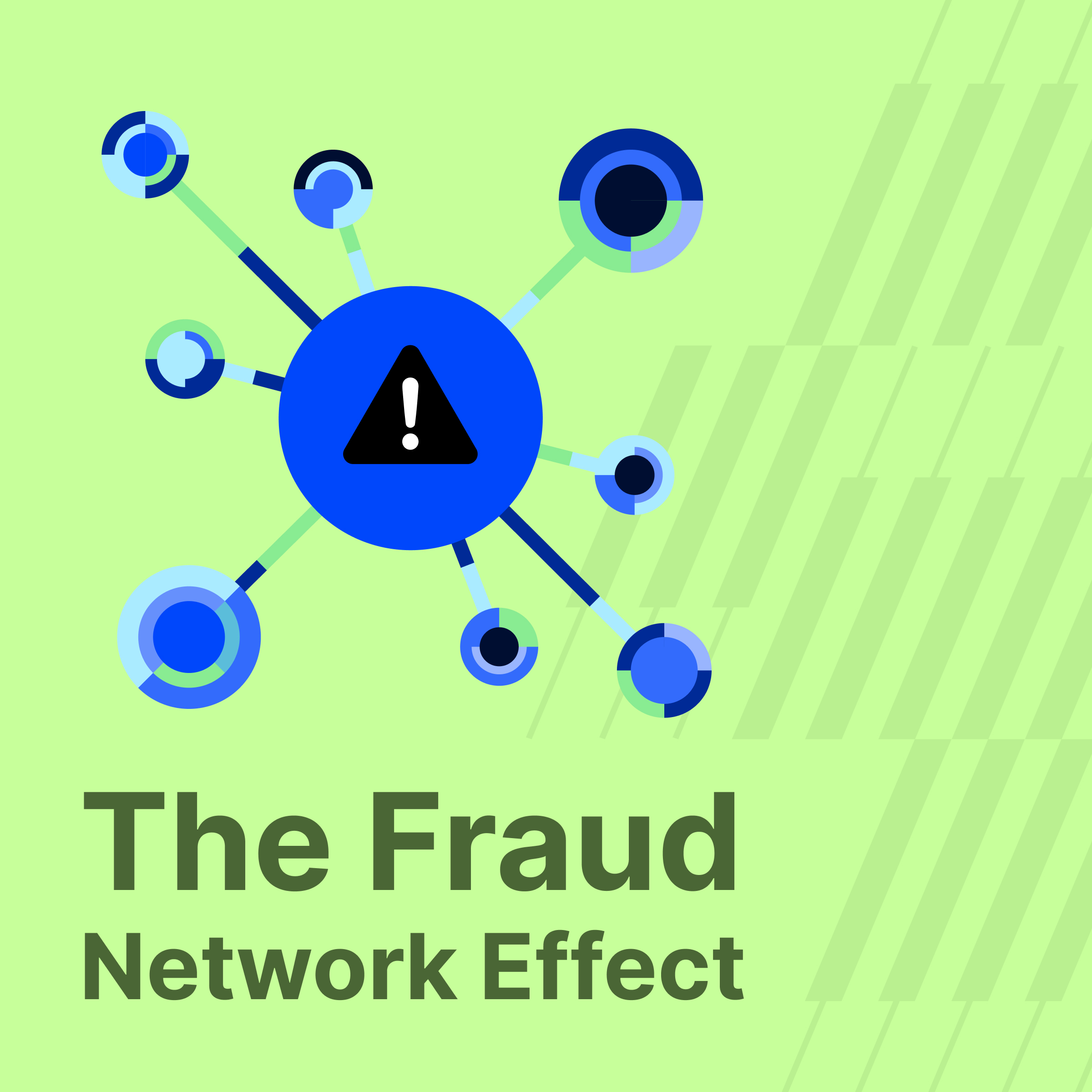
FinTech Global's September 30 analysis of ZIGRAM's research documents how Fraud-as-a-Service has restructured criminal operations. Criminal groups can now purchase data, infrastructure, tools, and specialist expertise rather than developing any capability themselves. The model includes subscription tiers, different pricing levels, customer support, and instructional material. Europol's IOCTA 2025 report found that crime-as-a-service platforms are supplying stolen credentials, data, and fraud tutorials at scale.
The operational implications are specific. A criminal actor can acquire stolen identity data from one service, purchase account-takeover tooling from a second, rent infrastructure from a third, and hire mule recruitment from a fourth, with responsibility for the full operation distributed across participants who each see only their segment. The scale of this model was documented in October 2025, when Europol dismantled a SIM-card rental service operating across roughly 80 countries, linked to more than 49 million fake accounts and thousands of fraud incidents across Europe. Each element of that operation was available as a purchased service.
The financial consequence is measurable. The Nasdaq Verafin 2026 Global Financial Crime Report puts the scale of the global financial crime epidemic at an estimated $4.4 trillion, up $1.3 trillion since 2023. Fraud scams and bank fraud schemes alone account for $579.4 billion in global losses. FATF's 2026 report identifies fraud as a major money laundering risk in 90% of assessed jurisdictions. The same fragmentation that makes FaaS operations difficult to attribute also makes proceeds difficult to trace: a chain stretching from stolen credentials through fraud execution, mule accounts, and crypto on-ramps is visible only in aggregate across institutions that each see one segment.
Agentic AI will compress fraud operating costs by 90% and double the volume
BCG's June 2026 analysis makes the economic argument for why the FaaS trajectory accelerates sharply from here. Generative AI has already lowered fraud costs by enabling synthetic identity creation, voice cloning, and fake document production at scale. The next phase is agentic: once AI systems can run complete fraud campaigns without human intervention, from reconnaissance through ransom demands, BCG estimates that operating costs fall by 90% or more, enabling adversaries to launch a much larger volume of attacks, test a broader range of tactics, and adapt against new defenses at machine speed.
The doubling-or-more volume estimate is the number that matters most for fraud operations teams. Current detection infrastructure is calibrated to current volumes. A 2x surge that arrives gradually is an adjustment problem. A 2x surge that arrives because the attack cost dropped 90% over 24 months is a different kind of problem: it means the economics of fraud shifted faster than the economics of detection.
BCG's recommendation is that banks must deploy AI defensively to detect suspicious activity and help customers exit scams before losses are realized, because waiting for a regulatory mandate to upgrade detection capability will leave institutions operating against a threat that has already moved.
Synthetic identity farms are running 6-to-18-month maturation cycles designed to generate 800+ credit scores
Sardine's analysis of seven agentic attack vectors live in 2026 adds operational specificity to the BCG economics. Synthetic identity farms now use AI agents to manage synthetic profiles through maturation cycles that maintain positive balances for 6 to 18 months to generate high-trust credit signals, often producing scores exceeding 800. Those profiles are then deployed across multiple products simultaneously when the maturation cycle completes.
The architecture of the attack is designed to defeat point-in-time KYC checks specifically. A check at onboarding sees a profile with 18 months of clean history, a strong credit score, and no adverse signals. Every element of that profile was manufactured by an automated system optimizing for exactly those metrics. In Europe, attackers exploit uneven KYC enforcement and IBAN discrimination to move funds across borders with minimal friction. In North America, synthetic identities are increasingly paired with MFA token theft and internal IT impersonation to unlock higher-value accounts once the profile has cleared onboarding.
Sardine's agent swarm analysis describes the detection problem directly: a swarm splits its attack across onboarding, login, payments, and payouts, with each step designed to look minor in isolation. Stopping it requires linking what happens at first signup to what happens at the final payout, across systems and teams that each see one checkpoint. Fraud that is invisible in any single data view but fully visible in aggregate is precisely the class of threat that point-in-time, siloed detection architectures are designed to miss.
For the first time, unauthorized device access surpassed scams as the leading threat for working-age adults
The Identity Theft Resource Center's 2026 Trends in Identity Report documents a shift in the composition of identity crime that reflects the FaaS industrialization above. For the first time, unauthorized device access surpassed scams as the primary threat for adults aged 35 to 64. 25.6% of identity crime victims are now managing two or more concurrent incidents, up from 23.5% in the prior year.
The multi-layered attack pattern the ITRC is measuring is the downstream consequence of the industrialized supply chain. A stolen credential enables account takeover. Account takeover enables new-account fraud under the victim's identity. New-account fraud enables synthetic identity construction using the victim's real attributes blended with fabricated data. Each layer is a separate incident in a compliance system that categorizes events by type rather than by connected actor. The victim experiencing two or more concurrent incidents is experiencing the output of a single supply chain that purchased data at one end and is monetizing it in parallel streams at the other.
The ITRC finding also documents a timing dimension: victims are frequently unaware that multiple fraud types are running simultaneously because each incident routes through a different institution, triggers a different response team, and produces a different notification. The intelligence connecting them is absent from any single system.
The economics argue for a different identity model
These signals describe one economic system. FaaS gave criminal networks the operating model of a software business. Agentic AI is about to cut the operating costs of that business by 90%. Synthetic identity farms are already running 18-month manufacturing cycles designed to defeat KYC at the point of check. Agent swarms split attacks across systems specifically to defeat siloed detection. And working-age adults are increasingly experiencing multiple concurrent identity crime incidents because the supply chain that originates them is running parallel monetization streams.
The architecture this attack economy targets is centralized identity verification: a vendor checks a document against a template, issues a pass or fail, and stores the result. The FaaS ecosystem operates by manufacturing the inputs to that check. Eighteen months of synthetic credit history, an 800+ score, a document that passes the template comparison: each element is a purchasable input, and the check has no mechanism to distinguish manufactured from real.
Cryptographic identity operates at the layer these attacks are designed to skip
The FaaS supply chain is built around one assumption: that identity is a collection of data points that can be acquired, assembled, and presented. Real SSNs, manufactured credit histories, deepfaked biometrics, synthetic profiles cultivated for 18 months — every element is a purchasable input to a system that checks data against data.
Cryptographic identity breaks that assumption. With Proof, a credential is bound to the key of a real, verified person. It travels with them, proves they authorized a specific action, and cannot be assembled from purchased inputs or manufactured through a maturation cycle. There is nothing in the FaaS catalog that produces it, because it requires the actual person.
BCG frames the threat as an economics problem: fraud gets 90% cheaper, so volume doubles or more. The response at the identity layer is to make manufactured identity economically worthless. When a credential requires the actual person, 18 months of synthetic credit history produces nothing useful at verification. The FaaS investment has no return against an identity that cannot be sourced from the catalog.

















































.jpg)






















































.jpg)