Cryptographic Identity Infrastructure
The missing layer between authentication and authorization
Authentication confirms you have a credential; cryptographic identity confirms you are who you say you are. Most vendors stop there.
Proof builds the infrastructure for what comes next.
Why authentication alone isn’t enough
Authentication answers one question: does this person have the right credential? At account recovery, workforce onboarding, and high-stakes financial authorization, the credential is gone, compromised, or not yet issued, leaving a question most identity stacks were never built to answer: is this person actually who they claim to be? Proof builds the infrastructure that does.
32%
Of all breaches involve stolen credentials
Verizon 2025 Data Breach Investigations Report
$4.44M
Average global cost of a data breach in 2025
IBM Cost of a Data Breach Report 2025
$10.22M
Average cost of a data breach in the United States
IBM Cost of a Data Breach Report 2025
Most vendors run a check. Proof issues a credential.
A check answers a question at a single moment and expires when circumstances change. It cannot be referenced by other systems without re-running the underlying verification, carries no cryptographic weight, and provides no formal basis for a downstream authorization or regulatory inquiry.
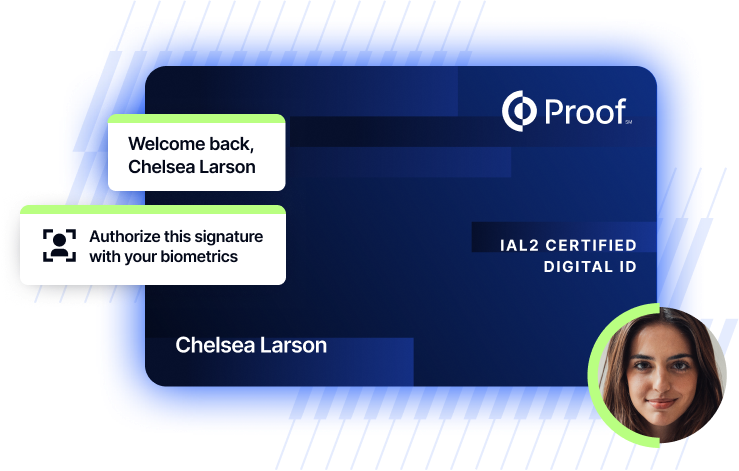
A credential is categorically different: a digitally signed, tamper-evident record that persists, is independently verifiable by any party at any future time, and carries the formal weight of the certificate authority that issued it.
Proof is a WebTrust-audited certificate authority and listed on the Adobe Approved Trust List (AATL): two separate trust hierarchies, both independently audited, governing HTTPS certificate authorities and legally binding digital signatures respectively.
Four layers. One tamper-evident record.

01
Confirm the person
Government-issued ID validation and liveness detection, grounded in who shows up, not just what they claim.
Explore Identify
02
Resolve every edge case
Flagged sessions go to trained human reviewers, so nothing defaults to approval or rejection by algorithm.
Explore Verify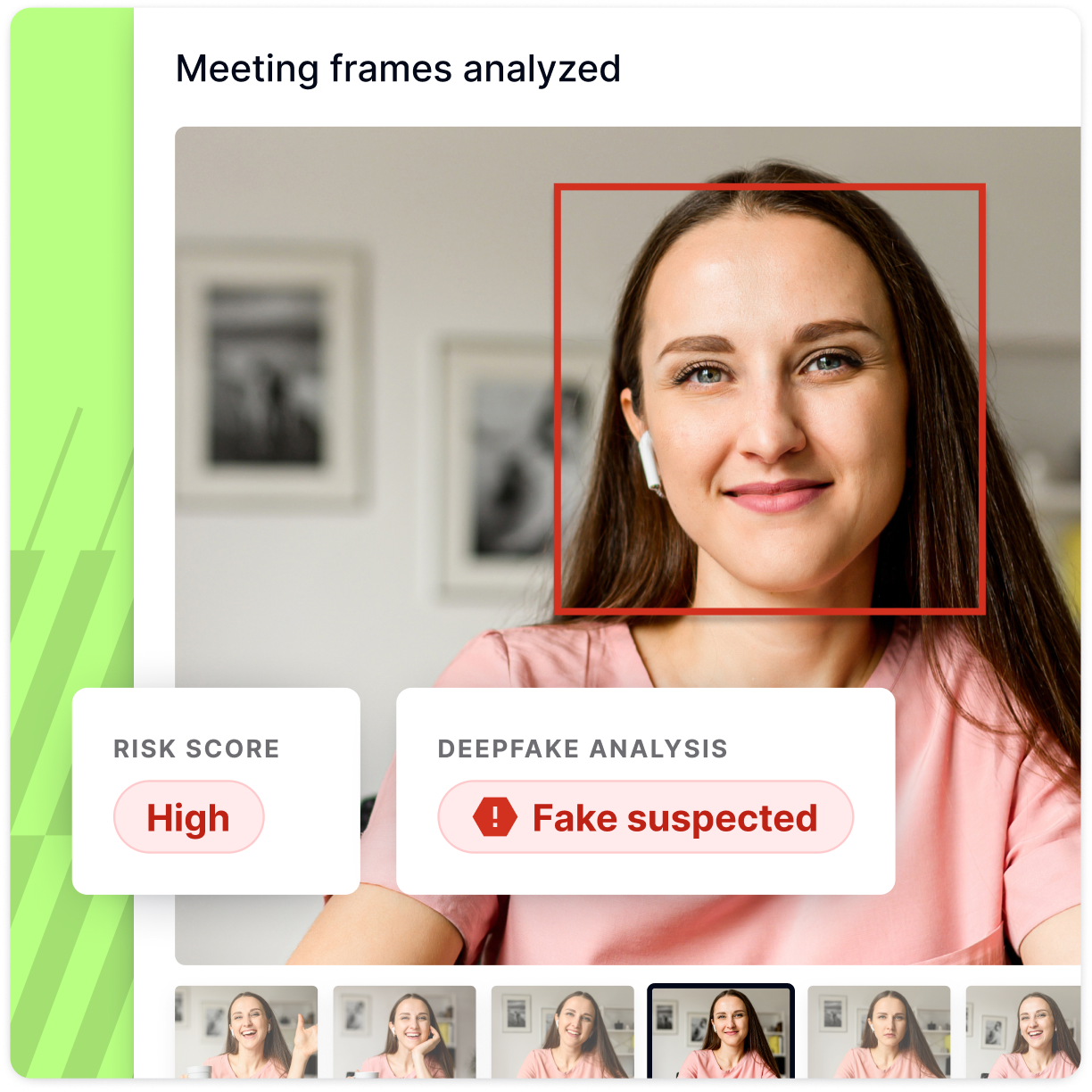
03
Screen for fraud
Every verification runs through 400+ network signals via OmniTrust, so each credential is backed by a real fraud assessment.
Explore Defend
04
Issue the credential
A cryptographically signed, tamper-evident record produced at every verification, independently verifiable by any party, any time.
Explore CertifyBuilt for the moments authentication doesn’t handle
Cryptographic identity infrastructure is the foundation beneath every moment where enterprise access carries real risk, across workforce identity and high-stakes financial authorization.
Enterprise Identity
From hire to offboard, every identity decision is made with proof.
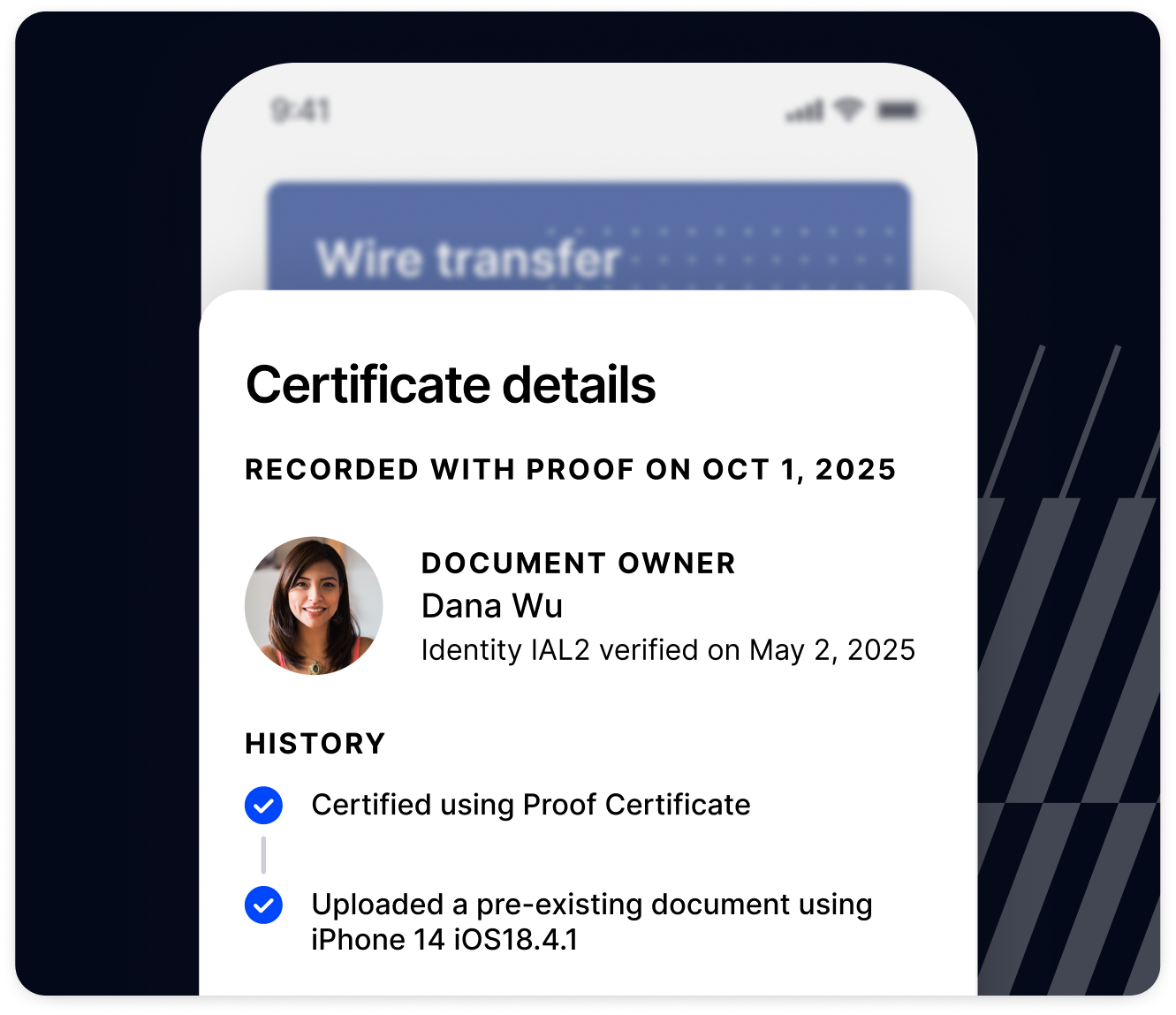
Workforce identity spans the full employee lifecycle: verifying candidates before day one, securing account recovery, and revoking access at offboard. Cryptographic identity infrastructure makes each decision verifiable, auditable, and tamper-evident.
Read the e-book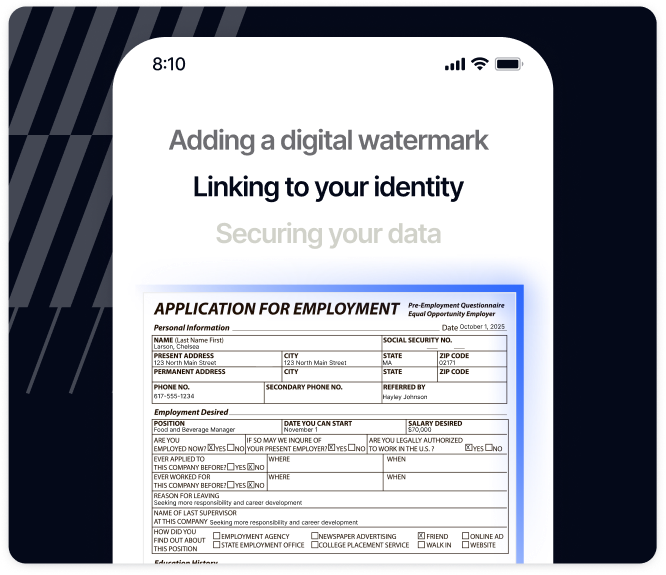
Agentic Identity
Verify the person who authorized the transaction, beyond the session token.
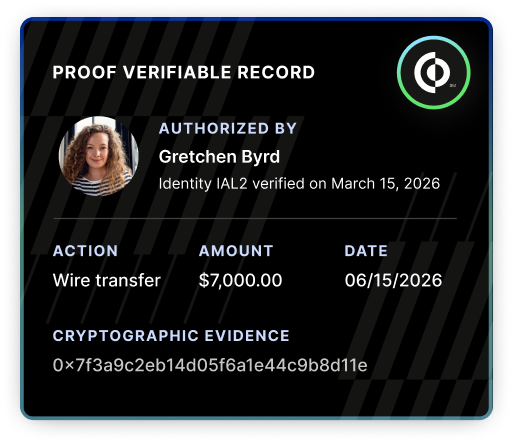
Wire transfers, account authorizations, and significant fund movements require more than a credential check: they require proof that a verified human initiated the action. Cryptographic identity infrastructure provides that layer, so the identity behind the transaction is as verifiable as the transaction itself.
Get Liminal’s perspective