Anatomy of a Fraud Attempt: The Signer Who Changed Computers Mid-Session


A signer joined a $195,000 transaction on a laptop. Partway through, the device changed. The signer was now on a different desktop, one with high-end graphics hardware. The email domain on the account was new. The connection came through a residential VPN.
None of those is suspicious alone. People switch devices. New email addresses are ordinary. Plenty of legitimate people use a VPN.
Key takeaways
- A deepfake attempt rarely presents as an obviously wrong face. It presents as a cluster of unremarkable details arriving together.
- The identity document is often genuine, which is why document checks pass.
- Running a face swap in real time locally needs a capable GPU, which is why a mid-session hardware change on a high-value transaction is worth a hard look.
- Scoring frames continuously through the session, well past the moment of capture, is what catches it.
How the scheme works
- Acquire a real identity. Stolen credentials and document images circulate freely. The strongest version of this attack uses a genuine document belonging to a real person, because a genuine document passes a document check.
- Build the face. The document photo becomes the reference for a swap that can be rendered live.
- Assemble the setup. Real-time swapping run locally needs a capable machine, plus a way to present the synthetic feed to the verification session as though it were a camera. The World Economic Forum's January 2026 analysis evaluated 17 face-swapping tools, finding genuine real-time capability in five, with only three offering injection paths suitable for live verification flows. Of eight camera injection tools evaluated, three were free and five were commercial at roughly $10 to $3,000.
- Pick a transaction worth the setup. This tooling is not deployed against a low-value account. It is aimed at a single moment large enough to justify the effort.
- Enter the session and present the face. The document is genuine. The face matches the document, because it is the document's face. A liveness check sees motion and responsiveness.
- Execute before anyone reconciles the details.
Why it gets past normal checks
Each layer, taken alone, returns a pass.
Document validation passes because the document is real. Face match passes because the face was built from that document. Liveness sees a responsive human because a live human is driving the swap in real time.
What does not pass is the context around the session. A machine change mid-flow, a fresh email domain, and a residential VPN arriving together at the exact moment a six-figure transaction needs a face on camera is a set of ordinary facts that only line up one way.
INTERPOL's 2026 threat assessment notes that "Deepfake-as-a-Service has been identified in Dark Web marketplaces which offer 'synthetic identity kits,' complete with AI-generated video avatars, voice clones, and biometric data at affordable prices," and reports that AI-enabled fraud schemes are estimated to be about 4.5 times more profitable than conventional ones.
How Proof disrupts the fraud scheme
Score the whole session, well past the moment of capture.
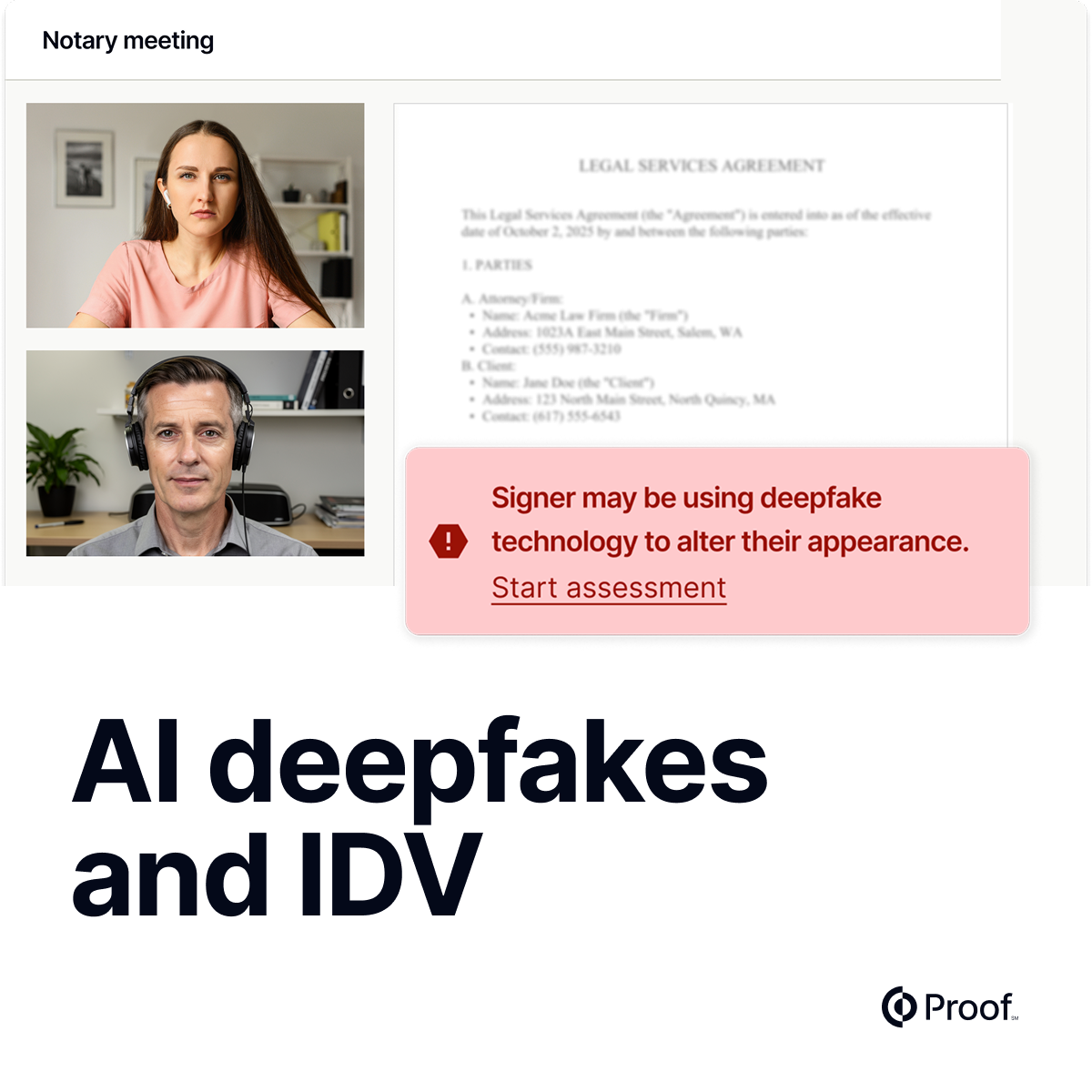
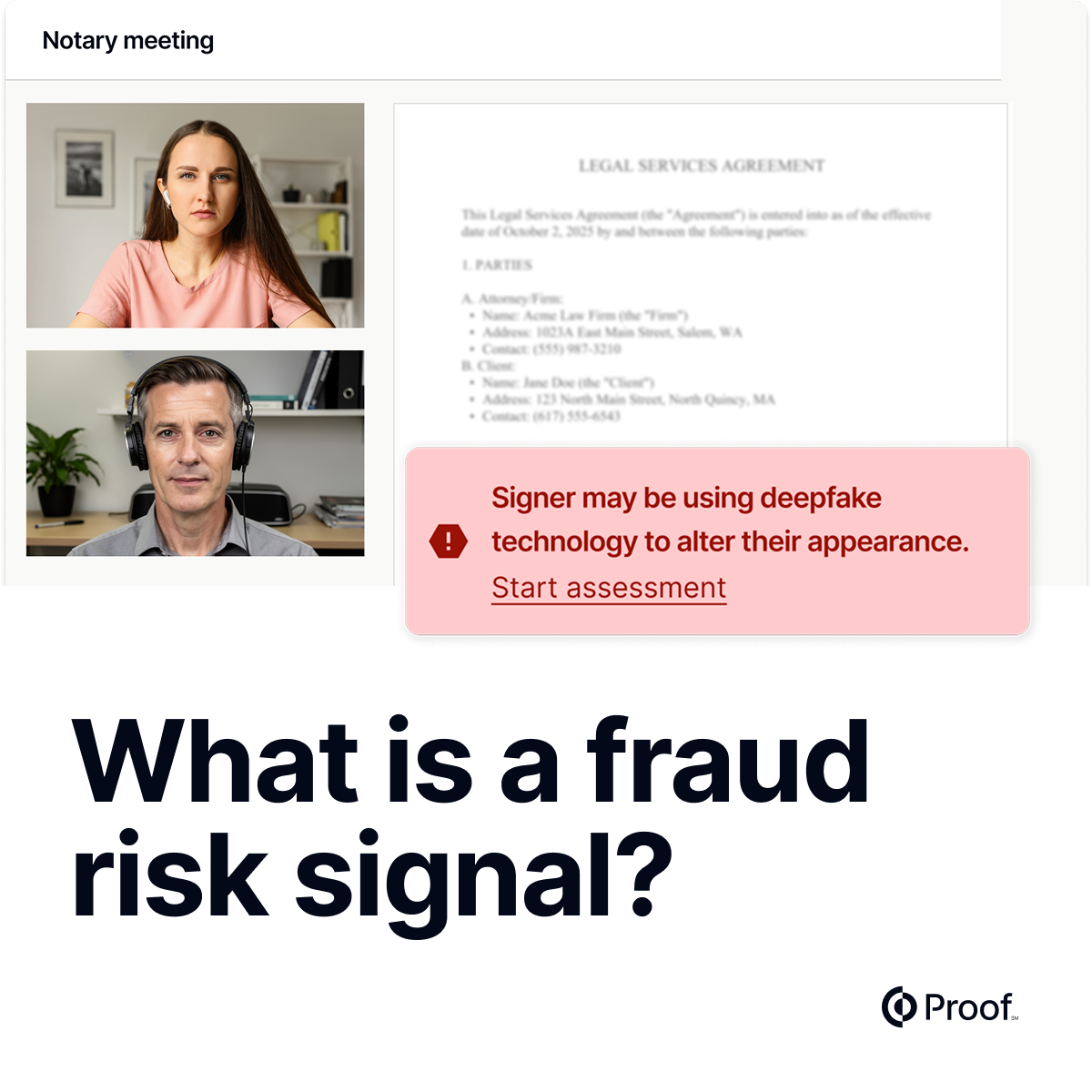
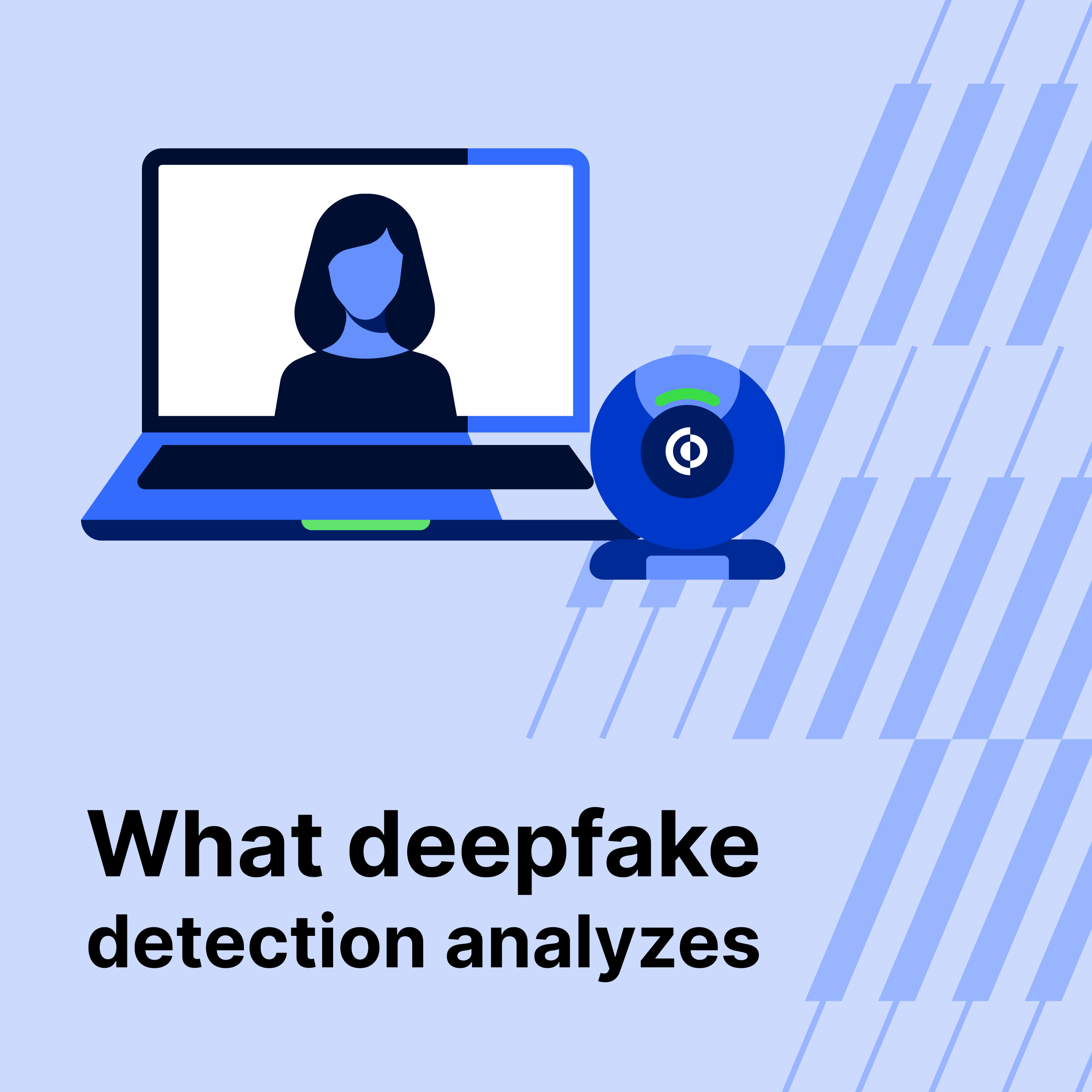
Defend analyzes video frames continuously through the notarization session for deepfake signals and alerts the notary before the document is executed. An attack that survives the first three seconds still has to survive the next ten minutes.
Read the session as well as the face.
Device intelligence, location data, email age, and behavioral signals run alongside the biometric check. The hardware change, the new domain, and the proxy are individually unremarkable and collectively decisive, which only works if the signals are evaluated together.
Put a person in the path of the largest transactions.
A trained agent on the session is the layer synthetic media is worst against, and it is the right economics precisely where the attacker has invested most.
The question to ask
Are your signals evaluated together, or one after another? Every attempt above was caught on a combination, and no individual signal would have justified stopping the transaction on its own.
To learn more about the fraud patterns we see emerging in 2026, check out our field guide.