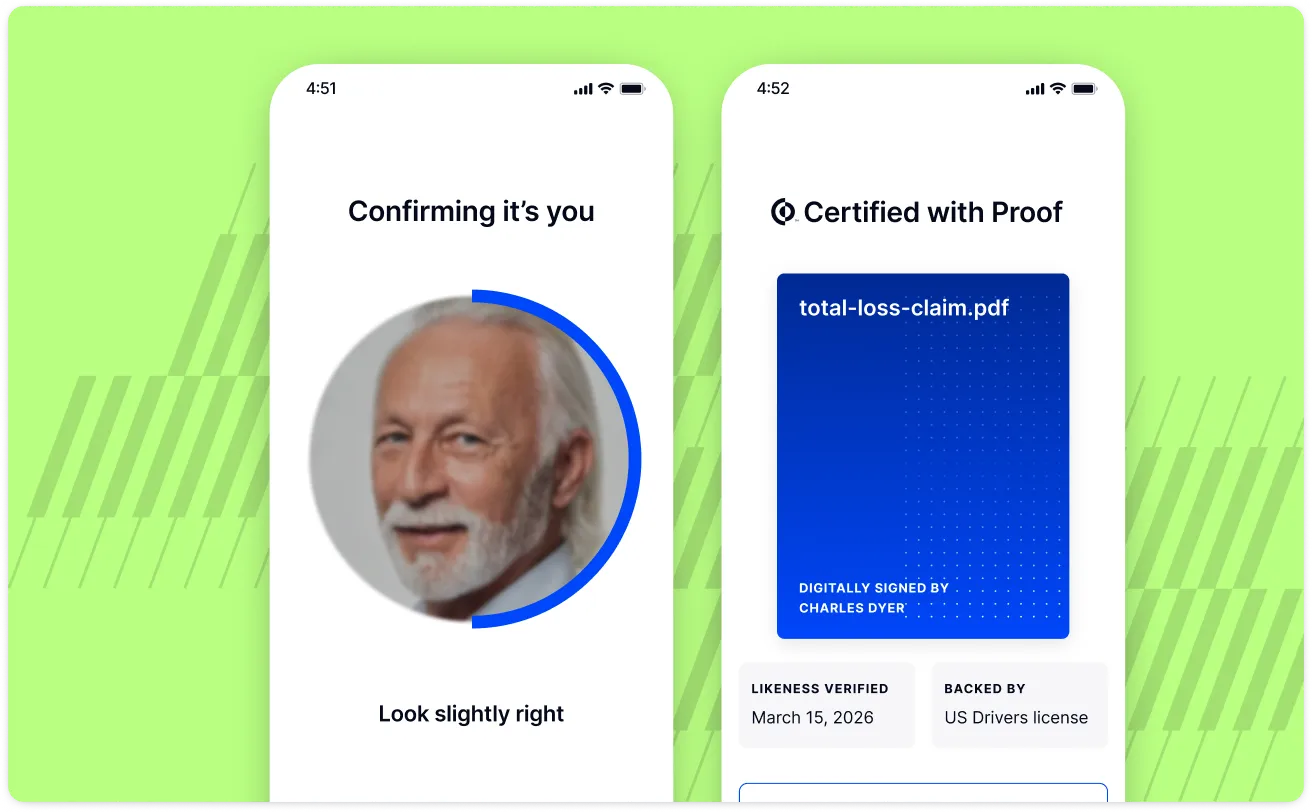
When a customer or agent acts, prove a real person approved it.
AI can fake a face, a voice or a document in minutes, and now AI agents act on people’s behalf every second. Proof gives every action a verifiable record of who authorized it and what they approved.
What is a verifiable record?
Every day, billions of contracts, payments, approvals, and data payloads move between people, businesses, and AI agents. Most carry no proof of who created them, whether that person agreed to them, or whether anything changed along the way. When something goes wrong, you're left arguing over a screenshot and an AI chat history.
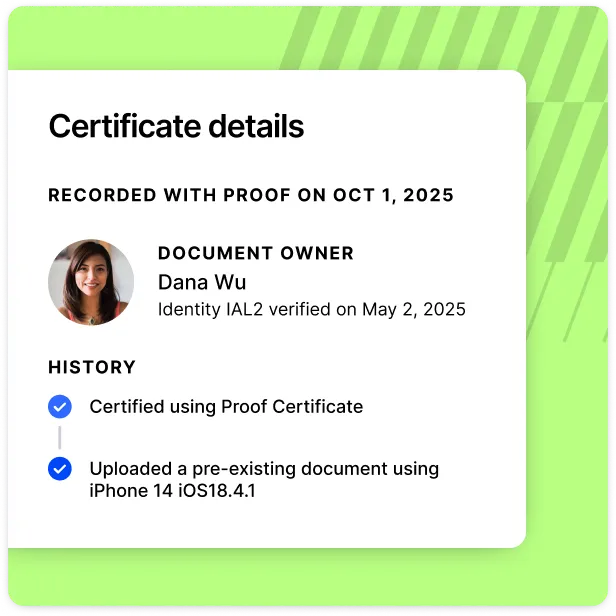
A verifiable record is cryptographically signed data you can check on receipt, keep, and produce later.
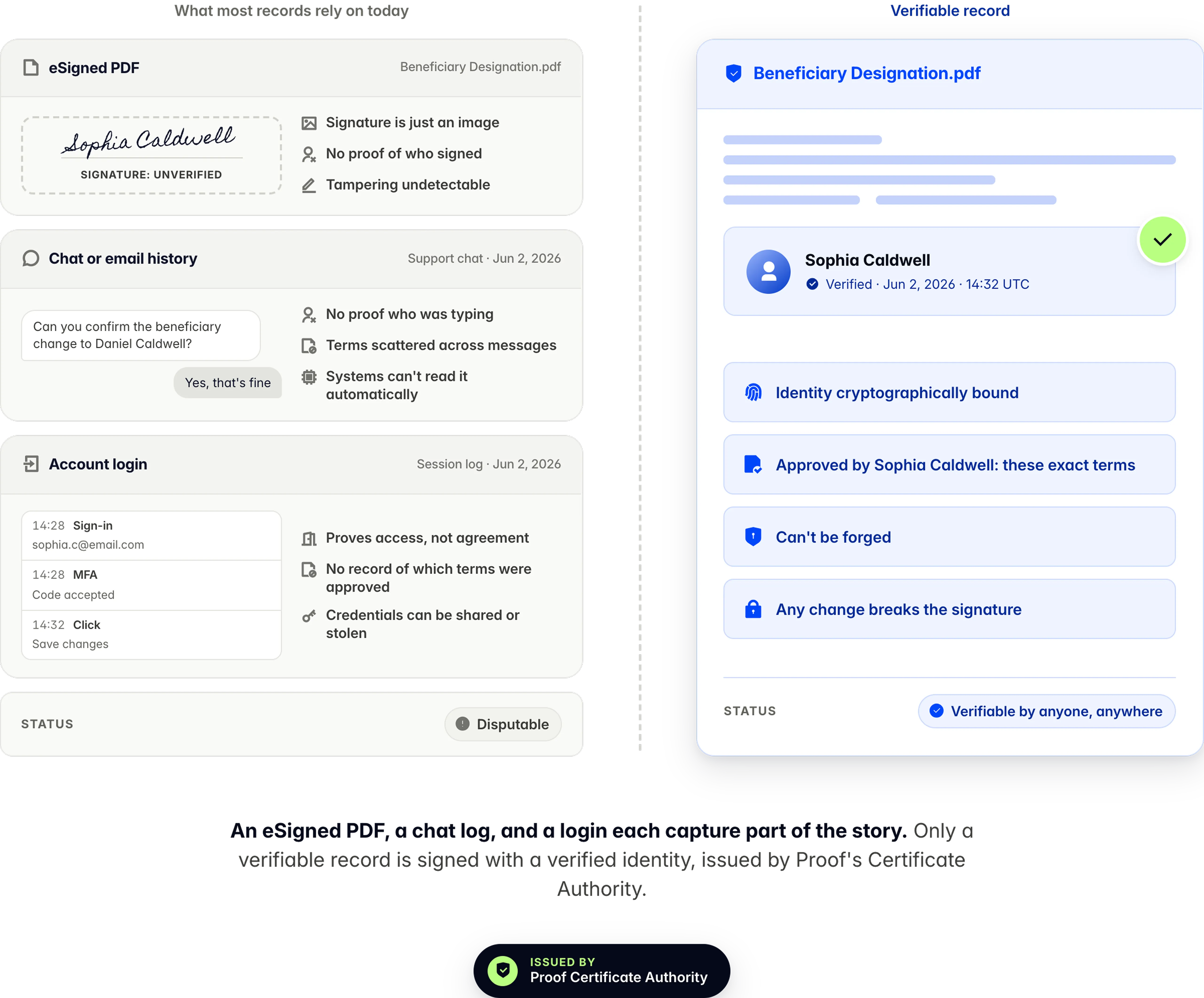
What a verifiable record proves
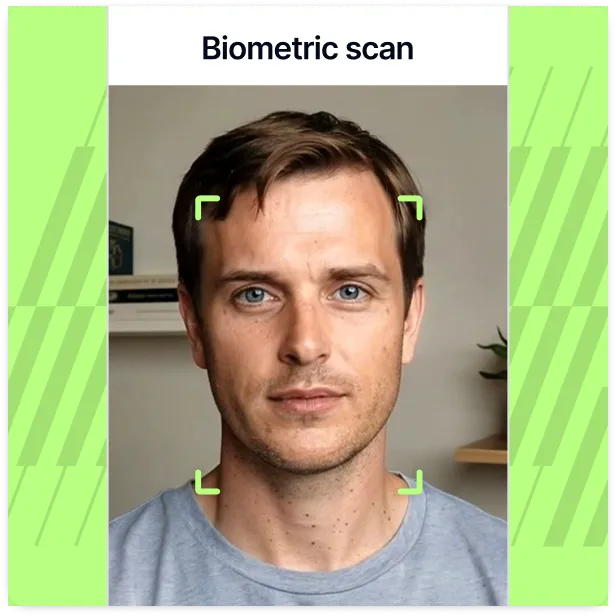
A real, verified person or organization
The record is tied to an identity confirmed through government ID, biometrics, or a live video session. Not an email address, not a password, not a phone number.
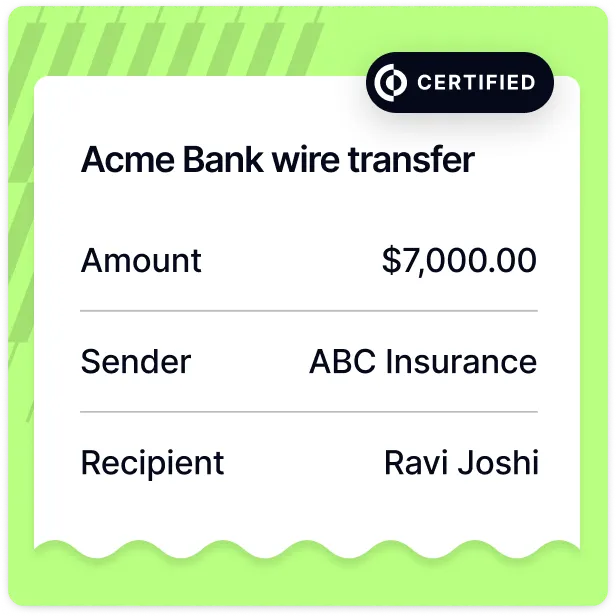
The exact action, amount or terms
The signature is bound to the specific content approved: this document, this payment, this recipient. Approval for one thing can't be reused for another.
.webp)
Any edit breaks the signature
Change a single character after signing and the record fails verification. Tampering isn't hidden. It's obvious.
Checkable anywhere by a person, system or agent
Anyone who receives the record can check it on their own, without calling Proof. It works across companies, platforms, and borders.
%201.webp)
Verifiable records start with verified identity
- Verify the person — Proof confirms who someone is with government ID, biometrics, or a live video session, to the assurance level the transaction requires.
- Issue the credential — Proof's Certificate Authority issues a cryptographic credential bound to that verified identity. The private key stays with the person. Proof never holds it.
- Sign the exact action - When the person approves something, their credential signs exactly what they approved: the document, the amount, the recipient, the terms. The result is a verifiable record, plus a human-readable receipt for your files.
- Anyone can verify — Whoever receives the record checks the signature against Proof's Certificate Authority. No account, no integration, no phone call. Signed PDFs show a green checkmark in Adobe.
Verifiable records apply everywhere a record needs to be trusted.

AI agents and agentic commerce
When an AI agent acts on someone's behalf, the business on the other end needs more than a recognized agent. It needs proof that a verified person approved this specific action, within these specific limits. A verifiable record is that proof, and it travels with the agent's request.

Payments and wire transfers
In a store, the chip on a card proves the card is present. Online, nothing proves the person is. For a wire, the record shows the amount, the beneficiary and the verified person who approved it. A verifiable record attached to a payment gives issuers a high-assurance signal that the verified human approved it, which reduces fraud.

Documents and eSignatures
An eSignature shows that someone clicked a button. A verifiable record shows who signed, that they were who they claimed to be, and that the document hasn't changed since.

Crypto and stablecoins
As more value moves over crypto rails, a signed identity record attached to a wallet helps satisfy Travel Rule requirements and makes every party on a transfer accountable.

Account changes and recovery
Most account changes like a new phone number, address, or password are approved with a one-time code sent by text. A verifiable record ties each change to a verified person, so a stolen phone number can’t quietly take over an account.

Claims, photos, and evidence
AI can generate a dented bumper, a flooded basement, or a fake receipt in seconds. When insurance claim photos and documents are signed at capture by a verified person, adjusters can tell real evidence from edited evidence before they pay.
The only identity platform with its own Certificate Authority
Because Proof issues the credentials itself, there’s no third party in the chain of trust.This means that when Proof signs a record, the chain of trust runs directly through Proof's infrastructure.
Whether you're certifying a document, a payment payload, structured data, or a media file, Certify makes it verifiable.