Anatomy of a Fraud Attempt: Five Tries, Each Deepfake Better Than the Last

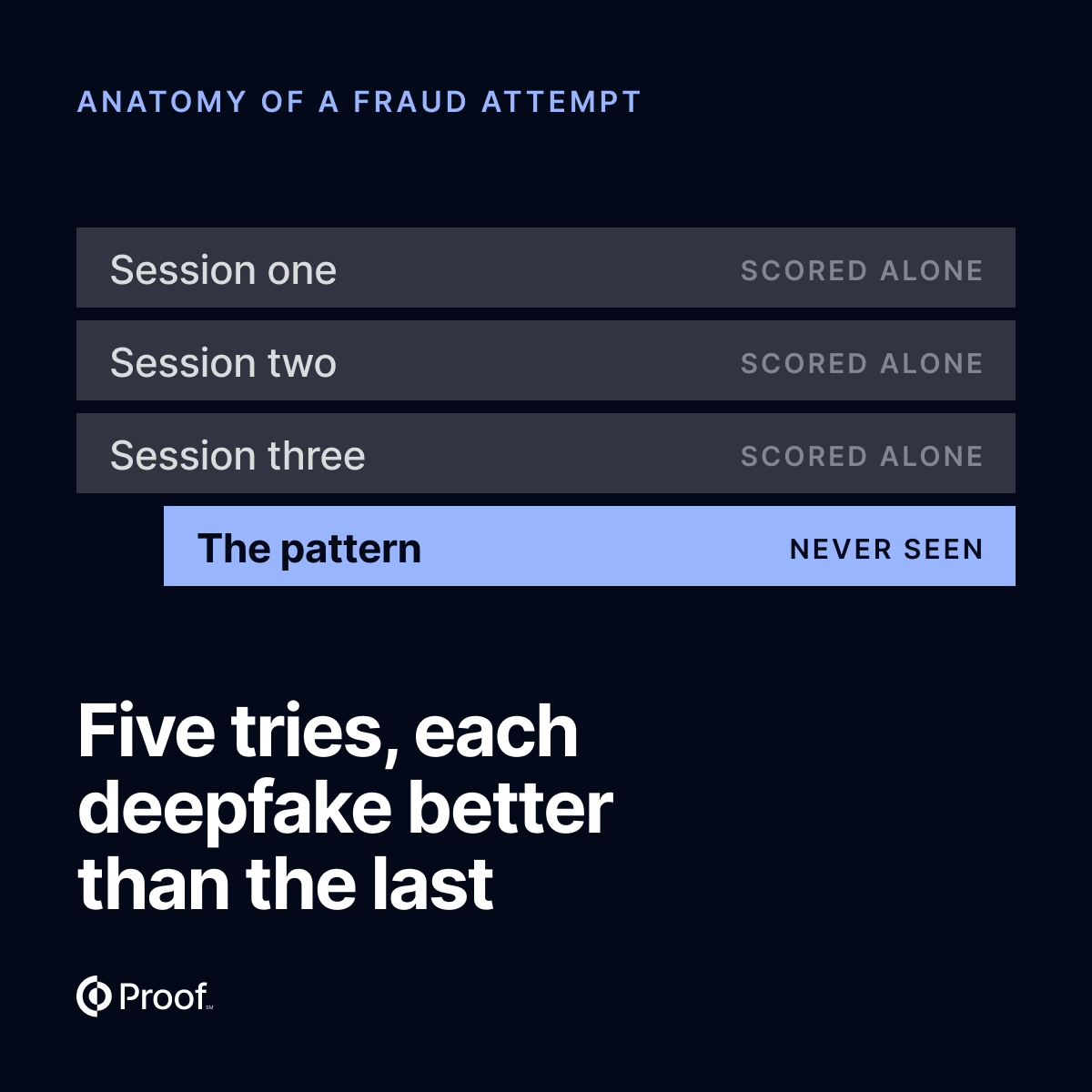
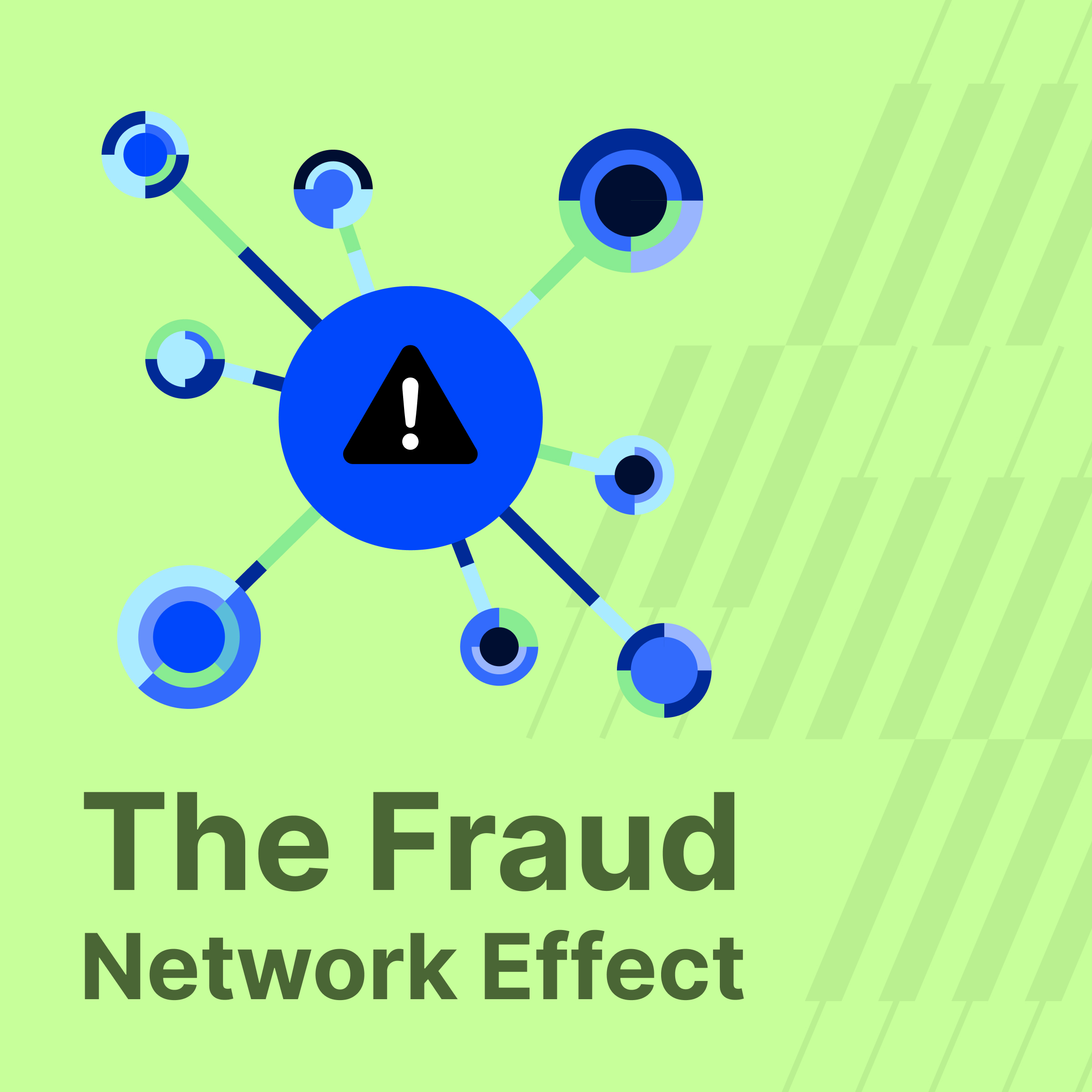
A $74,000 cash-out attempt failed. Then it came back. Five times in total, from a different country behind a proxy on each attempt, and the deepfake was visibly better every time.
No single one of those sessions was conclusive on its own. What gave it away was that there were five of them.
Key takeaways
- Fraud at this level is iterative. A failed attempt is reconnaissance, and the next one is built from what the last one learned.
- Detection tuned to a single session will keep scoring each attempt on its merits and keep missing the campaign.
- Correlating attempts across sessions, devices, and geographies is what surfaces this pattern.
How the scheme works
- Probe once and watch what happens. The first attempt is cheap. What matters is which check rejected it and how fast.
- Improve the artifact. Each failure is feedback. Lighting, frame rate, and the quality of the synthetic face all get tuned against a live target that reports back with every rejection.
- Change the surroundings every time. New country, new proxy, new session. Anything that would let a defender connect attempt four to attempt one gets rotated.
- Keep the target constant. The transaction and the identity stay the same, because that is the payday. Everything else is disposable.
- Run until something passes. The attacker only needs one success, and each attempt costs a fraction of what the transaction is worth.
Why it gets past normal checks
Most verification is built to answer one question: is this session legitimate? That framing is correct for the ordinary case and useless here.
Scored individually, attempt three looks like a slightly better version of an unremarkable failure. Attempt five may look clean enough to pass. Nothing in a single-session model is designed to notice that the same transaction has been approached five times by an identity that keeps arriving from a different continent.
The economics favor repetition. INTERPOL's 2026 threat assessment reports that AI-enabled fraud schemes are estimated to be about 4.5 times more profitable than conventional ones, and describes dark web "synthetic identity kits" sold "complete with AI-generated video avatars, voice clones, and biometric data at affordable prices." When the tooling is that cheap and the target is fixed, iteration is the rational strategy.
How Proof disrupts the fraud scheme
Correlate across attempts as well as within them.
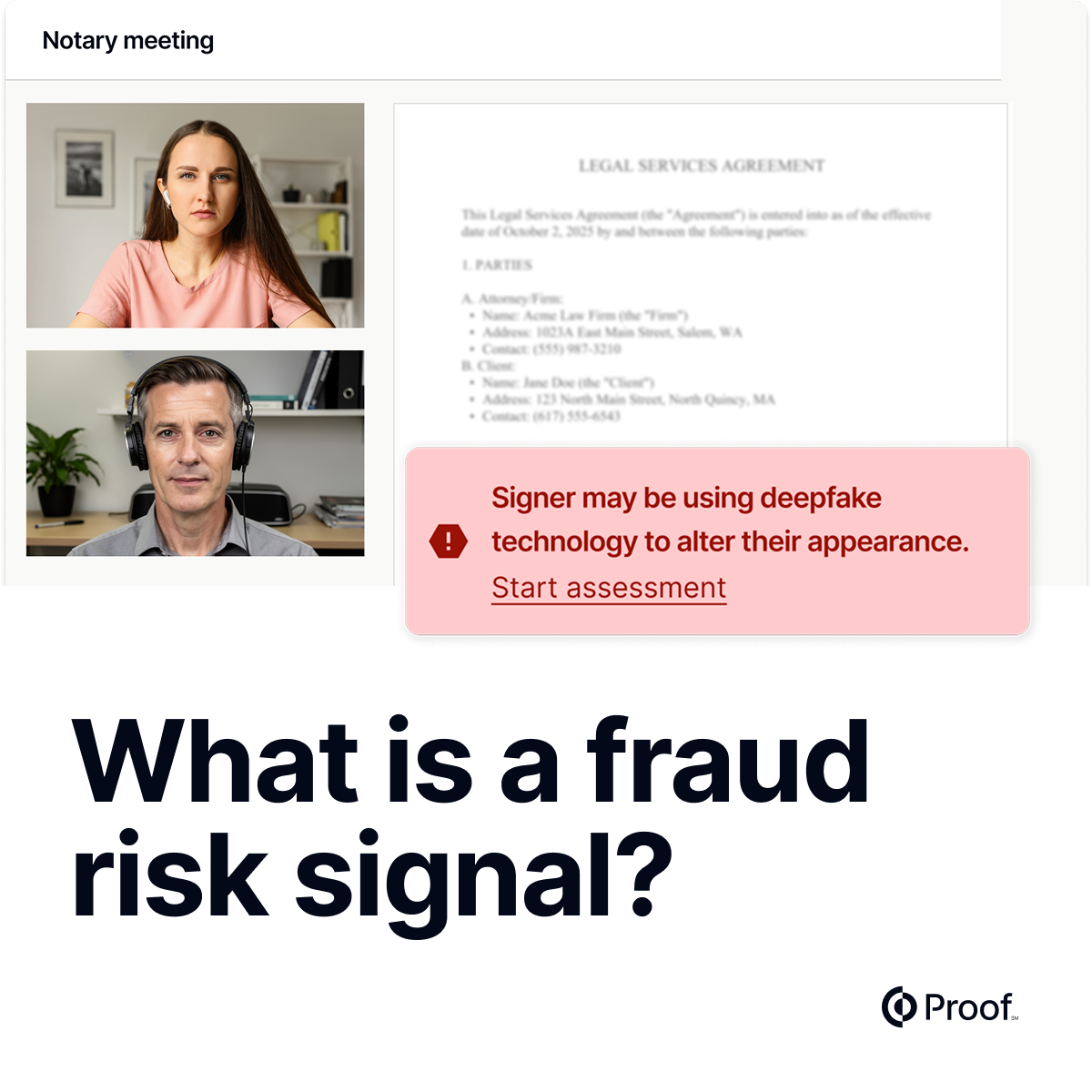
Defend carries risk signals across sessions, so repetition against a single transaction becomes a signal in its own right. That is the layer that caught this one.
Treat geography and device rotation as information.
A legitimate signer who fails a check tries again from the same place on the same machine. Rotation is a tell, and reading it requires holding the earlier attempts.
Score every frame, every time.
Continuous deepfake scoring through the session means an artifact that improved since the last attempt still has to hold up for the length of a live meeting, well beyond a single capture.
Escalate on pattern as well as score.
When the signal is a campaign spread across sessions, a trained agent on the call is the layer that resolves it.
The question to ask
If the same transaction were attempted five times from five countries, would your system see one pattern or five unrelated sessions? Ask whether your fraud signals persist across attempts or reset with each one.
To learn more about the fraud patterns we see emerging in 2026, check out our field guide.