Anatomy of a Fraud Attempt: The Students Who Never Existed

Community colleges exist to make enrollment easy. Open admissions, a streamlined application, and in many cases an automatic decision. The same design that opens the door to a returning adult learner opens it to someone applying with a stolen identity to collect financial aid.
Key takeaways
- The identities are usually real and stolen, which is why fraudulent applications look like ordinary ones.
- Federal policy changed in 2025, and institutions were pulled into verification requirements they were not built for.
- Yavapai College moved the check ahead of enrollment, so an applicant who fails never reaches the system of record.
How the scheme works
- Target institutions with open admissions and online programs. FinCEN's July 2026 alert, issued with the ED Office of Inspector General and the FBI, notes fraudsters "often exploit educational institutions that offer open admissions and online programs."
- Apply with a stolen identity. FinCEN defines the term directly: "ghost students refers to stolen identities used for the purpose of enrolling at an educational institution." The same identities frequently appear across multiple institutions.
- Enroll and stay enrolled just long enough. The application is automatic or lightly reviewed, and enrollment is what unlocks aid eligibility.
- Collect the disbursement. Aid covers institutional charges first, and the refund portion is the target.
- Disappear, leaving a seat that a real student could have taken and a file the institution has to unwind.
FinCEN also notes fraudsters "may use artificial intelligence (AI) or other tools to overcome identity verification by generating fraudulent documents that combine stolen PII with fabricated details."
Why it gets past normal checks
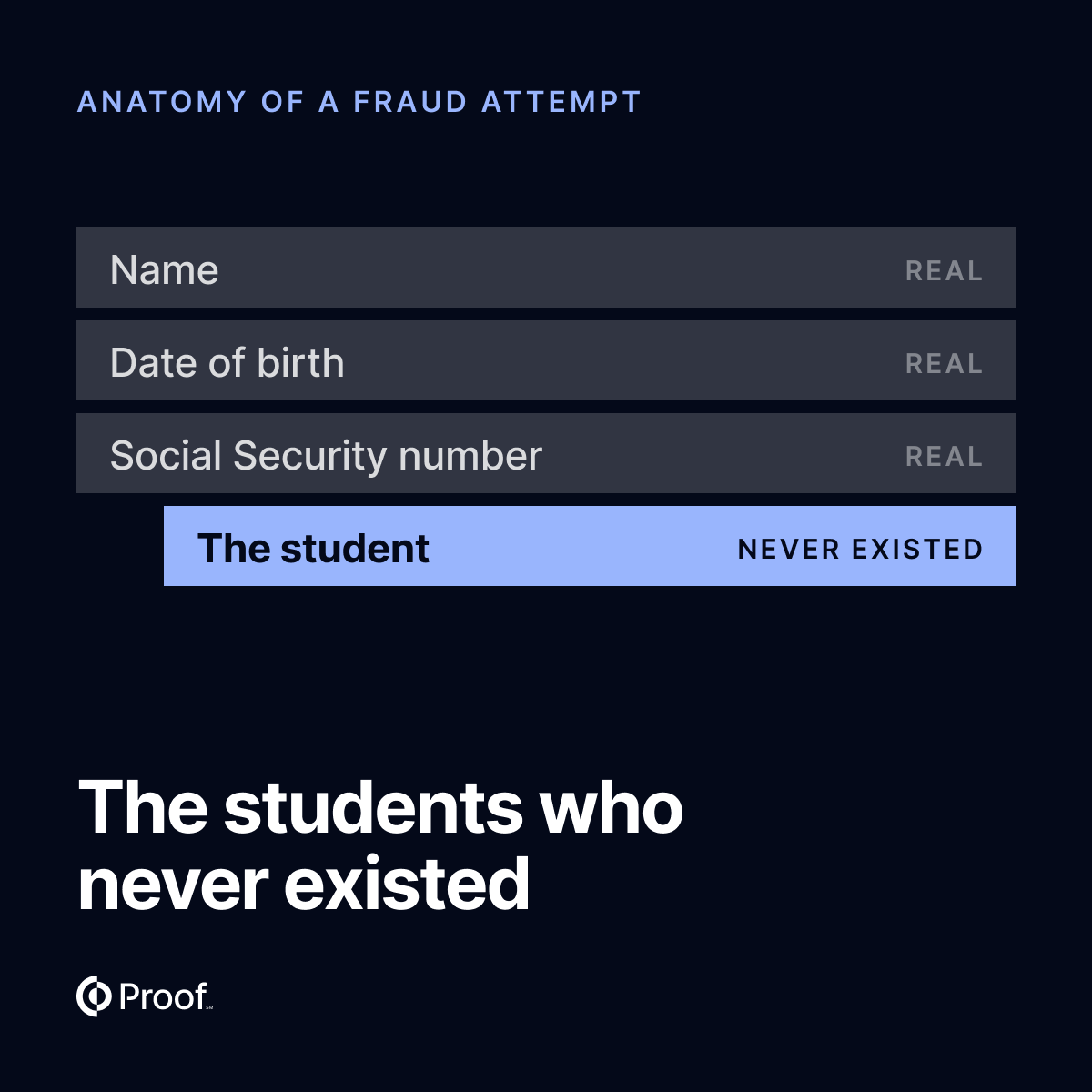
The identity is real. That is the whole difficulty.
Verification built to confirm that a name, date of birth, and Social Security number belong together returns a pass, because they do. They belong to a real person who has no idea their details are enrolled somewhere.
Detection models help and do not finish the job. Yavapai College's CIO Patrick Burns described AI-based screening as useful and incomplete: "IAL2 ID verification checks are a necessary add-on to ensure the applicant is a valid student."
The pressure is also now external. The Department of Education's Federal Student Aid office stated in June 2025 that "the rate of fraud through stolen identities has reached a level that imperils the federal student aid programs," and expected roughly 125,000 students to require identity validation that summer alone. The same announcement named NIST IAL2 as an accepted standard for verifying a student's identity.
How Proof disrupts the fraud scheme
Verify before the record exists.
Yavapai runs an IAL2 check at admissions. An applicant who does not pass never enters the college's ERP, which stops the identity before it becomes an enrolled student with an aid file, and long before anyone would be flagging it afterward.
Check the person, and stop checking only the paperwork.
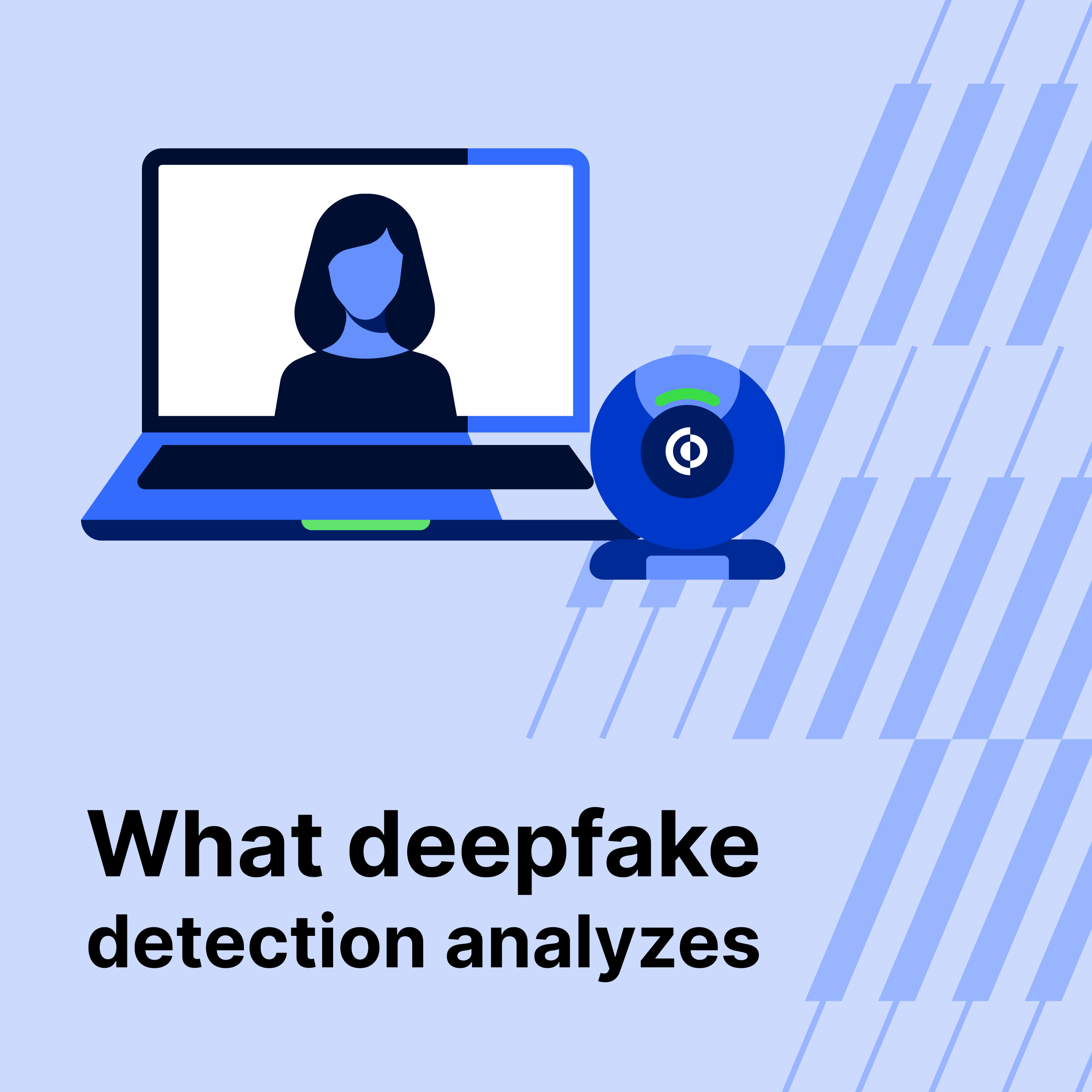
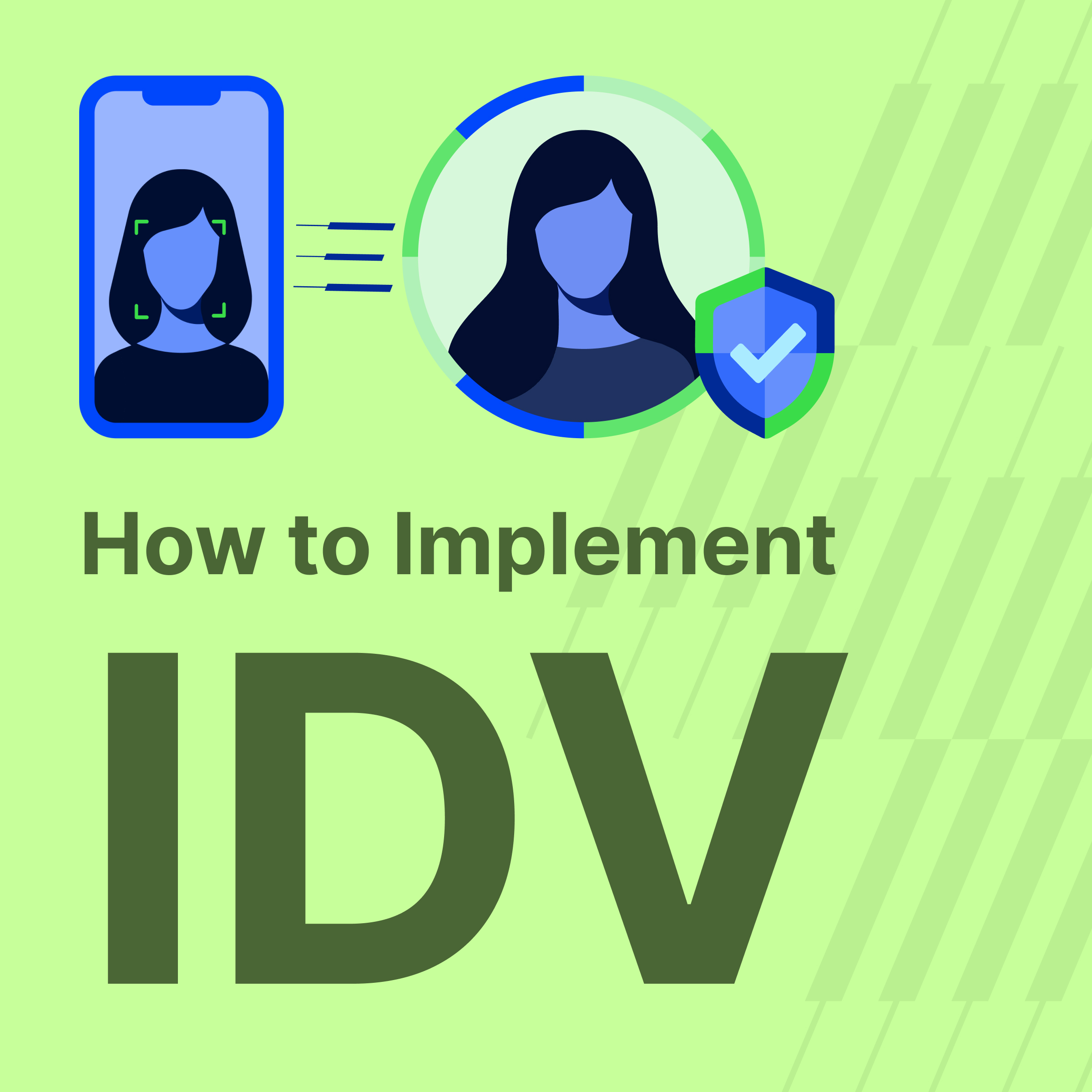
IAL2 includes biometric comparison, matching a live selfie with liveness detection against the photo on a validated government document. A stolen name and Social Security number do not survive that.
Fit the systems the teams already use.
Yavapai connected Proof to its Element 451 admissions platform by API and writes results back to Banner, so a student verified once is not asked again. Burns on why that mattered: "Many of the solutions in the marketplace are API-driven, where you need to write your own front-end system or work with a 3rd party partner. The Proof platform is more turnkey."
Cover the other doors too.
The same platform serves Financial Aid for one-off checks and the IT service desk for account recovery, which is where bad actors turned next, calling to claim their multi-factor authentication had stopped working.
For Yavapai, roughly 5,000 identity checks a year now run at about three minutes each, most without a staff member involved. The friction Yavapai braced for among its least tech-savvy applicants has not materialized so far in the first full registration cycle with the requirement in place.
The question to ask
If someone applied to your institution using a real person's stolen identity, which check would catch it? If the answer is a data match, you are confirming that the details are genuine, which is the one thing the attacker has got right.
To learn more about the fraud patterns we see emerging in 2026, check out our field guide.