Was This You? | The Everyday Moments Where Fraud Slips In


Updated July 15, 2026
Today’s fraud doesn’t look like a crime scene. It looks like a normal workflow with one strange detail. A timing mismatch. A document that almost checks out. A customer who sounds exactly right…and somehow wrong.
These small, odd moments are where the biggest losses start - and they’re getting harder to catch with traditional tools.
Let’s take a look at some of the workflows where seemingly harmless behavior quickly becomes a threat — and why organizations are turning to stronger identity, verification, and fraud-detection signals to protect what matters.
Key takeaways
- Modern fraud hides inside routine workflows — equipment financing, real estate closings, account recovery, and candidate onboarding are all high-exposure moments that look normal until they aren't.
- Urgency is a weapon. Fraudsters deliberately compress timelines to force decisions before verification can happen. Any workflow that rewards speed over identity assurance is a target.
- Familiar details are not the same as verified identity. Knowing the right email, phone number, or account history doesn't prove someone is who they claim to be — it only proves they've done their research.
- Fraud detection in everyday workflows requires layering verified identity, predictive risk signals, and human review at the specific moments where impersonation is most likely to succeed.
Why fraud detection must move beyond single checkpoints
Fraud detection in everyday workflows fails when organizations treat it as a one-time gate rather than a continuous layer. Most fraud prevention is concentrated at onboarding, the moment a new customer or user enters the system. But that's not where most losses happen.
Fraudsters know where the gates are. They pass through onboarding cleanly, using stolen credentials, synthetic identities, or manipulated documents. The actual attack comes later — during a wire transfer, a closing, an account recovery request, or a hiring decision.
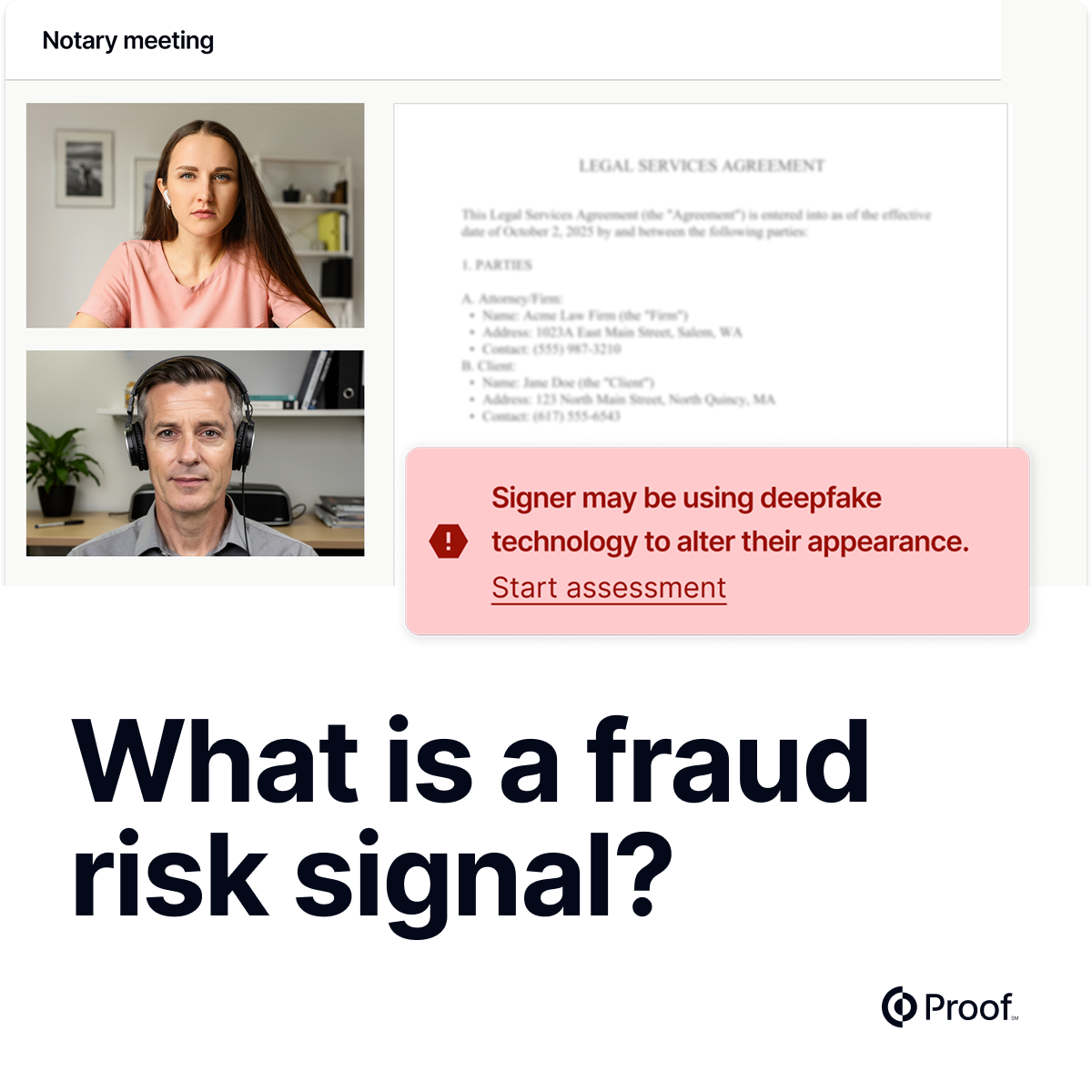
The threat has also changed fundamentally. AI-generated deepfakes, voice cloning, and document manipulation have made it possible to impersonate real people with a level of fidelity that defeats visual inspection. Seeing is no longer believing. Organizations that rely on "does this look right?" as their primary fraud signal are already behind.
Effective fraud detection today means embedding identity assurance and risk signals into the specific workflow moments where impersonation is most likely to succeed, not just at the front door.
Equipment financing: When urgency becomes a weapon
Fraud in equipment financing rarely starts with forged documents. It starts with urgency. A customer needs a machine today. A delivery window just opened. A contractor is waiting on-site. Everything sounds plausible — until it isn’t.
Fraudsters rely on that urgency to bypass controls. They impersonate real businesses. They spoof owners and operators. They submit stolen IDs and polished applications that look flawless until the final step.
With Proof, lenders anchor each application to a verified identity, use signals to spot anomalies, and bring in human review when something feels off — before funds are released.
Title: When tiny inconsistencies hide big consequences
Title and closing teams regularly work with high-value assets, high emotions, and tight deadlines. That combination creates a perfect storm for manipulation.
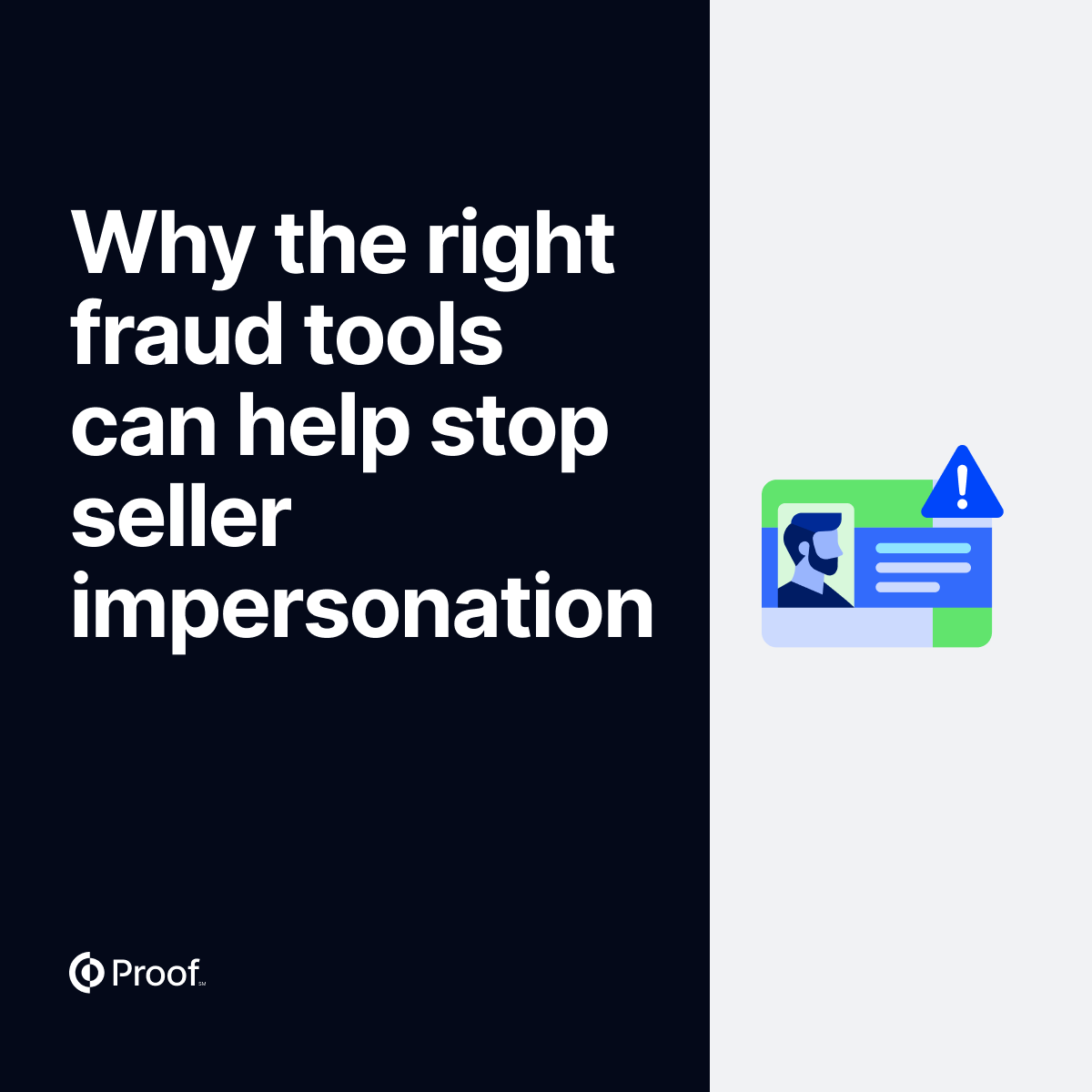
Fraudsters impersonate sellers. They reroute payoff instructions. They request wire changes minutes before closing. On the surface, everything checks out. Then the transaction collapses, or worse - your assets get sold without you ever knowing.
With Proof, identity assurance and fraud signals help teams verify the party behind each request, confirm intent, and detect rerouting attempts before funds are lost.
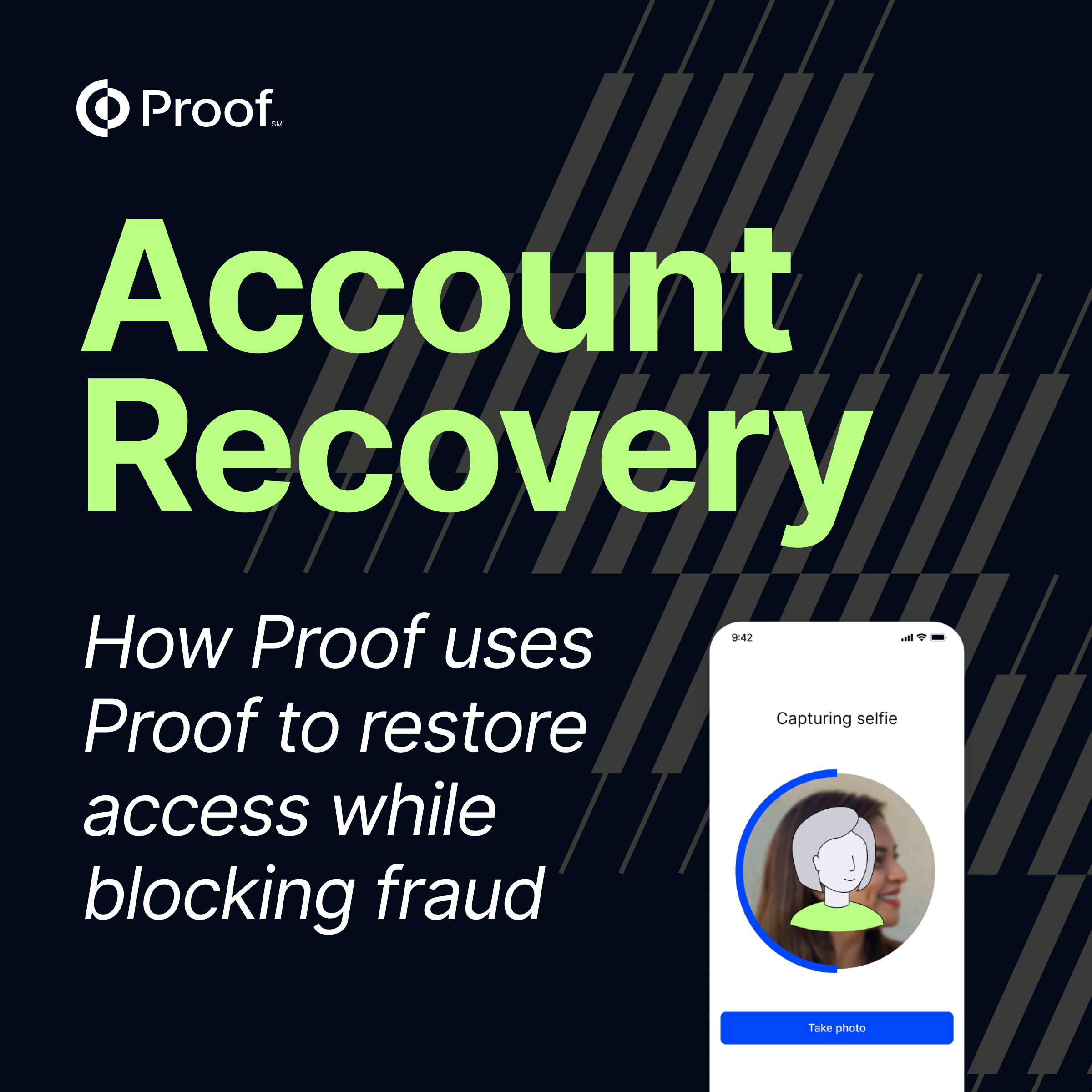
Account recovery: When familiar details aren’t enough
Account recovery is supposed to be simple: prove who you are, get back in. But attackers study victims closely. They know the right email, the right phone number, the right guessable details. They tailor requests to sound believable. And many recovery flows only test for “familiar,” not “verified.”
Anchoring recovery to a verified, persistent identity — with risk checks and human-in-the-loop verification when needed — turns a vulnerable moment into a secure one.
Candidate onboarding: When the résumé is real but the person isn’t
Hiring teams are seeing more identity-based fraud than ever. Applicants submit pristine résumés, perfect credentials, and video interviews that seem legitimate….until small inconsistencies add up.
Deepfakes. Document manipulation. Identity theft. Fraudsters know what recruiters expect, and they know how to match it.
By verifying that a claimed identity matches the individual, and using fraud signals to detect irregular activity, organizations can reduce identity-based fraud that can result in payroll loss and process disruptions. Having proper identity verification and fraud prevention tools help to mitigate this risk.
Identifying fraud before it becomes a problem
Each of these scenarios begins with something subtle. A detail overlooked. A request that feels routine. That’s why organizations are rethinking identity assurance and layering predictive fraud signals into their workflows. Not to add friction — but to add clarity, trust, and speed where it matters.
Fraud may look absurd in a 30-second clip. In real life, it’s far more costly.
With Proof, these red flags become conversations instead of crises.
See how Proof identifies fraud before it becomes a problem >



























.jpg)














































.jpg)