What HR Teams Are Seeing When It Comes to Candidate Fraud

Updated July 13, 2026
The wrong person, or an entirely fabricated individual showing up for an interview (aka Candidate fraud) is no longer a theoretical problem. Fake candidates are showing up in real hiring processes more often every day, and usually in ways that teams aren’t fully equipped to catch.
During a recent Proof webinar hosted in partnership with SHRM, we asked hundreds of HR professionals a series of live poll questions about candidate fraud, identity verification, and how confident they were in their current hiring controls. Responses came directly from practitioners responsible for recruiting, hiring, and talent operations across a wide range of industries, geographies, and company sizes.
What these individuals shared paints a clear picture — candidate fraud is already happening — but most teams aren’t verifying candidate identities until they’ve already decided to hire someone. And confidence in detecting AI-powered deepfakes is far lower than most organizations would like to admit.
Key takeaways
- More than 40% of HR professionals surveyed have confirmed or highly suspected candidate identity fraud in the past 12 months, including deepfake interviews, proxy stand-ins, and stolen identities.
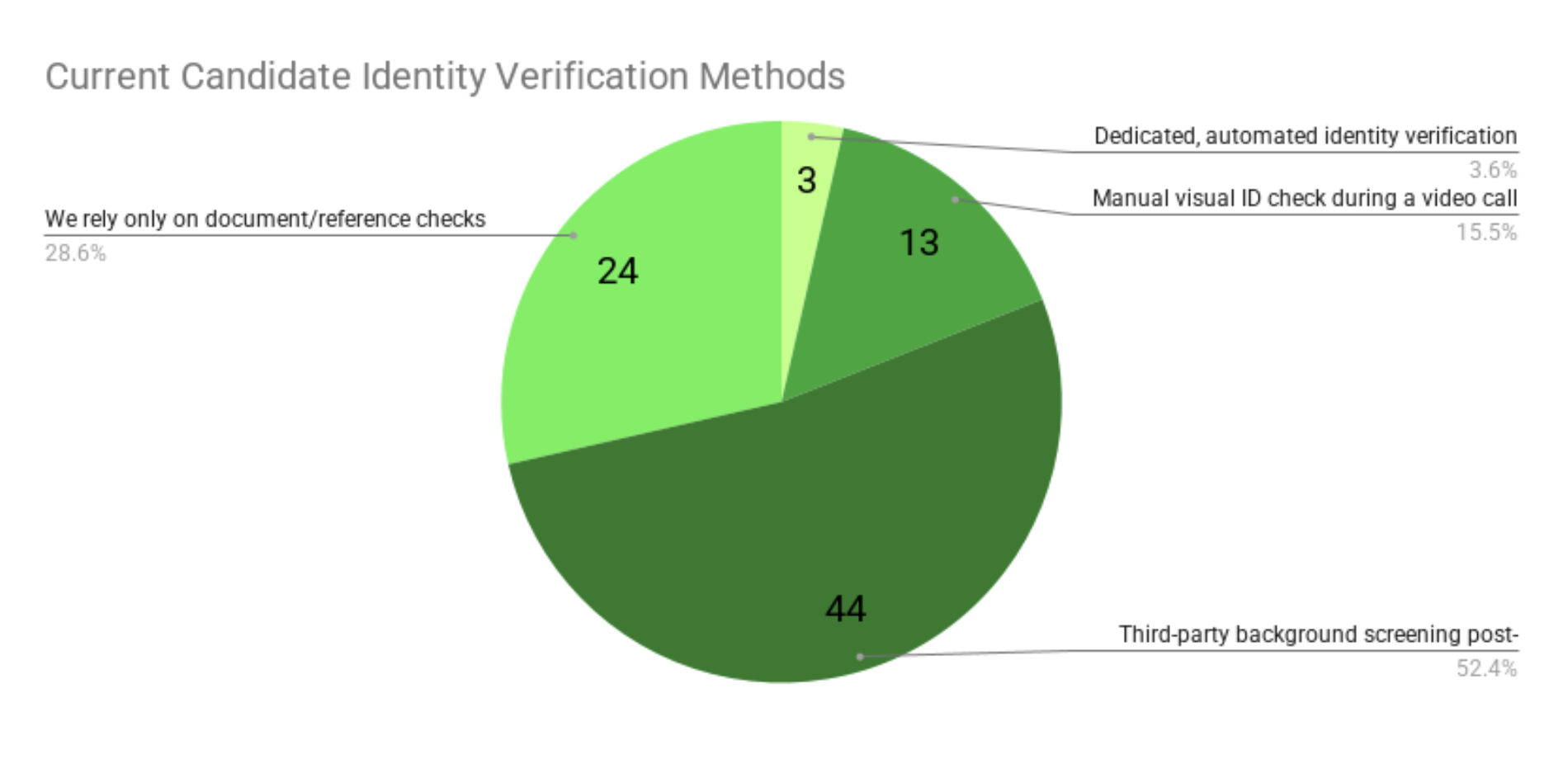
- 80% of organizations do not verify candidate identity before extending an offer — meaning most hiring decisions are made without confirming the person evaluated is the person who will show up on Day One.
- Only 15.3% of HR professionals say they are extremely confident their current hiring process would catch an AI-generated fake candidate.
- The solution is not overhauling hiring overnight. It is adding identity verification at specific, high-risk points in the hiring lifecycle without creating unnecessary friction for legitimate candidates.
- Teams that address this gap protect recruiter time, reduce insider threat exposure, and preserve trust in their hiring process for real applicants.
Candidate fraud is already inside your hiring pipeline
Candidate fraud is not something most HR teams are preparing for someday — it is something many are already encountering. More than 40% of respondentsin our SHRM webinar poll said they have either confirmed or highly suspected cases of candidate identity fraud in the past 12 months.
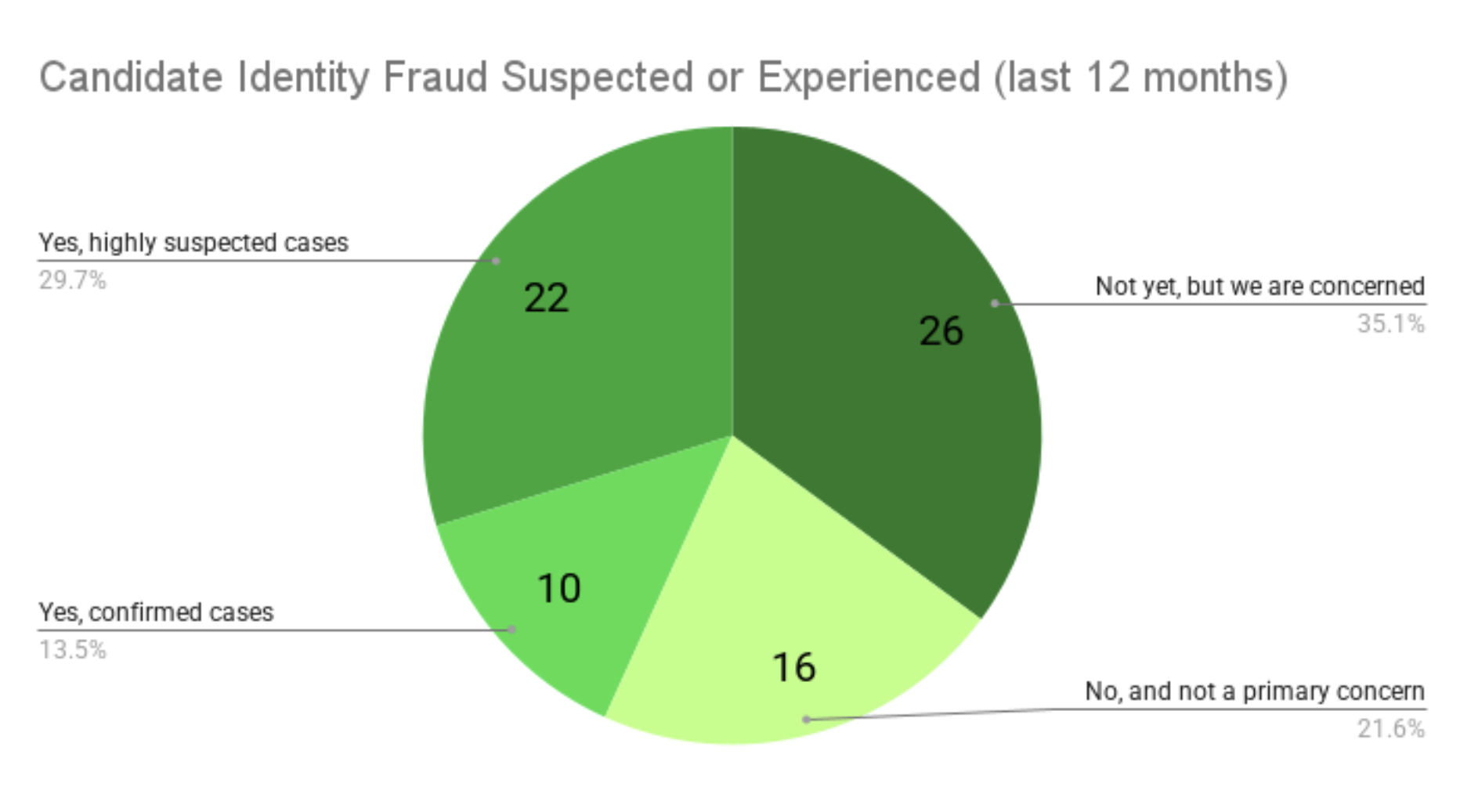
These cases include:
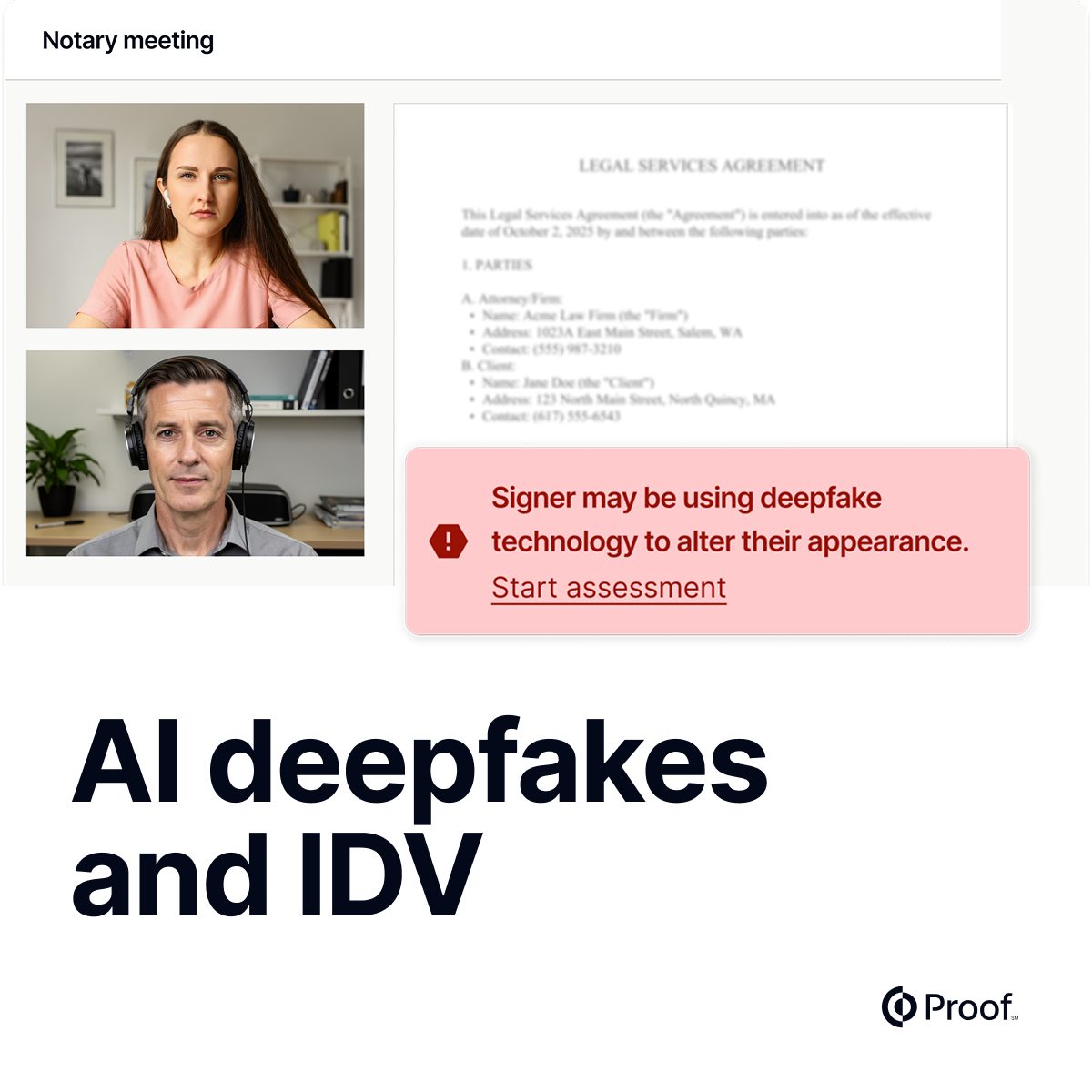
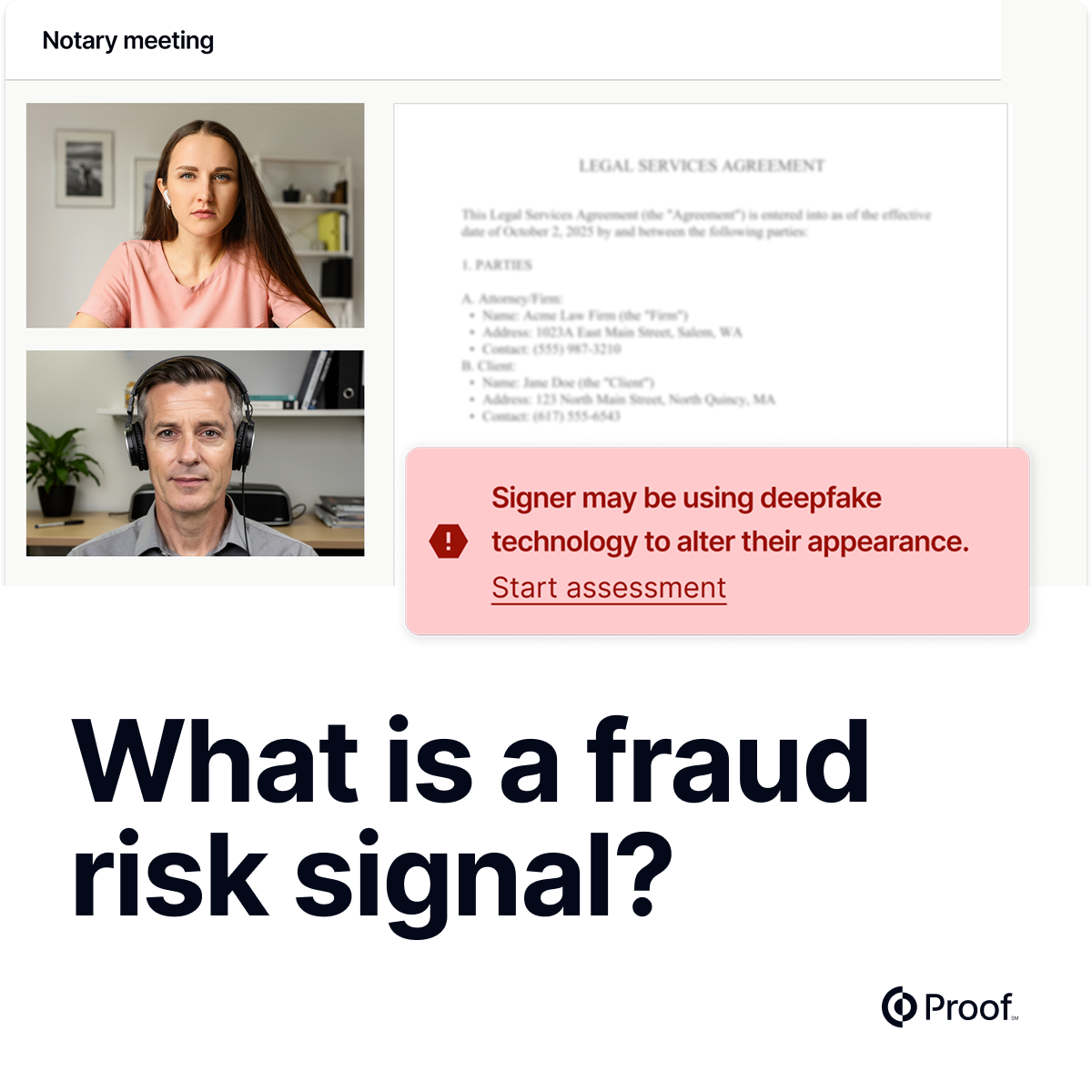
- Deepfake interviews — AI-generated video used to impersonate a qualified candidate during video screening
- Proxy stand-ins — a different person appearing on a video call than the one who applied
- Stolen or synthetic identities — fabricated credentials tied to real or entirely invented people
This number matters because it reframes the problem. Candidate fraud is not a future risk to plan for. It is a present-day operational reality — and most teams are encountering it without formal processes to detect or respond to it.
An additional 35% of respondents said they have not experienced candidate fraud yet, but they are concerned about it. Together, these figures suggest a workforce that is increasingly aware of the threat but has not yet translated that awareness into prevention.
Awareness has not translated into prevention yet
Most organizations are making hiring decisions without confirming that the person they evaluated is the same individual who will be onboarded. Our polling found that more than 80% of respondents do not perform any form of identity verification before extending an offer.
This is not negligence. For decades, identity checks in hiring have been treated as background screening formalities — something that happens after an offer is accepted, not before. The process was built for a different threat environment.
The problem is that candidate fraud exploits the assumptions teams make earlier in the process. When identity is implied rather than verified, fraud has room to operate at every stage: the application, the screening call, the interview loop, and the offer conversation.
The result is a hiring workflow that appears thorough on paper but leaves critical gaps at the moments that matter most.
How confident are HR teams in catching AI-driven candidate fraud?
The short answer: not very. When asked how confident they are that their existing hiring process would catch an AI-generated fake candidate, only 15.3% of respondents said they are extremely confident.
The majority described themselves as only somewhat confident. A meaningful group said they are not confident at all.
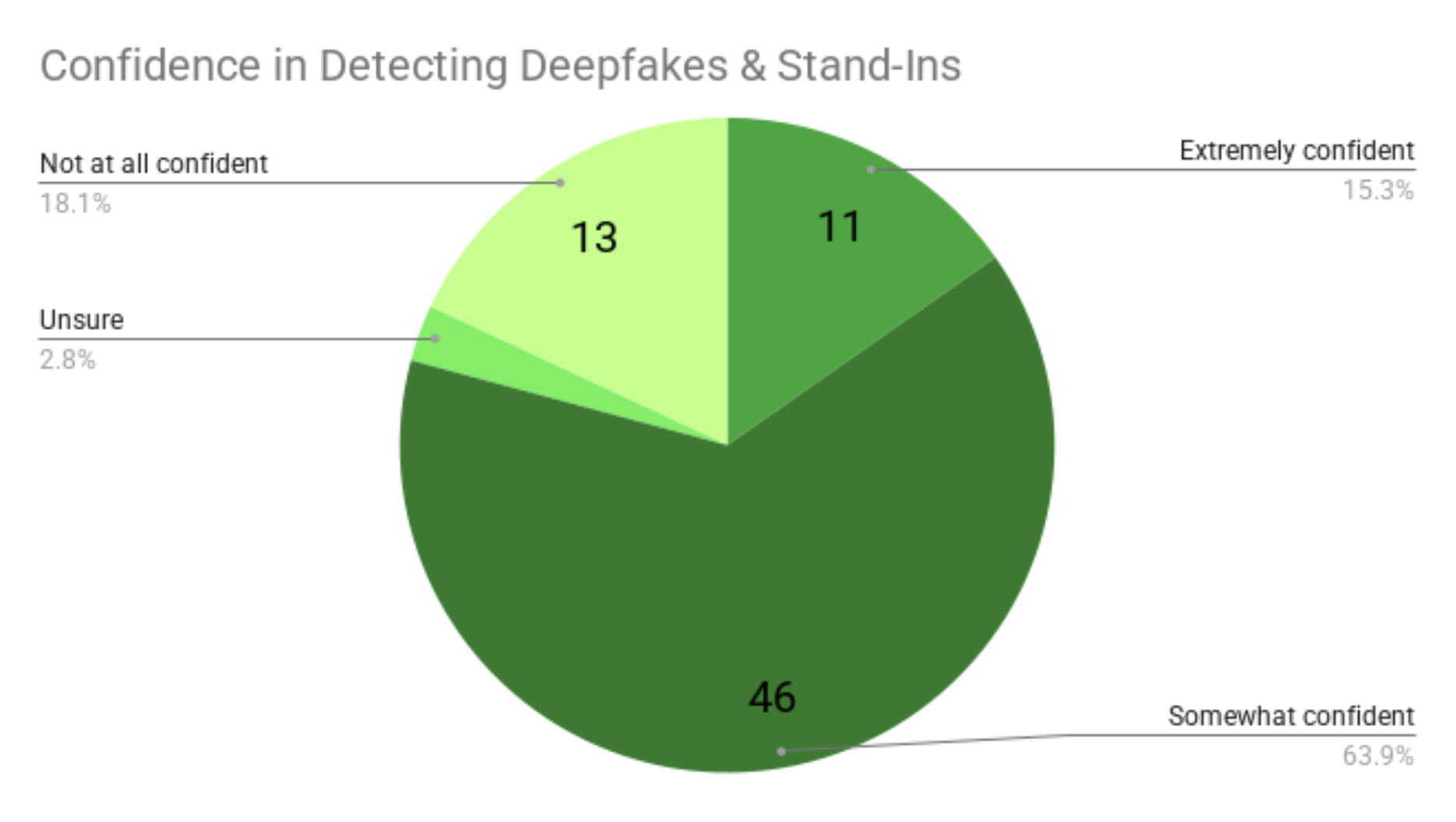
That lack of confidence is telling. It reflects a growing recognition that the tools most hiring teams rely on — resume reviews, video interviews, reference checks, and manual observation — were not designed to catch AI-powered impersonation. As deepfakes become more convincing and synthetic identities become harder to distinguish from real ones, relying on intuition or visual cues becomes a liability.
Confidence drops when tools are not designed to address the actual threat. And the threat has changed faster than most hiring stacks have adapted.
What leaders are actually asking about candidate fraud prevention
During the webinar, the live Q&A added important context to the poll results. Attendees were not asking abstract questions about fraud theory. They were asking operational questions:
- How does identity verification integrate with ATS platforms? Teams want solutions that fit into existing workflows, not parallel systems that require separate logins and manual handoffs.
- Where does verification fit in the hiring process? The question of timing — when to verify, and at what stage — came up repeatedly. Teams are trying to balance thoroughness with candidate experience.
- Does viewing IDs create compliance or discrimination concerns? Legal and HR compliance teams want to understand how identity verification interacts with EEOC requirements and fair hiring obligations.
- How do we explain this to candidates? Practitioners want verification that is explainable, transparent, and respectful — not surveillance.
These questions point to a shared reality. HR teams know the risk is real. What they need are solutions that are integrated, explainable, and aligned with how hiring actually works.
What these insights mean for HR teams
Candidate fraud is already present in hiring processes. Most teams are not verifying candidate identities before making an offer. Confidence in detecting AI-driven impersonation is limited. And existing hiring processes were not built to prevent candidate identity fraud.
For HR leaders, the takeaway is not to overhaul hiring overnight or introduce unnecessary friction. It is to recognize that trust in hiring now requires identity verification at specific points throughout the process. Teams that address this gap are not just reducing fraud risk. They’re protecting recruiter time, safeguarding access to systems, and preserving trust in their hiring process for legitimate candidates.
Candidate fraud is evolving quickly. Hiring practices must evolve with it.































.jpg)








































.jpg)