Medallion Signature Guarantees vs Remote Online Notarization: Different Tools, Different Risks

Updated July 15, 2026
In our recent blog, we looked at why medallion signature guarantees exist, what problem they were designed to solve, and why they still appear in modern securities workflows even as the experience feels increasingly disconnected from how people expect to transact.
That brings us to the next question many organizations and customers ask once they encounter friction: if the goal is trust and fraud prevention, how does a medallion signature guarantee compare to a notary stamp, especially remote online notarization?
At a glance, the two can look similar. Both involve identity checks. Both result in a stamped or sealed document. Both are often described as forms of verification. But they are built for different risks, and using one where the other is required can create real problems.
To understand where each belongs, it helps to start with what each process is actually designed to do.
Key takeaways
- An MSG and RON are not interchangeable; each is required in specific contexts that the other cannot cover.
- The MSG carries a three-part financial warranty: the signature is genuine, the transaction is appropriate, and the signer has legal capacity.
- Only eligible financial institutions (banks, broker-dealers, credit unions) can issue an MSG; notaries cannot provide one.
- RON is used for legal documents requiring notarization; MSG is required for securities transfer instructions.
- Confusing these two instruments stalls transactions and can expose transfer agents and clients to legal liability.
What a notary stamp does and does not do
A notarization is about witnessing and attribution, not financial guarantee.
When a document is notarized, the notary confirms the identity of the signer, observes them execute the document, and records the act. The notary is verifying that a real person appeared, was identified using acceptable credentials, and signed willingly.
A notary does not validate the contents of the document. A notary does not insure the transaction. And a notary does not assume liability if the signature later turns out to be fraudulent.
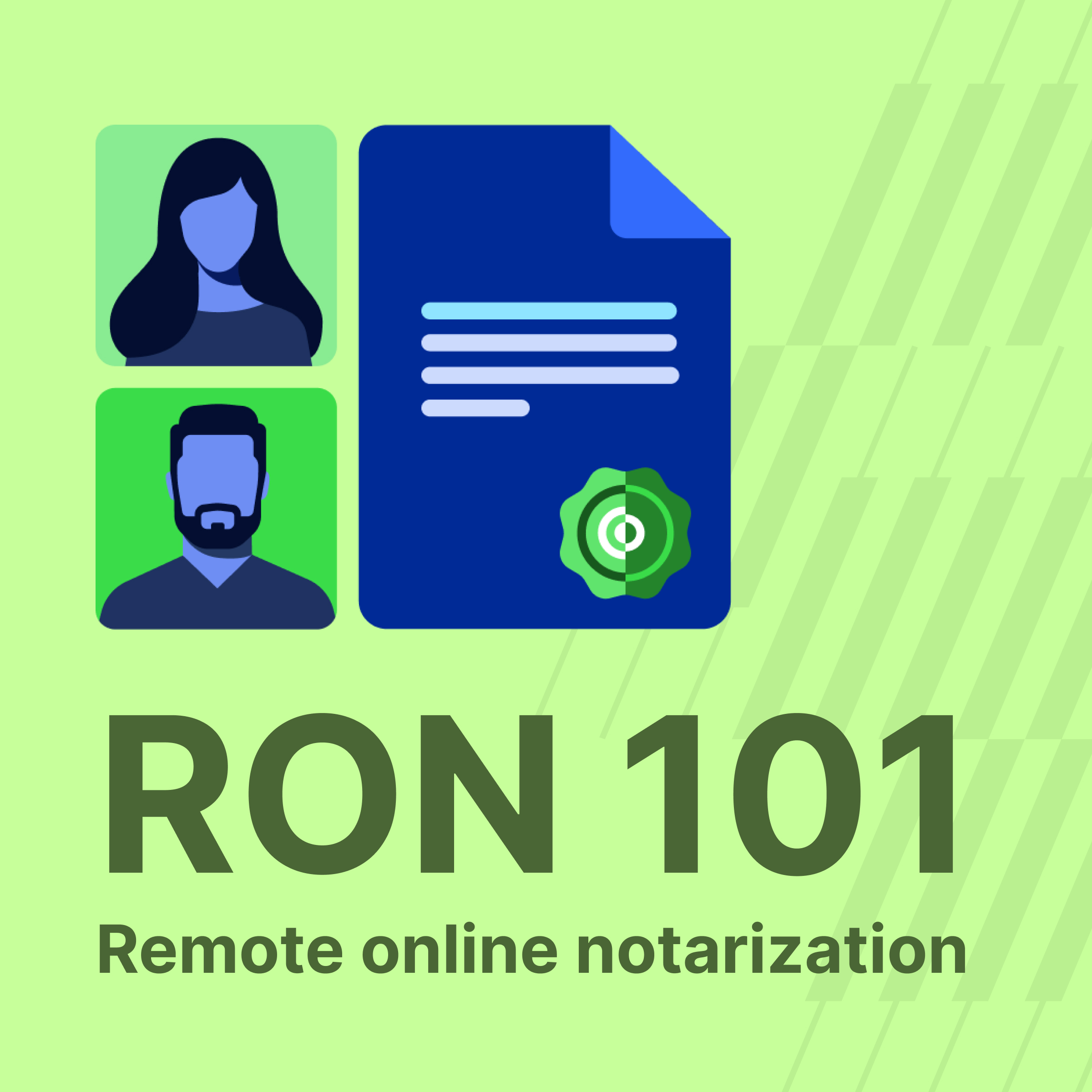
Remote online notarization follows the same legal principles, but replaces physical presence with technology. Identity verification may include government ID analysis, biometric checks, credential validation, and a live audio video session with a commissioned notary. The session is recorded, the document is digitally sealed, and an audit trail is created.
In many cases, remote online notarization produces more evidence than a traditional in person notarization, not less. But the core purpose remains the same: establishing who signed, when they signed, and that they did so voluntarily.
What a medallion signature guarantee is actually guaranteeing
A medallion signature guarantee serves a different purpose and addresses a different risk profile.
An MSG is used primarily for certain securities transfers. When a financial institution issues a medallion, it is not just verifying a signature. It is financially backing it. If the signature is later found to be fraudulent, the institution that issued the medallion may be responsible for the resulting loss.
That financial liability is the heart of the medallion program.
In effect, the issuing institution is saying: we know this customer, we have verified their identity and signature, and we are willing to stand behind this transaction with our own balance sheet.
This is why medallions are restricted. Not every bank offers them. Not every branch can issue them. Not every employee is authorized. And many institutions only provide them to existing customers with established relationships.
The friction is not accidental. It is a byproduct of the risk being assumed.
A side by side comparison
Because notarization and medallion signature guarantees are often discussed together, it helps to look at them next to each other.
The key takeaway: these tools are not interchangeable. They solve different problems and assign risk differently.
Why confusion between the two causes real issues
Problems arise when organizations treat notarization and medallion guarantees as interchangeable simply because both involve signatures and stamps.
Customers may be told to “just get it notarized,” only to have a transfer rejected later because an MSG was explicitly required. Others may be sent on a frustrating search for a medallion when the institution would have accepted a notarized document supported by strong identity verification.
This confusion increases abandonment, drives support volume, and delays transactions that are otherwise ready to move forward.
The issue is rarely malice or negligence. It is usually inherited process. Forms get copied. Requirements get passed down. Over time, the distinction between witnessing a signature and guaranteeing a transaction becomes blurred.
Different tools for different risks
Medallion signature guarantees were built to solve a very specific problem: allocating financial risk in high value securities transfers. That problem still exists, and the program remains relevant where it is explicitly required.
Remote online notarization addresses a broader need: establishing identity, intent, and execution in a digital world where fraud looks very different than it did when paper certificates were the norm.
An MSG provides a financial backstop for certain securities transfers. A notary stamp, whether remote or in person, provides documented evidence of identity and execution. Both play important roles when used appropriately.
For organizations reviewing their workflows, the right question is not which stamp to choose. It is where each level of assurance is actually required, and where modern digital tools can reduce friction without weakening trust.
In every case, the goal is the same as it has always been: confidence that the right person signed the right document, and that the evidence will hold up when it matters most.
If your organization is evaluating where notarization fits into modern workflows, especially in scenarios where a medallion signature guarantee is not explicitly required, we’re here to help.















































.jpg)























































.jpg)