Introducing Persistent Identity: The Foundation of Repeatable Trust

Updated July 15, 2026
Most digital transactions that require identity verification follow a similar pattern: users prove their identities by uploading documents, taking selfies, or answering questions about their past before completing a transaction. Then they do it all over again because every new transaction and every new service starts the identity process from scratch, as if nothing happened before.
This may have been tolerable when transactions were less frequent, or when they happened face-to-face, where personal human connections could fill in the gaps. Today, a lot more transactions happen online. Everything including banking, mortgages, retirement, insurance, healthcare, is now done online. In this context, repeating identity verification for every transaction isn’t just inefficient, it increases abandonment rates, erodes trust, and wastes valuable time for people on both sides of the transaction.
At the same time, new threats have reinforced the need for identity verification. AI can now generate nearly perfect replicas of user images and voices. Coupled with the large-scale theft and loss of login credentials, it’s no longer feasible to treat identity as a one-time checkpoint. Identity must be durable and reliable. It must be something users can carry forward from one interaction or company to the next, with clarity and confidence.
This is the problem persistent identity solves.
Persistent identities allow individuals to verify their identities once, to a high-assurance standard (IAL2), and then save that identity on the Proof platform so they can quickly re-authenticate in future interactions using a simple biometric match. The identity is then enrolled in the Identity Authorization Network (IAN), and becomes reusable for any transaction, at any organization that accepts persistent Proof IDs. Now trust doesn’t have to be rebuilt from scratch. It can persist.
Key Takeaways
- A persistent ID is a verified digital identity record that allows individuals to prove their identity once, at a high-assurance standard, and reuse that verification across future interactions without starting over.
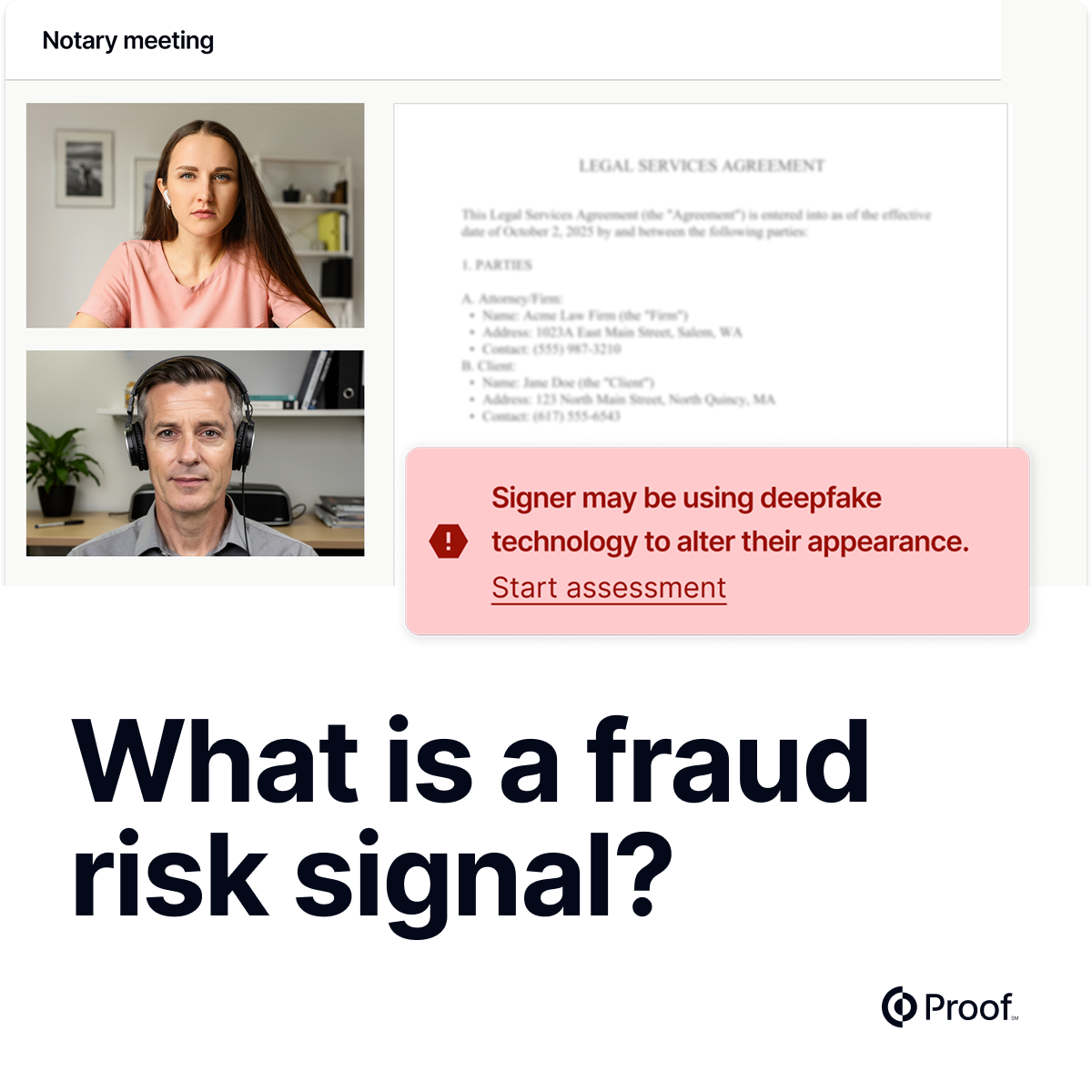
- On the Proof platform, persistent IDs are created through IAL2-certified verification, combining document analysis, biometric comparison, multi-factor authentication, and deepfake detection — and enrolled in the Identity Authorization Network (IAN).
- Re-authentication with a persistent ID requires only a biometric selfie match, not a full re-verification, reducing friction without lowering the underlying security standard.
- Persistent identity dramatically reduces transaction abandonment, lowers manual review burden, and creates a clear attribution chain, tying every signature, authorization, or approval to a single verified person.
- The value compounds over time: the more interactions a persistent ID covers, the stronger the fraud defense becomes, because behavioral anomalies become detectable against a known baseline.
- Persistent identity is the infrastructure that makes high-value digital workflows scalable, not by relaxing verification standards, but by making those standards reusable.
What is Persistent Identity?
Persistent identities are secure digital ID records on Proof, tied to real people using the Proof platform. These digital identities are tied to a real person using document analysis, biometric comparison, multi-factor authentication, and other fraud and deepfake prevention methods. Once saved, they become a baseline for future authorizations.
When individuals return to complete future tasks, they don’t need to start over. They initiate a transaction, complete a quick selfie check, and proceed. The system recognizes the identity with high confidence and allows the transaction to continue.
This makes the identity both durable and reliable.
Why Persistent Identity Matters Now
Repeated identity proofing isn’t just inefficient. It creates a long chain of disadvantages that compound over time.
- Stronger fraud defense: Persistent identities combine real-time biometric comparisons and risk signals with an identity that was originally verified to a high-assurance standard. For example, a platform that uses persistent identities can more easily tell if a fraudster is trying to impersonate an identity already in the network. Proof can tell if it’s the same person logging in for the tenth time because of a biometric match; it’s clear if the biometrics don’t match repeatedly. This makes impersonation substantially more difficult.
- Reduced completion rates: People abandon transactions when they feel they’re being asked to prove the same thing repeatedly. Proof balances high assurance with low friction by providing an easy-to-use customer experience.
- Lower manual review and support burden: Repeated verification flows generate edge cases that result in more support tickets.
- Clear attribution: Every signature, authorization or approval originating from a persistent identity can be tied to a single verified person. This provides strong evidence in the event of a dispute.
When Persistent Identity Matters Most
Persistent identity is particularly valuable in workflows where individuals return to complete multiple actions across time.
- Hiring: Candidates should prove their identity at the applications stage, during virtual interviews and once hired for employee onboarding. A persistent identity gives assurance to the company that they’ve interviewed and hired a legitimate person.
- Real estate and mortgage closings: Closings often unfold across several weeks. There are approvals, disclosures, signatures, and notarizations. When identity persists, the process moves forward without the friction of repeated identity verifications, and reduces the stress of identity verification on the actual time of closing.
- Financial account maintenance: Opening an account may require users to verify their identity once, but account changes, money transfers, and beneficiary updates also benefit from identity proofing. Persistent identities keep these tasks efficient and predictable.
- Retirement and wealth management: Beneficiary changes, spousal consent forms, rollover authorizations, and documentation updates can be completed with less friction and fewer delays.
- Government and public services: Persistent identities support program integrity while reducing the burden placed on residents and citizens who need to prove their identity multiple times.
- Enterprise operations: Employees who sign documents or certify transactions as part of their job can move through these actions without repeating identity verification for each one.
In each of these environments, the value is the same: trust becomes easier to maintain because it does not need to be re-established in every transaction.
Persistent Identity on the Proof Platform
The workflow is straightforward and consistent.
- An individual completes identity verification during a Proof transaction.
- They are offered the option to save their verified identity.
- The Proof platform creates a secure digital identity tied to the verified individual.
- In future transactions, the person re-authenticates using MFA and facial verification.
- The transaction proceeds without the need to re-verify their identity.
Organizations receiving these transactions do not need to operate new systems or change how they evaluate identity evidence. The integrity of the verification remains the same, but the time and effort required to use it is dramatically reduced. Persistent identity works because it maintains both rigor and efficiency. It does not relax the standard, It preserves it, and makes it reusable.
Building the Foundation for Repeatable Trust
Persistent identity is not simply a convenient feature, it’s part of a broader shift toward repeatable trust. When identity persists, every action a person takes can be tied back to their verified identity. This creates a consistent, verifiable chain of evidence across companies and interactions. It becomes clear who performed which actions, and makes fraud exponentially more difficult to achieve.
Reliable trust is what allows high-value digital transactions to scale, without sacrificing security or confidence. It’s the difference between digital workflows that merely function and digital workflows that you can rely on.
Persistent identity is the foundation that makes this possible.










































.jpg)
















































.jpg)