When Ticketing Goes Digital, Identity Becomes the Risk Surface

Updated July 13, 2026
Ticketing has gone fully digital. Fans buy online, transfer instantly, resell across marketplaces, and enter venues through mobile wallets. Premium agreements and account changes that once required in-person verification now happen remotely. For most organizations, the entire ticketing lifecycle, from purchase to gate, runs without a single physical touchpoint.
That shift has delivered speed, scale, and convenience. It has also introduced a quieter problem: digital ticketing identity verification has not kept pace with how fast the rest of the workflow moved online. The result is a growing gap between what systems can track and what they can actually prove.
Key takeaways
- Most ticketing fraud today does not look suspicious. Bots mimic real users, stolen credentials access legitimate accounts, and transfers follow approved workflows — traditional risk signals cannot catch what blends in.
- The real cost of ticketing fraud shows up downstream: chargebacks, support escalations, degraded CRM data, and strained premium relationships — not just at the point of purchase.
- Identity verification does not require verifying every fan at every step. Applied selectively at high-risk moments — account creation, high-value purchases, transfers, premium agreements — it delivers the greatest downstream value with the least friction.
- Organizations that move identity earlier in the workflow (confirming who is taking the action rather than reacting to what looks suspicious) are the ones getting ahead of fraud, not chasing it.
The challenge is not tickets. It is knowing who is behind them.
Modern ticketing platforms are excellent at managing inventory. They track tickets with precision, record ownership changes, and validate scans at the gate. What they struggle to do consistently is confirm the person taking the action.
That uncertainty surfaces in familiar ways:
- Transfers that appear legitimate but later turn into disputes
- Purchases that clear initially and then come back as chargebacks
- Account changes or premium agreements completed by someone other than the true holder
- CRM records that slowly drift as accounts change hands without clear verification
Individually, these moments rarely feel severe. They show up as support tickets, manual reviews, or one-off exceptions. Over time, they accumulate into operational drag and erode trust across the ecosystem.
The root issue is the absence of reliable identity at the moments where it matters most.
Why fraud keeps slipping through digital ticketing workflows
Most ticketing fraud today does not look suspicious on the surface. It succeeds by blending in.
Bots create fan accounts that behave like real users. Stolen credentials provide access to legitimate accounts. Transfers and resale activity follow approved workflows. Barcodes scan as expected. From the system’'s point of view, everything looks normal.
Traditional controls attempt to manage this by evaluating signals — device data, velocity, behavioral patterns, payment risk indicators. These tools are useful, but they are inherently probabilistic. They estimate likelihood rather than establish certainty.
During low-volume periods, that tradeoff is often acceptable. During peak moments, it becomes costly.
The real cost shows up downstream
Ticketing fraud rarely ends at the point of purchase. Its impact is felt later, across operations and customer experience.
Chargebacks require time and resources to investigate and defend. Support teams absorb escalations tied to transfers, resale issues, and access confusion. CRM data becomes less reliable as account ownership grows murkier. Premium relationships are strained when agreements or changes are questioned after they have already taken effect.
Even when revenue is recovered, trust takes a hit. Fans expect speed, but they also expect fairness and clarity. Premium holders expect confidence that their accounts are protected. Venues and event operators need certainty when managing access, not assumptions.
Over time, these downstream effects matter as much as the fraud itself.
When identity gaps become most dangerous
High-demand on-sales, major events, premium renewal cycles, and last-minute transfers before entry all create the conditions where volume spikes and attackers blend into legitimate traffic.
Research suggests that bots make up almost 40% of all ticketing website traffic — and in some high-profile on-sales, as much as 96% of traffic came from bots and non-legitimate visitors rather than genuine fans. Identity gaps tend to reveal themselves only after the fact: when disputes arise, transfers fail, or access breaks down at the gate.
At that point, teams are reacting instead of preventing.
The fraud tactics that exploit digital ticketing
Understanding how fraud enters the workflow is the first step to closing the gap:
- Bot-driven bulk purchasing (scalping): Automated software monitors ticketing sites, creates fake accounts, fills checkout forms, and completes purchases hundreds of times per minute — locking real fans out before they can act.
- Screenshot fraud and duplicate QR codes: A buyer screenshots a QR code and forwards it to multiple people. The first person through the gate is in; everyone after is turned away. Without identity binding, there is no way to know who the legitimate holder is.
- Account takeover: Stolen credentials give attackers access to legitimate accounts. They transfer tickets, change account details, or resell inventory — all within approved workflows.
- Premium agreement fraud: High-value agreements and account changes completed by someone other than the true account holder, often going undetected until a dispute surfaces.
Why identity needs to move earlier in the workflow
A common response to ticketing fraud is to add controls later in the process. More review after purchase. More rules when activity looks suspicious. More manual intervention when disputes arise.
That approach can reduce risk in the short term, but it does not scale well.
Organizations that make meaningful progress take a different approach by addressing identity earlier and applying it selectively. Rather than asking whether a transaction looks risky, they confirm who is taking the action. Instead of treating accounts as stand-ins for people, they verify the person behind the account. Instead of scrambling to reconstruct events after a dispute, they create defensible evidence at the moment of authorization.
But won’t this destroy the user experience?
No, because this does not require verifying everyone, everywhere, all the time. The focus is on the moments where volume and risk intersect:
- Account creation
- High-value purchases
- Transfer and resale
- Premium agreements
- Restricted or sensitive access
These are the points where identity has the greatest impact and where verification delivers the most downstream value.
What changes when identity is verified
When ticketing workflows are anchored to a verified person, several things begin to change.
Fraud becomes harder to scale because automation and fake accounts lose leverage. Disputes become easier to resolve because organizations can show who authorized an action, rather than which account. Premium workflows become more defensible, reducing impersonation and unauthorized changes. Support teams spend less time asking who really performed what actions, entry operations run more smoothly, and CRM data stays cleaner.
At the same time, legitimate fans move faster, because when the system has stronger trust, unnecessary friction can be reduced rather than increased.
The downstream value: Chargeback defense and dispute resolution
One of the most underappreciated benefits of digital ticketing identity verification is what it does after a transaction — not just during it.
When a fan disputes a charge, a transfer fails, or a premium agreement is contested, the question is always the same: Was this really you?
Without a verified identity record, that question is nearly impossible to answer definitively. Organizations are left reconstructing events from device logs, IP addresses, and behavioral signals — probabilistic evidence that rarely satisfies a chargeback dispute or legal challenge.
With a cryptographically signed record tied to a verified identity, the answer is immediate and defensible. The record shows who authorized the action, the biometric match that confirmed their identity, and the timestamp of the event. That evidence holds up in disputes, in chargeback processes, and in any downstream review.
This is the difference between managing fraud reactively and preventing it structurally.
Where Proof fits
Proof helps organizations establish trust at the moments in ticketing where proof of identity matters most.
At high-risk points like account creation, high-value purchases, transfers, premium agreements, and access requests, Proof verifies the actor is the intended person. Identity checks are applied selectively, based on risk, so legitimate fans and account holders can move quickly without unnecessary friction.
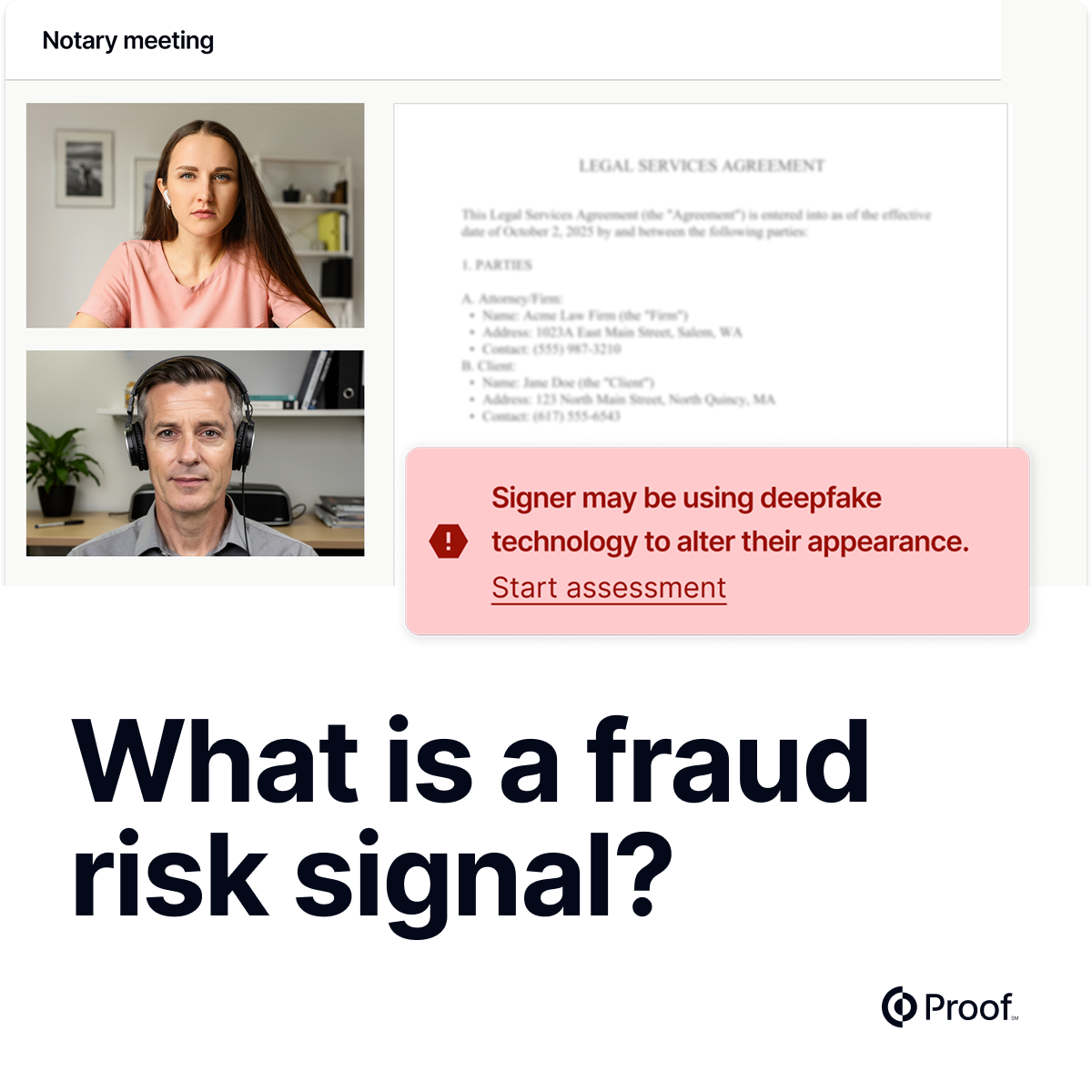
As activity scales, Proof monitors hundreds of signals and controls to help detect and prevent fraud, account abuse, and impersonation. This reduces reliance on brittle rules or manual review while improving confidence during peak moments.
In addition, every verified action is captured as a cryptographically signed record that attests to authenticity and cannot be falsified. That record provides a clear digital audit trail, supporting dispute resolution, chargeback defense, and long-term trust across systems.
Together, these capabilities create a consistent foundation for secure ticketing workflows. One that confirms identity, authorizes actions, and preserves proof without slowing down real fans.
Digital ticketing needs more than signals
As ticketing continues to move online, expectations are shifting. Fans expect seamless experiences and fair outcomes. Organizations need to protect revenue and relationships. Platforms need clear evidence when things go wrong.
The teams getting ahead of this are not chasing every new fraud tactic. They are addressing the underlying problem.
They can answer a simple question with confidence.






































.jpg)













































.jpg)