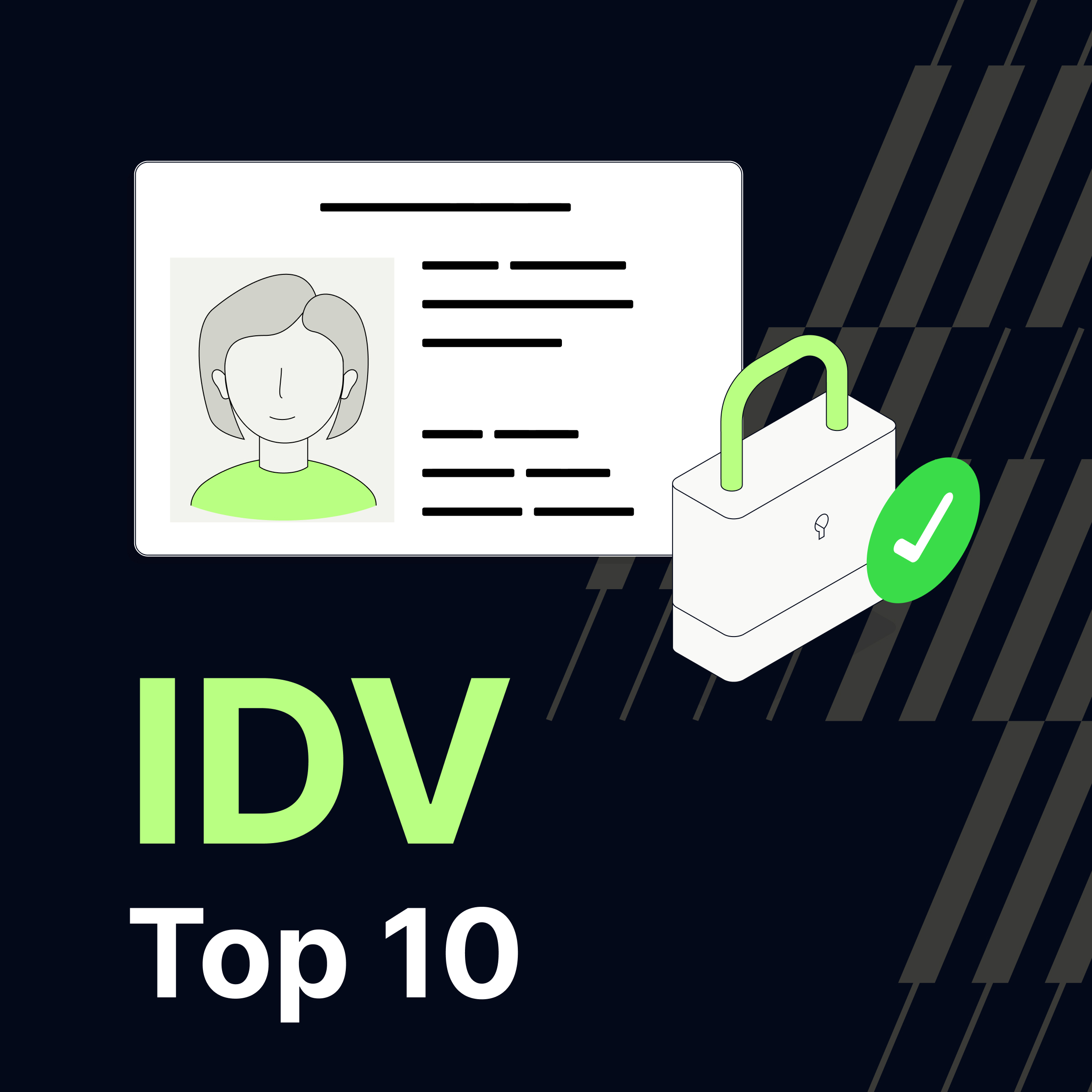
Top 10 Identity Verification Solutions to Consider in 2026

Updated July 13, 2026
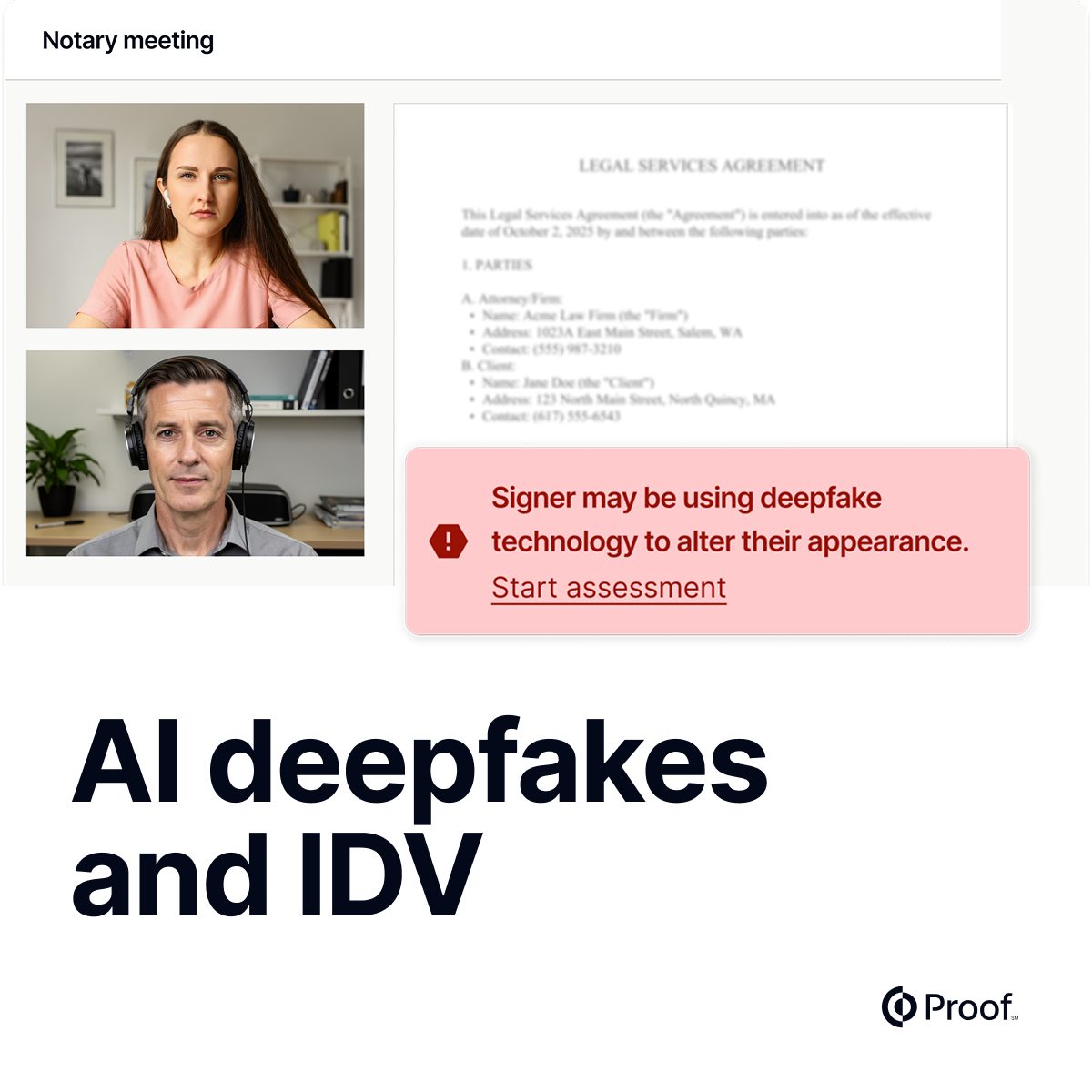
Identity verification has a new adversary. Deepfakes, synthetic identities, and high-volume automation have made "scan an ID and match a selfie" a liability, not a safeguard. Your IDV layer now has to stand up to those threats without making legitimate users fight to get through.
This guide breaks down the top 10 IDV solutions organizations should evaluate in 2026. Each one approaches identity differently, from high-assurance proofing and biometrics to global coverage, risk analytics, and compliance-driven onboarding. If your workflows involve legally binding actions, high-value agreements, or regulated customer interactions, the differences between these platforms matter more than they might appear.
Key takeaways
- The threat has changed. IDV in 2026 must defeat AI-driven fraud — including deepfakes and synthetic identities that pass standard document and selfie checks — not just filter out obvious bad actors.
- Assurance levels vary significantly. Solutions range from high-speed automated checks optimized for conversion to high-assurance, auditable, legally defensible transactions. Choosing the wrong tier for your risk level is itself a vulnerability.
- Global reach and specialized depth are different things. Some providers lead on regional data coverage and compliance breadth; others lead on transaction-level evidence and defensible records. Know which you need before you evaluate.
- Use case determines fit. The right identity verification solution depends on your risk profile, threat environment, transaction volume, and whether your workflows demand records that hold up in disputes, audits, or regulatory scrutiny.
- Identity doesn't stop at onboarding. The strongest platforms secure the full customer lifecycle — from account creation through high-value transactions, account changes, and ongoing access — not just the front door.
- Seeing is no longer believing. When AI can generate convincing faces and documents, trust must be provable and cryptographically documented — not assumed from appearance alone.
What Is an identity berification solution?
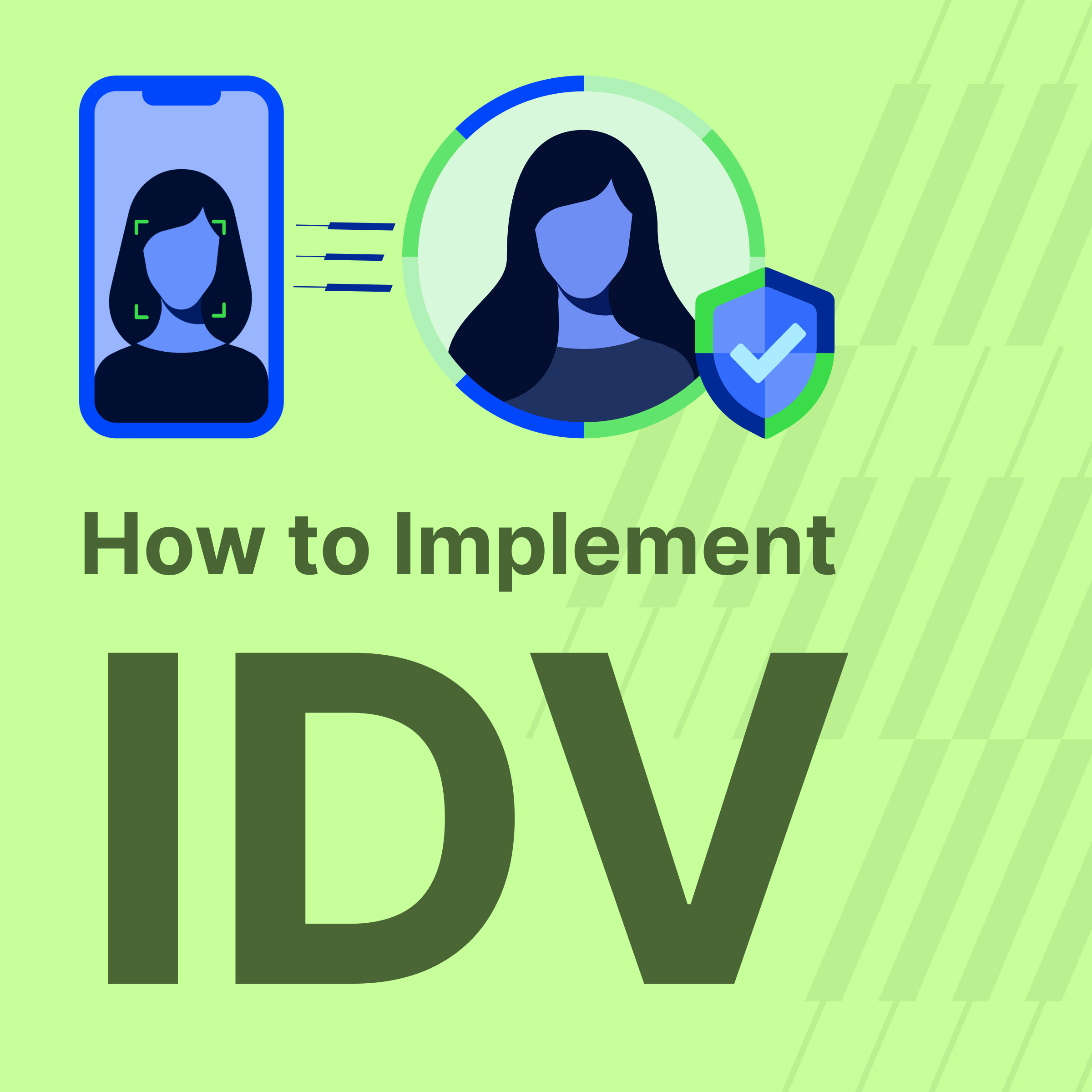
An identity verification solution is a platform or service that confirms a person is who they claim to be during a digital interaction. It does this by validating personal information, government-issued documents, or biometric data against credible sources, in real time.
Modern IDV platforms go well beyond document scanning. They combine document authentication, biometric liveness detection, database cross-referencing, device intelligence, and behavioral signals to build a multi-dimensional picture of identity. The goal is to establish that a real person exists, that they are who they claim to be, and that the interaction is safe to proceed.
Identity verification is not the same as identity authentication. Verification is typically a one-time or periodic process — confirming who someone is at account creation or a high-risk transaction. Authentication is the ongoing process of confirming a returning user is the same person who was previously verified. Both matter, but they serve different purposes at different stages of the customer lifecycle.
Why identity verification solutions matter more than ever
The stakes for getting IDV wrong have never been higher. The FTC reported fraud losses exceeding $10 billion in 2023 (a record high) with a 33% increase in forged government documents and a 14% rise in fake driver's licenses. AI has industrialized the production of synthetic identities and deepfakes that can pass standard verification checks.
For organizations running regulated workflows, the consequences of a failed verification aren't just financial. They include regulatory penalties, reputational damage, and — in high-stakes transactions like real estate closings, loan approvals, or wire authorizations — legal liability.
The right identity verification solution does three things simultaneously:
- Stops fraud without creating so much friction that legitimate users abandon the process
- Produces defensible records that hold up in audits, disputes, and regulatory reviews
- Scales across the full customer lifecycle, not just the onboarding moment
1. Proof
Proof is an identity verification platform built for high-trust digital transactions where identity must be verified, documented, and defensible. Organizations use Proof when identity is tied to legally binding actions, regulated workflows, or high-value agreements, not just account creation. The platform combines identity verification, fraud detection, and transaction-level evidence to help teams establish trust at critical moments.
Product highlights:
- Identity verification, including document and biometric checks designed for high-assurance use cases
- Human-in-the-loop review for edge cases where automated checks are not sufficient
- A certified, auditable record of identity verification and transaction evidence
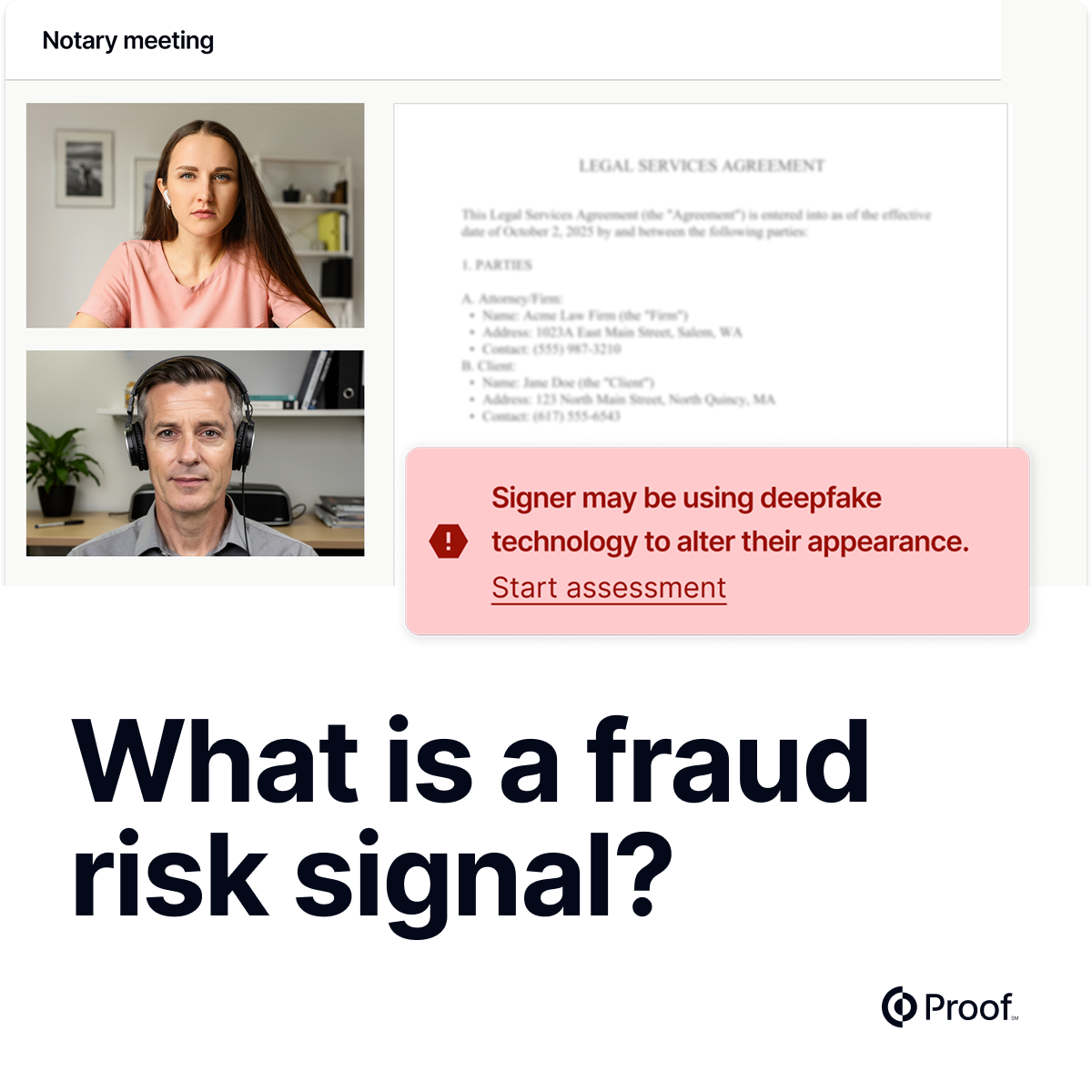
- Fraud detection signals, including protections against impersonation and AI-driven attacks
- Flexible deployment through APIs and configurable user experiences
Product lowlights:
- Human review can be part of the flow (by design), which may not fit teams that want fully automated resolution
- No assumption of pre-built integrations for every system of record
2. Persona
Persona is a configurable identity verification platform that teams use when they want to design verification flows around different risk levels, user types, and business lines. It supports multiple verification methods and is commonly positioned as flexible enough for many internal teams, not just compliance. Persona tends to be a fit when you want to orchestrate identity checks as a system, not as a single point solution.
Product highlights:
- Broad set of verification methods that can be combined into workflows
- Configurable verification flows that can adapt to different risk thresholds
- Case management and review tooling (useful when you do not want pure automation)
- API + webhook support for custom implementations
Product lowlights:
- Flexibility can come with heavier setup and ongoing tuning
- Pricing is not always straightforward to evaluate early
3. Jumio
Jumio focuses on identity verification with core building blocks like ID document checks, selfie + liveness, and risk-based decisioning. It’s frequently used in onboarding flows where teams want biometric and document verification packaged as a repeatable, productized experience. Jumio also positions itself around “identity intelligence,” meaning the goal is not only verification, but also decision support.
Product highlights:
- ID document authenticity checks
- Selfie + liveness and face matching
- Risk-based decisioning and platform approach to verification + screening
Product lowlights:
- Biometric-heavy steps can add friction depending on your audience and channel
- Best results usually require careful tuning of pass/fail thresholds and fallback paths
4. Veriff
Veriff positions its product around fast automated verification with fraud prevention and compliance support for digital businesses. It is commonly used in consumer sign-ups and marketplaces where conversion matters, but you still need strong checks against impersonation and spoofing. Veriff also offers related capabilities like biometric authentication, which can matter if you want IDV to extend beyond onboarding.
Product highlights:
- Document and identity verification designed for quick decisions
- Biometric authentication options for returning users
- Fraud-prevention positioning alongside identity verification
Product lowlights:
- As with any automated-first tool, edge cases still need a clear escalation plan
- “Fast” verification can become a trade-off conversation if your use case demands very high assurance
5. Trulioo
Trulioo is often selected for its global reach and identity data coverage, especially when onboarding spans many countries and document types. It positions itself as a single platform/API for identity verification, pulling from a large network of data sources and supporting both person and business verification. This tends to be the fit when “coverage and locality” is the headline requirement.
Product highlights:
- Coverage across 195+ countries and access to 450 data sources
- Support for large numbers of verifiable ID documents
- One-platform, API-led approach geared for international onboarding
Product lowlights:
- Breadth-first solutions may still need added layers if your primary threat is advanced impersonation
- Implementation quality depends heavily on choosing the right checks per region
6. Socure
Socure is best known for identity verification and fraud prediction using data and machine-learning-driven risk insights, including focus on synthetic identity fraud. It’s often used when teams want to make an identity decision with higher confidence using broader identity intelligence, not only document and selfie checks. If your problem is “real people vs. fabricated identity fragments,” Socure is commonly part of that conversation.
Product highlights:
- AI-powered identity verification and fraud prevention, including synthetic identity detection
- Synthetic identity fraud detection offering
- Risk analytics approach that can complement other verification layers
Product lowlights:
- Teams still need to define how risk scores translate into action (approve, step-up, deny)
- May require pairing with other capture methods depending on your workflow
7. AU10TIX
AU10TIX offers identity verification with a strong emphasis on document verification and automated processing, alongside liveness and video-based capabilities. It is frequently positioned around identity proofing and onboarding where the goal is to verify identity quickly while reducing manual reviews. Teams often look here when they want a vendor that is explicitly centered on identity verification as a standalone capability.
Product highlights:
- Document verification capabilities (passports, IDs, etc.)
- Liveness detection and video-based verification options
- KYC-oriented positioning and automation focus
Product lowlights:
- Like most KYC-centric stacks, you will still need a plan for repeat authentication and account lifecycle
- Best fit depends on your jurisdictional requirements and document mix
8. IDnow
IDnow is commonly associated with European identity verification, including expert-led video verification workflows and related trust services like eSignatures. It is often selected when teams want a more “equivalent to face-to-face” verification option, or when the process needs to accommodate users who benefit from guided, human-assisted verification. IDnow also supports automated options and eID-style flows in certain contexts.
Product highlights:
- Expert-led video verification designed to approximate face-to-face checks
- Automated identity verification options
- eID product for NFC-based verification in supported markets
Product lowlights:
- Human-assisted verification can be slower or higher-cost than fully automated flows
- Market fit can skew regionally depending on your audience
9. Onfido (Entrust)
Onfido offers identity verification using document and biometric checks, and it became part of Entrust after Entrust completed its acquisition in April 2024. In practice, Onfido is frequently evaluated when teams want a mature document + selfie verification flow with SDK-style capture experiences. Post-acquisition, it sits within a broader identity-centric security portfolio under Entrust.
Product highlights:
- Document and biometric verification approach that is widely used in digital onboarding
- Alignment with Entrust’s broader identity-centric security portfolio
Product lowlights:
- As with most doc + selfie tools, your outcome quality depends on orchestration, thresholds, and fallback design
- Some teams may prefer a vendor that is more purpose-built for their specific vertical workflow
10. LexisNexis Risk Solutions (InstantID)
LexisNexis Risk Solutions offers identity verification products that lean heavily into reference data and matching of personally identifiable information (PII). InstantID is positioned as an identity verification tool that matches PII to a large U.S. reference database to help confirm identity, commonly in U.S.-centric contexts. This is often chosen when the workflow benefits from data-driven identity matching and you want verification that can happen without requiring every user to complete biometric capture.
Product highlights:
- PII matching against a large reference database (InstantID)
- Identity verification positioning within a broader fraud and identity management portfolio
Product lowlights:
- Best fit is often strongest where your user base and data coverage align (commonly U.S.-centric)
- Data matching alone may not be sufficient for high-assurance, high-adversary impersonation scenarios
What to look for in an identity verification solution
Not all identity verification tools are built for the same job, and most are still built for the easy one. Some optimize for speed and conversion at signup. Others are designed to withstand audits, disputes, and increasingly sophisticated fraud tactics. Before choosing an IDV solution, get clear about which problem you are actually trying to solve.
- Start with assurance level. Ask whether the verification needs to hold up in regulated, high-risk, or legally binding transactions, or whether it simply needs to reduce obvious fraud at the front door. Higher-assurance use cases typically require stronger identity proofing, clearer evidence trails, and support for human review when something doesn't look right.
- Next, consider threat coverage. Document checks and selfie matching are table stakes. Modern IDV should also account for synthetic identities, deepfake attempts, and coordinated fraud. The right solution combines multiple signals: biometrics, device intelligence, behavioral analysis, and liveness, instead of relying on a single pass-or-fail moment.
- User experience matters just as much. Identity checks that feel confusing or invasive can slow real users down or push them away entirely. The best platforms balance security with clarity, using mobile-first flows and risk-based step-ups so low-risk users aren't over-challenged.
- Finally, think about how identity fits into your broader workflow. Can verification results be reused? Are they auditable later? Do they integrate cleanly with the systems where decisions actually happen? Identity is rarely a one-time event, from onboarding through ongoing account management, and the right solution should support that reality.
Identity verification is no longer just a checkbox at onboarding. It is a foundation for trust across every digital interaction, from account access to high-value transactions. The tools on this list represent different approaches to that challenge, each with its own strengths depending on your risk profile, industry, and scale.
Here is the reality: seeing is no longer believing. When deepfakes can impersonate clients and synthetic identities can pass standard checks, trust must be provable, not assumed. If your priority is high-assurance identity verification that can stand up to fraud, audits, and real-world scrutiny, Proof is built for exactly that.






























.jpg)




































.jpg)