The POA Process for Leasing: Why Manual Workflows Are Costing You Deals


Updated August 11, 2026
The POA process for leasing is the last paper-dependent step in an otherwise digital workflow. You've invested in faster underwriting, electronic signatures, and CRM integrations. Then a single power of attorney document stalls everything.
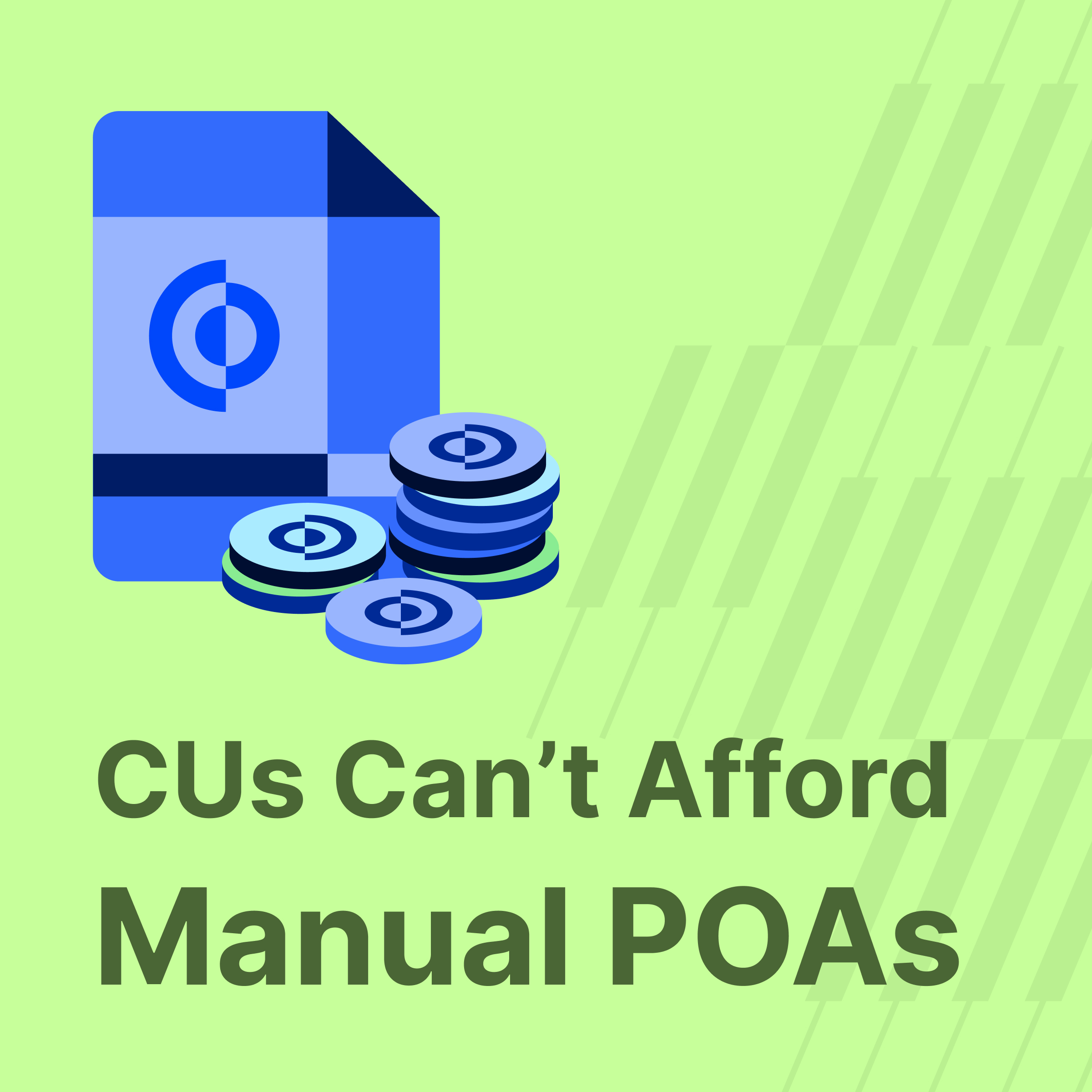
In equipment finance and leasing, powers of attorney (POAs) are essential to closing deals. They authorize lien releases, title transfers, and asset delivery. When that process depends on paper, appointments, and physical delivery, it becomes the bottleneck that kills deal velocity.
This guide breaks down exactly what makes the POA process for leasing so friction-heavy, what it costs your operation, and how digital notarization solves it.
Key takeaways
- Manual POA workflows are the most common cause of deal delays in equipment finance and leasing, because they depend on paper, in-person notaries, and manual identity review that no longer meet state RON standards.
- Remote online notarization (RON) is legal in 49 states and Washington, D.C. as of 2026, meaning electronically notarized POAs are accepted as originals across nearly every U.S. jurisdiction.
- State RON laws now require credential analysis, government-issued ID presentation, and identity proofing before a notarization is valid. Manual POA processes meet none of these standards.
- 66% of Proof POAs are completed on a mobile device in under six minutes, which means the process can match the pace of your fastest deals.
- A digital POA workflow creates a tamper-proof audit trail that is defensible in court, protecting your organization when a transaction is challenged.
- Digitizing the POA process for leasing reduces operational drain, closes fraud exposure, and improves the customer experience without adding complexity to your team.
What is a POA in the context of leasing?
A power of attorney is a legal document that authorizes one person or entity (the agent) to act on behalf of another (the principal) in specific transactions. In equipment finance and leasing, a POA typically authorizes the leasing company or a designated agent to handle title transfers, lien releases, and asset delivery on the lessee's behalf, without requiring the lessee to be physically present at every step.
The POA must be notarized to be legally valid. That notarization requirement is where the process breaks down for most leasing operations.
Why the POA process for leasing slows everything down
The POA process for leasing is a systemic blocker, not just a slow patch in your workflow. State laws across the country already recognize electronically notarized documents as originals, yet most leasing operations still run POAs through a paper-based process that looks like this:
- Paper forms require printing, scanning, or physical delivery
- Signers may be remote, unavailable, or lack access to a notary
- Errors or omissions force rework and resubmission
- Staff rely on manual review to validate identity and authorization
When deals are moving fast, that lag translates to lost revenue, frustrated customers, and greater exposure.
What manual POAs are really costing your leasing operation
- Deal delays: Leases stall when POAs are not signed or notarized quickly. That holds up funding, delivery, and sometimes billing. A deal that closes two weeks late because of a paper POA is a deal that costs you more than the notary fee.
- Operational drain: Teams spend hours chasing signatures, redoing paperwork, and coordinating notary appointments. That time could be spent closing the next deal. The administrative cost of a manual POA process compounds across every transaction in your portfolio.
- Risk exposure: Forged signatures. Outdated authorizations. Unverified signers. Every manual POA introduces opportunities for fraud or legal dispute. State RON laws now require credential analysis, government-issued ID presentation, and identity proofing before a notarization is valid. Manual POA processes meet none of these standards, leaving your organization without the defensible evidence it needs when a transaction is challenged.
Poor customer experience: Requiring signers to fax forms or drive to a notary creates friction that reflects poorly on your organization. In a competitive lending environment, that frustration has a cost. Borrowers who experience a cumbersome POA process remember it when they evaluate their next lease.
How to digitize the POA process for leasing
Digitizing POAs is about upgrading a weak link in your leasing chain. A modern POA workflow is fast, compliant, and defensible by design. Here is what that looks like with Proof:
- Fully remote completion: Sign and notarize POAs online from any device, with no appointments, no delays, and no paper trail. Signers connect with a commissioned notary on a live video call, complete their session, and receive the finished document immediately. The result is accepted in all 50 states. 66% of Proof POAs are completed on a mobile device in under six minutes.
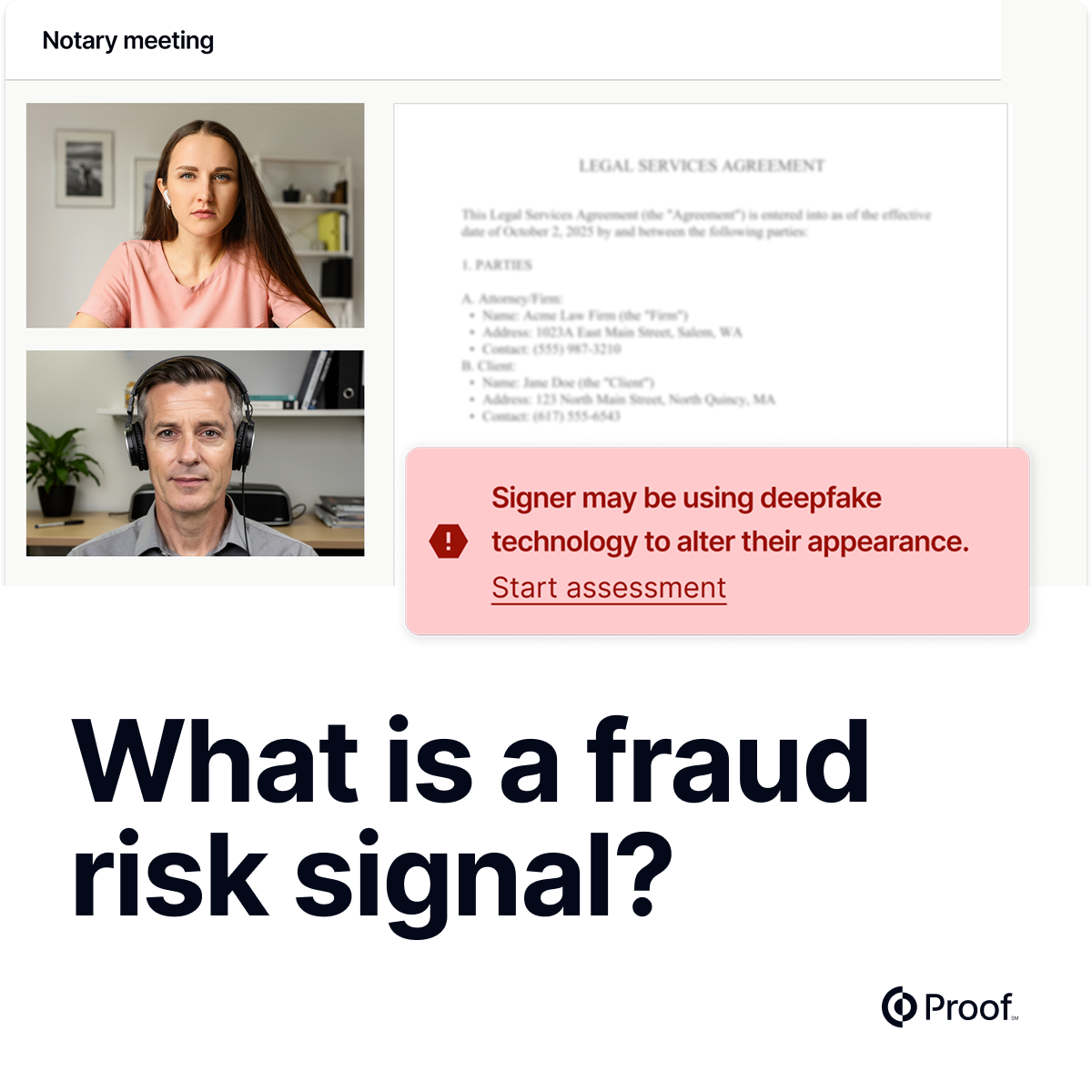
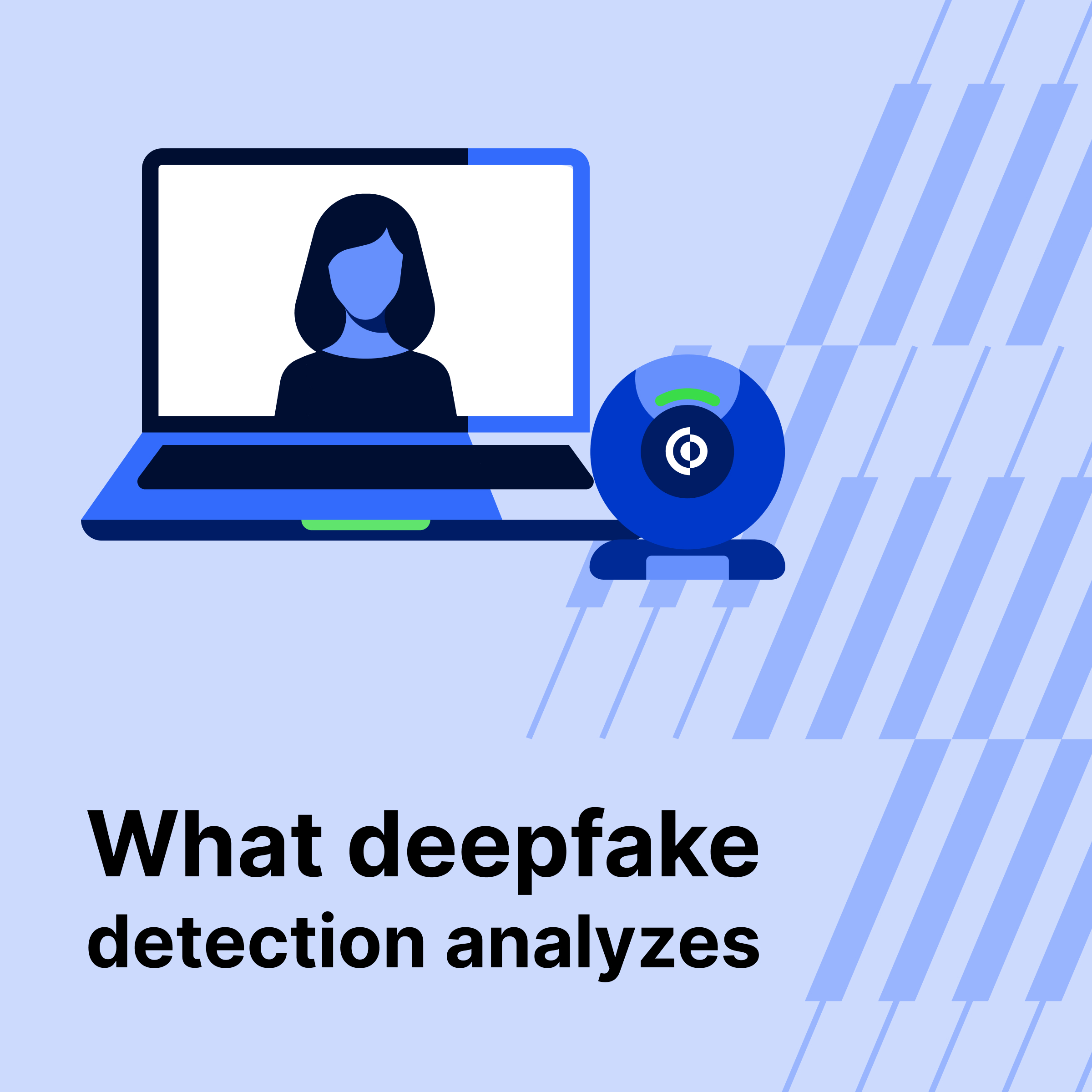
- Built-in identity checks: Every Proof session layers multiple verification steps: government ID scans, facial biometrics, fraud scoring, and credential analysis, all completed before a document is ever finalized. That multi-layer approach satisfies state RON identity proofing requirements and creates a defensible audit trail for every transaction.
Compliant by default: Proof embeds state-specific requirements and RON standards into every workflow. That means fewer errors and less back-and-forth with legal or compliance teams. The workflow enforces compliance automatically rather than relying on staff to catch it manually. - Instant routing and archiving: Completed POAs are immediately available to staff, stored in your system of record, and sealed with a tamper-proof audit trail. There is no waiting for documents to arrive by mail or be manually uploaded.
How the online notarization process works for leasing POAs
The process is four steps, with no office visit required.
- Upload your document from any device.
- Verify identity using a government-issued ID, facial biometrics, and fraud scoring.
- Connect with a notary via live audio-video session.
- Receive the completed, tamper-proof document, instantly routed and archived.
With Proof, the entire process takes under six minutes on average. Every session generates a cryptographic audit trail, so the document is defensible from the moment it is signed.
From friction to confidence
The POA process should not be the reason a deal stalls or fraud gets through. With a digital workflow, it does not have to be.
Your team gets tools that reduce workload and risk. Your customers get an experience that fits how they actually work today. And you turn a behind-the-scenes burden into a front-line advantage.
In a tightening credit environment, leasing firms are under pressure to close faster, cut risk, and streamline operations. A clunky POA process works against all three. A digital one eliminates the problem entirely.
Want to see how top leasing providers are transforming POAs from a paperwork problem into a performance boost? Watch our on-demand webinar with industry experts and a real-time demo of digital POAs in action.






















.jpg)

































.jpg)