Online Closings for Title Companies: How to Serve Buyers and Sellers Anywhere


Updated August 4, 2026
The real estate market no longer operates within a single zip code. Buyers relocate across state lines for jobs. Investors purchase properties in markets they have never visited. International clients pursue U.S. real estate from abroad. Title companies that rely on location-based, in-person closing workflows are limiting themselves to a shrinking slice of available business.
Online closings for title companies solve this problem directly. With secure digital workflows, verified identity, and remote online notarization, geography stops being a constraint. The result is a larger addressable market, faster transactions, and a fraud posture that is stronger than paper-based alternatives.
Key takeaways
- RON is legal in 49 states and Washington, D.C. as of 2026, making online closings an operational option for nearly every title company in the country.
- Title companies that offer online closings unlock new client categories: out-of-state buyers, relocating sellers, international clients, and investors who cannot or will not travel to close.
- Digital closings reduce cost and error. Research from MarketWise Advisors found that title agents can save up to $100 per transaction when using remote online notarization (RON), and lenders save up to $444 per loan.
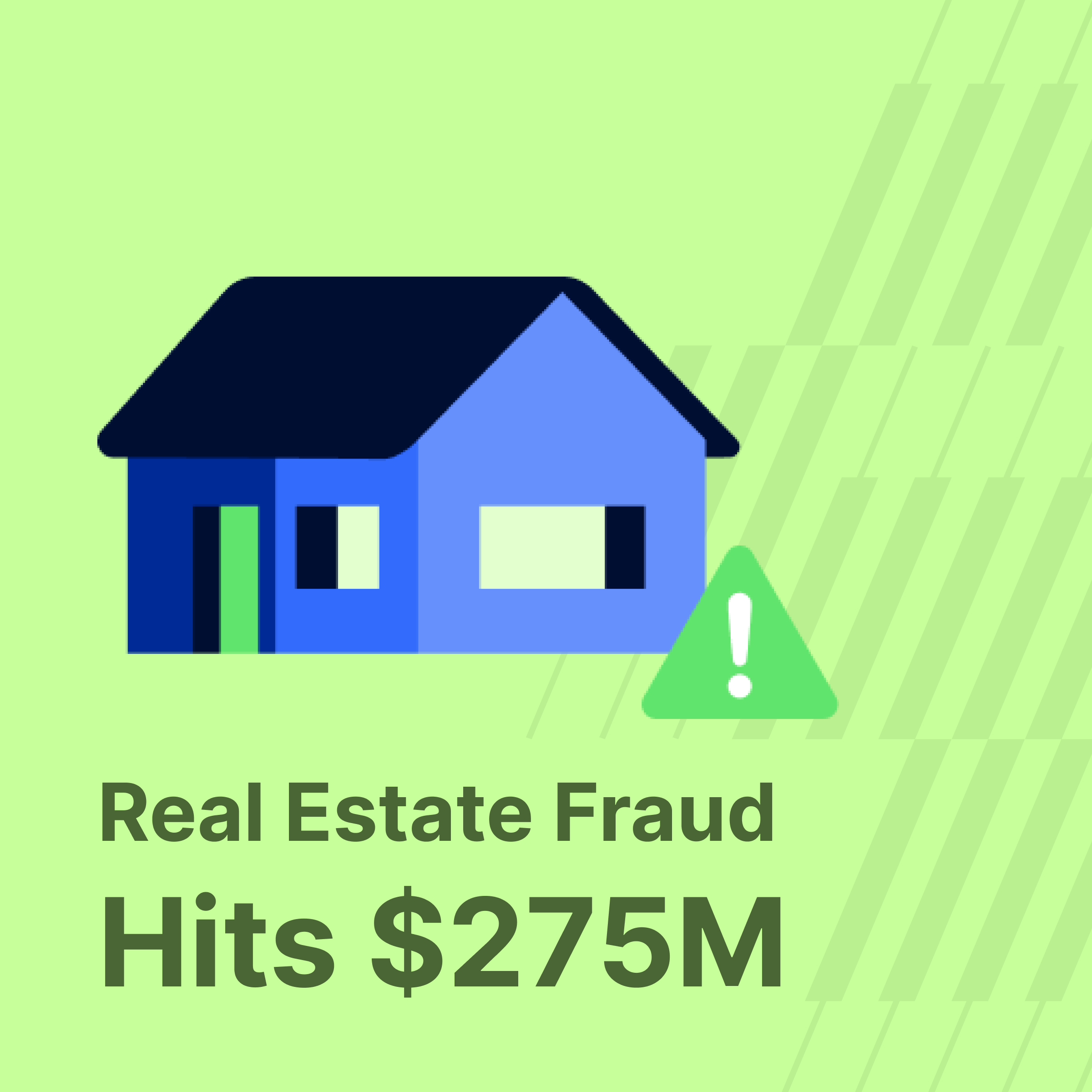
- Fraud risk in remote closings is real and rising. Real estate fraud hit $275 million in 2025, up 58% year over year. Weak identity verification at closing is the primary vulnerability.
- The Proof Engine enforces more than 4.5 million compliance rules programmatically, removing the burden of manually tracking state RON laws, underwriter requirements, and investor eligibility from your team.
- Online closings are a competitive differentiator today. Title companies that adopt them now build the operational infrastructure, lender relationships, and client trust that will define the next decade of the market.
Types of digital closings title companies should know
Not all online closings work the same way. The right closing type depends on the state, the lender's requirements, and whether the transaction involves an eNote. Here are the four formats title companies encounter most often:
- Hybrid eClosing. The most common format. Signers complete non-notarized documents electronically before closing day, then appear in person to wet-sign the promissory note and any documents requiring notarization. Hybrid closings are legally available in all 50 states and are the standard entry point for title companies moving toward digital workflows.
- Remote online notarization (RON). A fully digital closing in which all documents, including notarized documents, are signed electronically via a live video session with a commissioned notary. The notary verifies signer identity using credential analysis, knowledge-based authentication (KBA), and biometric comparison. RON is the format that enables completely remote closings, with no in-person requirement for any party.
- In-person electronic notarization (IPEN). All parties appear in person, but documents are signed electronically rather than with wet ink. The notary verifies identity on-site and applies a digital seal. IPEN is useful in states where RON is not yet available or where lenders require physical presence.
- Remote ink-signed notarization (RIN). A paper-based process in which signers ink-sign documents on camera while a notary watches via video. The documents are then mailed back for final notarization. RIN was widely authorized as a temporary measure during the pandemic and remains available in some states, but it lacks the automated identity verification of RON and carries higher chain-of-custody risk.
For most title companies building a scalable digital closing practice, hybrid eClosing and RON are the two formats that matter most.
Why title companies are adopting online closings
The business case for online closings is operational and competitive, not just technological:
-
- Cost savings and efficiency. Research from MarketWise Advisors found that title agents save up to $100 per transaction and lenders save up to $444 per loan when using RON. Digital workflows eliminate document shipping costs, reduce scheduling overhead, and cut the back-and-forth that comes with incomplete paper packages. Proof Close delivers a 31% reduction in errors compared to traditional closing processes.
- Faster closings and funding. Electronic documents are delivered instantly. Signed closing packages are available to all parties immediately after the session ends. Faster delivery to lenders accelerates secondary market delivery and speeds up commission checks for real estate agents, which strengthens your referral relationships.
- Fewer errors and missed signatures. Digital platforms enforce required fields before a session can complete. Missing signatures and incomplete notarizations, two of the most common causes of post-closing rework, are eliminated by the workflow itself.
- Consumer demand. Research from Stavvy found that 85 to 90 percent of consumers elect for digital or online closing when offered the option. Lenders are increasingly requiring title partners with digital capabilities. Title companies without online closing options are losing business to those that have them.
- Expanded market reach. Online closings let title companies serve clients regardless of location. A seller who has already relocated to another state, a buyer purchasing remotely, an international client avoiding the logistics of a U.S. Embassy visit: all of these transactions become straightforward when your closing workflow is not tied to a physical office.
The fraud risk title companies cannot ignore
Online closings are more secure than traditional paper closings when implemented correctly. They are more vulnerable when identity verification is weak.
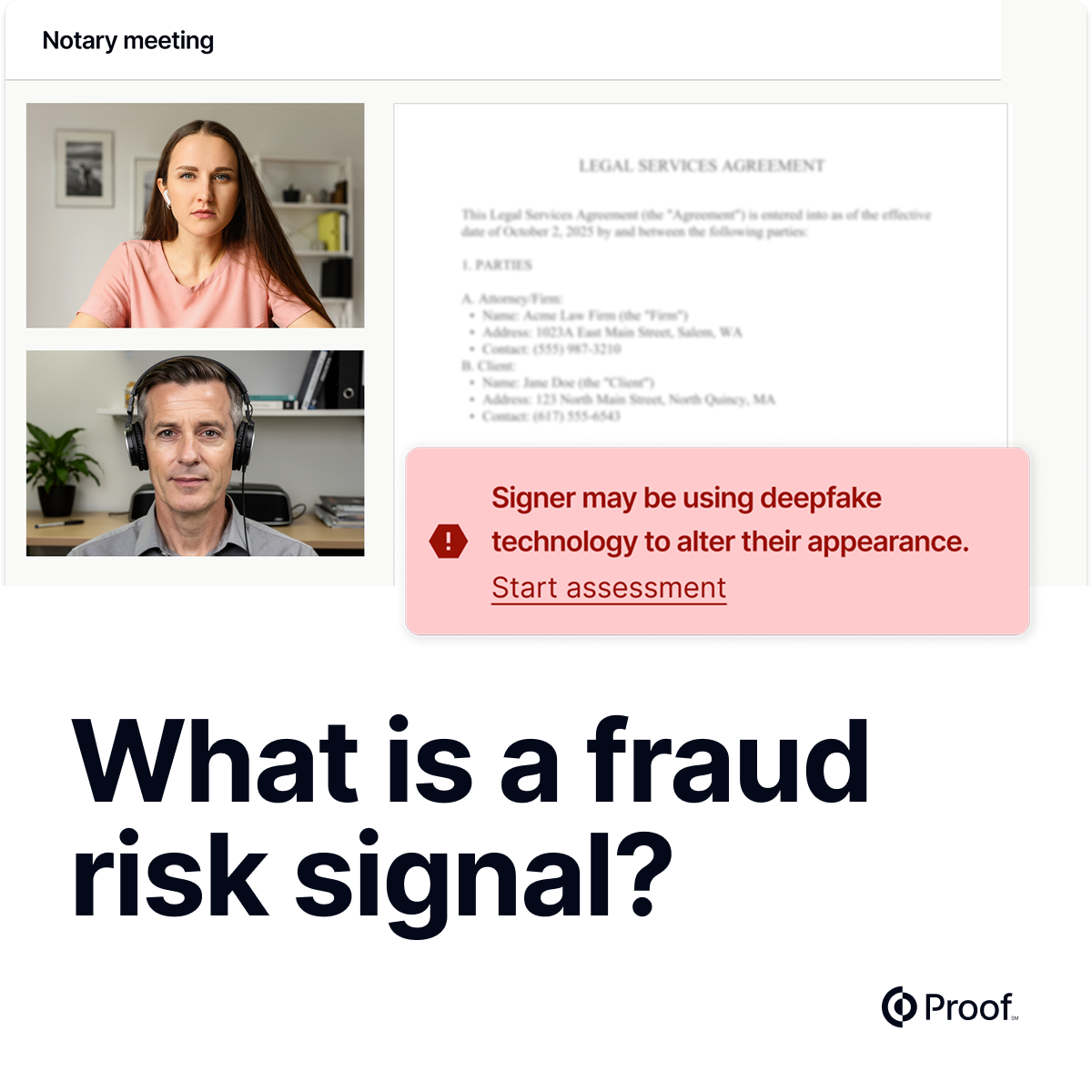
Real estate fraud hit $275 million in 2025, up 58% year over year. The primary attack vectors are identity impersonation at closing, document forgery, and wire fraud. AI-generated fake IDs can now pass standard visual inspection. Deepfake technology enables bad actors to impersonate sellers or buyers on video calls. These are active threats in the current market, not hypothetical future risks.
The security of a remote closing depends entirely on the strength of the identity verification behind it. A RON session that relies only on KBA questions provides a much weaker guarantee than one that combines credential analysis, biometric comparison, and liveness detection.
Proof's identity verification completes 25 checks in under five seconds. The Defend fraud intelligence layer monitors every session for deepfakes, impersonation signals, and document tampering. If a session triggers a risk flag, it is held for review before the closing proceeds. The result is a closing that is more defensible than a wet-ink transaction, because every step is recorded, verified, and cryptographically signed.
For title companies, this matters beyond fraud prevention. When a claim arises, the audit trail from a Proof closing provides documented evidence of who signed, when, and with what level of identity verification. Paper closings cannot provide that.
How to get started with online closings at your title company
Moving from traditional closings to digital workflows is a phased process. Here is a practical sequence:
- Assess your state and underwriter requirements first. Confirm which closing types are available in the states where you operate. Contact your underwriter to confirm their approved platform list and any specific requirements for RON transactions. Proof's compliance engine handles this automatically once you are on the platform, but your initial setup should confirm alignment with your underwriter.
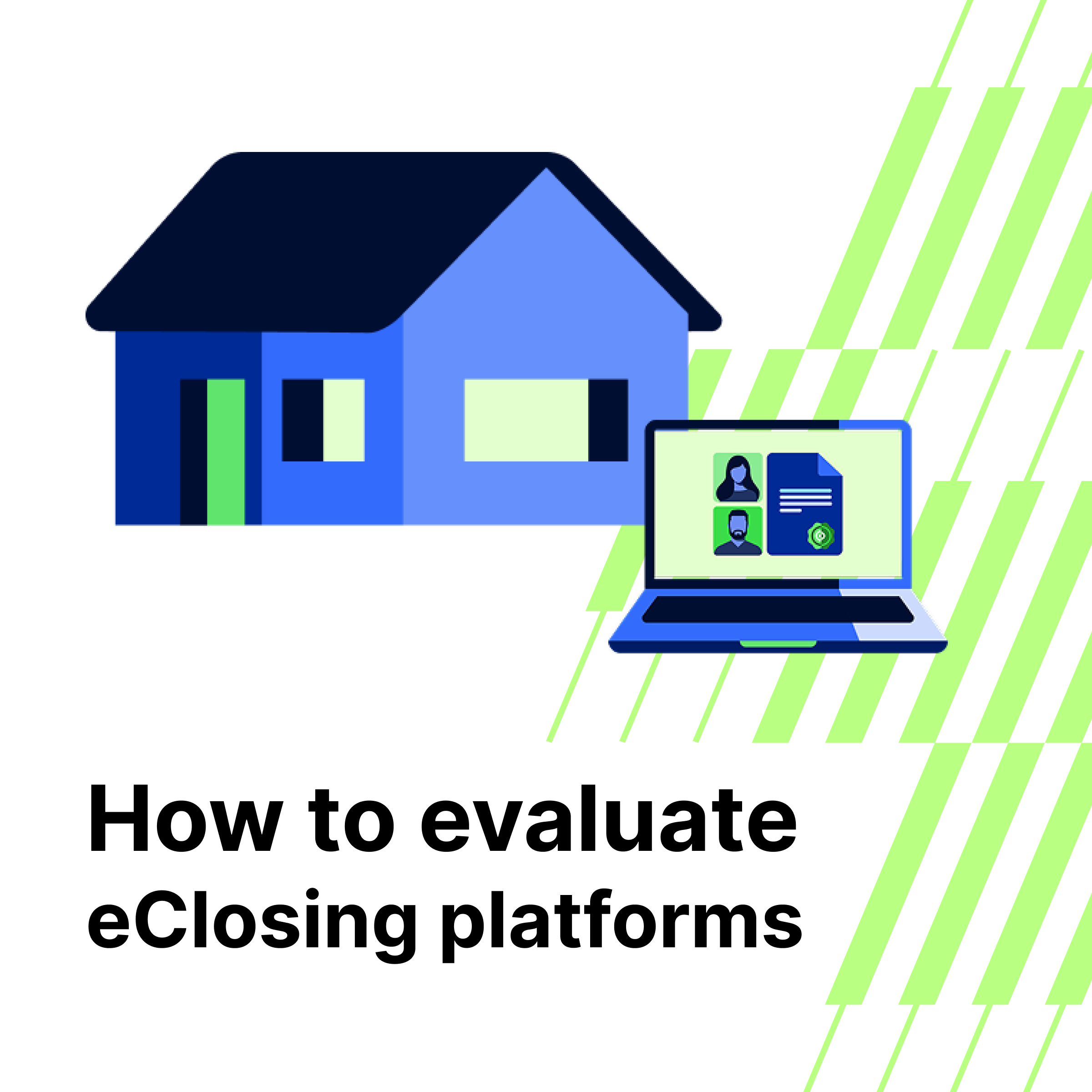
- Choose an integrated platform. Point solutions that handle only one part of the closing workflow create gaps. An integrated platform that combines identity verification, notarization, eSignature, and fraud detection in a single workflow is more defensible and more efficient. Proof Close supports the full closing lifecycle, from eligibility verification through document delivery and secure archiving.
- Train your team on the workflow differences. RON closings are operationally different from wet-ink closings. Notaries must be commissioned for RON in states that require separate certification. Closing coordinators need to understand how to set up packages, manage identity verification steps, and handle sessions where a signer fails automated verification and requires escalation to a live agent.
- Market your capabilities to lenders and real estate agents. Lenders are actively seeking title partners with digital closing capabilities. Real estate agents benefit from faster closings and fewer scheduling constraints. Positioning your company as an eClosing-enabled operation is a concrete differentiator in competitive markets. Announce your capabilities to your referral network, and offer to educate lender partners on the workflow.
- Use in-house notaries or the Notarize Network. Proof Close gives you the option to use your own commissioned notaries for RON sessions, with overflow to the Notarize Network when demand exceeds capacity. The Notarize Network provides 24/7 availability with sub-second wait times, so your clients are never blocked by scheduling constraints.
Borderless closings as a competitive strategy
The title companies that will lead the next decade are the ones building digital closing infrastructure now. The regulatory environment supports it: RON is available in 49 states. The consumer demand is there: the majority of clients prefer digital options when offered them. The fraud risk is manageable with the right platform. The cost savings are documented.
Is your business ready to serve clients anywhere? 👉 Explore Proof for Real Estate




















.jpg)






































.jpg)