How To Protect Your Business Against Ransomware Attacks


Updated August 20, 2026
Ransomware shuts businesses down. From school systems canceling exams to a 157-year-old Illinois college closing permanently to the Colonial Pipeline attack that triggered gas shortages across the eastern United States, the damage is real and escalating. Knowing how to protect against ransomware attacks is no longer optional for any organization that depends on its systems and data to operate.
In a ransomware attack, cybercriminals gain access to a targeted network or application, typically through phishing or stolen credentials, then encrypt the organization's data and hold it hostage until a ransom is paid. Modern ransomware has evolved beyond encryption alone. In what's known as double extortion, attackers steal data before encrypting it, then threaten to publicly release it if the ransom isn't paid. Paying up doesn't guarantee your data stays private, and backups alone no longer fully protect you.
The financial toll is substantial. According to Sophos' The State of Ransomware Report 2022:
- 66% of organizations experienced a ransomware attack in 2021, a 37% increase over 2020
- The average ransom payment rose to over $800,000, five times the amount demanded in 2020
- The IBM Cost of a Data Breach Report found the average ransomware attack cost $4.62 million, exceeding the $4.24 million average cost of a standard data breach
Because the damages can be so significant, businesses need to proactively prevent attacks, limit damage if an attack occurs, and ensure fast recovery. Here are five proven ways to do that.
Key takeaways
- Ransomware exploits identity first. Most attacks begin with stolen credentials or phishing, which means protecting access and verifying who is behind every request is your first line of defense.
- Zero trust reduces both intrusion likelihood and blast radius. Least-privileged access and micro-segmentation limit what an attacker can reach, even with valid credentials.
- Multifactor authentication (MFA) is necessary but not sufficient. SMS-based codes can be intercepted through SIM-swapping; biometric verification adds a layer that's materially harder to compromise.
- Identity assurance is the through-line. Every control described here, from zero trust to phishing training, ultimately protects identity and access. Organizations that verify who is behind every transaction and authorization request close the gap that ransomware exploits.
What is ransomware and how does it work?
Ransomware is malicious software that encrypts files or locks systems to force a victim into paying for recovery. Modern ransomware attacks do more than lock data. Different attack variants combine encryption, data theft, and extortion to pressure victims from multiple directions simultaneously.
Attackers don't appear out of nowhere. There is typically a window where the attacker is lurking inside the environment, exploring systems, establishing persistence, abusing credentials, and preparing to move fast. That dwell time is the window where prevention and detection controls can stop the attack before the ransom note appears.
Understanding how ransomware gets in is the foundation for knowing how to prevent ransomware attacks.
How ransomware attacks get into your organization
Ransomware enters through a small number of well-documented vectors. Closing these entry points is the most direct form of ransomware attack prevention:
- Phishing and email-based delivery remain the most common entry point. According to IBM's X-Force Threat Intelligence Report, 41% of attacks started with phishing. Attackers craft convincing emails that replicate corporate logos, spoof sender addresses, and create urgency to prompt a click or an attachment download.
- Stolen credentials are the second major vector. Attackers purchase credentials from data breaches on dark web markets, then use them to authenticate as legitimate users. Once inside, they move laterally and escalate privileges before deploying ransomware.
- Remote Desktop Protocol (RDP) abuse is a persistent threat. RDP is convenient for remote access and equally convenient for attackers. Exposed RDP ports, combined with weak or reused passwords, give attackers a direct path into organizational systems.
- Vishing and social engineering have expanded beyond email. Attackers now use phone calls, SMS (smishing), and social media messages to trick employees into handing over credentials or logging into fake sites. The FBI has issued official warnings about this technique.
- Unpatched vulnerabilities in operating systems and applications give attackers exploitable entry points that have already been publicly documented. Unpatched systems stay on attacker targeting lists for exactly this reason.
Five ways to protect against ransomware attacks
1. Use a zero trust approach
Traditionally, businesses focused on protecting their physical network perimeter. With the rise of remote work and cloud-based systems, that perimeter no longer reliably exists. Zero trust has become the modern standard. The Microsoft Zero Trust Adoption Report 2021 found that 76% of organizations surveyed were in the process of implementing zero trust.
Zero trust is a framework built on the assumption that no user or device is authorized by default. Every access request requires verification. Within that framework, two controls are especially effective against ransomware:
- Least-privileged access: Users are granted only the access required for their specific role. When stolen credentials are used in an attack, the attacker's reach is limited to that user's narrow permissions rather than the full network.
- Micro-segmentation: The network is divided into small, isolated segments. If ransomware is deployed, it's contained to a single segment rather than spreading across the entire organization.
Implementing zero trust reduces both the likelihood of successful intrusion and the blast radius when one does occur.
2. Enforce multifactor authentication
Many ransomware attacks begin with stolen credentials. Making those credentials harder to use is one of the most direct defenses available. Multifactor authentication (MFA) requires users to prove their identity in two or more ways before accessing a system, and it's a core element of any zero trust implementation.
A standard setup requires both a password and a one-time code sent to a registered phone. Even if an attacker has the password, they can't access the system without also controlling the device. For higher-security environments, stronger MFA methods are available.
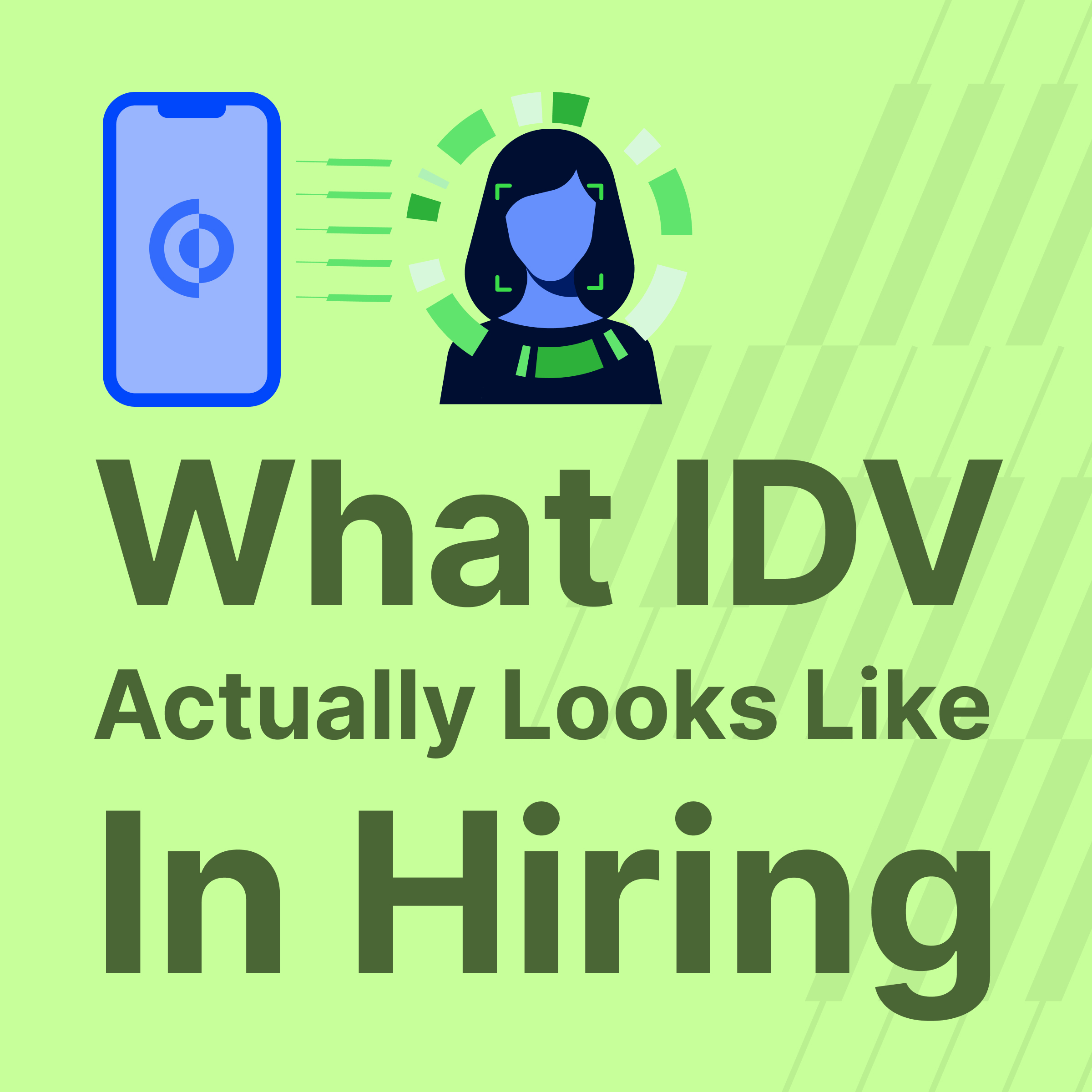
Biometric verification, including fingerprint scans and facial recognition, adds a layer that's much harder to compromise than a code sent via SMS. SMS-based codes can be intercepted through SIM-swapping attacks. The right approach depends on your risk profile, but every layer of authentication makes unauthorized access materially harder.
MFA is necessary, but it has limits. Attackers increasingly use social engineering and AI-generated impersonation to bypass authentication controls entirely. Identity verification that confirms a real, verified person is behind each request adds assurance that MFA alone cannot provide.
3. Back up data regularly and test recovery
Regular backups give organizations a path to recovery that doesn't depend on paying a ransom. Sophos found that 73% of organizations used backups to restore data encrypted during a ransomware attack.
To be effective, backups need to be isolated. If your backup lives on the same server as your primary data, ransomware can corrupt both at once. Store backups off-site and disconnected from the main network. Test the full recovery process regularly, not just the backup itself. Discovering a flaw in your restoration process during an actual attack is a costly way to find out.
One important caveat: backups address data encryption, but they don't address data theft. In double extortion scenarios, attackers exfiltrate sensitive data before encrypting it. A clean restore gets your systems running again, but it doesn't prevent the attacker from releasing that data. Detection speed and identity-layer controls matter as much as recovery infrastructure.
4. Prevent phishing attacks with technology and training
Phishing is the most common entry point for ransomware, and it works because attackers have become skilled at making malicious emails look legitimate, including replicating corporate logos and spoofing sender addresses.
Common phishing tactics:
- Emails impersonating trusted brands, vendors, or internal IT teams
- Links to convincing-looking login pages designed to capture credentials
- Attachments containing malware that executes on download
- Fake invoice or payment notifications that prompt urgent action
What you can do:
- Deploy email scanning technology that flags malicious links and attachments before they reach employee inboxes
- Train employees to recognize phishing indicators: mismatched sender addresses, spelling errors, and pressure to act quickly
- Establish a clear reporting process so staff know where to send suspicious emails
- Define what to do if someone accidentally clicks a link, such as disconnecting the device from the network and contacting IT immediately
AI-generated phishing has raised the stakes. Attackers now produce convincing, personalized messages at scale. Employee training reduces risk, but verification is the safety net when training isn't enough.
5. Train employees to recognize vishing and social engineering
As employees have become more cautious about phishing emails, attackers have expanded to vishing: voice-based social engineering attacks where a caller tricks an employee into handing over credentials or logging into a fake site.
The Proofpoint State of the Phish report found that 69% of organizations faced vishing attacks in 2021, yet only 23% of organizations globally include vishing in their security training.
Vishing has also expanded beyond phone calls. Attackers now use SMS (smishing) and social media messages to run similar schemes, creating a false sense of personal familiarity that causes employees to lower their guard. The through-line across all of these methods is the same: attackers are trying to get someone inside your organization to hand over their credentials.
Training employees to recognize these tactics is the most direct defense. Cover all three vectors: phone calls, text messages, and direct social media contact. Make it clear that no legitimate internal system will ask for credentials through these channels, and give employees a safe way to verify requests before acting on them.
Why identity is the real target in every ransomware attack
Ransomware attacks succeed when attackers can move through your systems unchallenged. Every measure described above, from zero trust to MFA to phishing training, is fundamentally about protecting identity and controlling access.
The attack chain is consistent across ransomware incidents:
- Attacker gains initial access through phishing, stolen credentials, or RDP abuse
- Attacker authenticates as a legitimate user
- Attacker moves laterally, escalating privileges
- Attacker exfiltrates data and deploys ransomware
Steps two and three depend entirely on the attacker being able to impersonate a legitimate identity without detection. Organizations that can verify who is behind every transaction, every credential, and every authorization request close the gap that ransomware exploits.
This is where identity verification becomes a ransomware defense, not just a compliance requirement. When every high-stakes authorization, whether that's an account recovery request, a wire transfer, or a system configuration change, is tied to a verified identity, attackers lose the ability to impersonate their way through your organization.
Building a layered defense against ransomware
Protecting against ransomware requires layered prevention and recovery controls working together. No single tool or policy closes every gap.
The most effective ransomware defense combines:
- Zero trust architecture with least-privileged access and micro-segmentation
- Strong MFA, preferably biometric, across all remote access points
- Isolated, tested, off-site backups with verified recovery procedures
- Email scanning and phishing awareness training
- Vishing and social engineering training covering phone, SMS, and social media
- Behavioral monitoring that detects suspicious activity before encryption begins
- Identity verification at high-stakes authorization points to confirm who is really behind each request
- A tested incident response plan that defines isolation steps, communication protocols, and recovery procedures
The organizations that contain ransomware fastest are the ones that catch attacker behaviors early, before encryption, lateral movement, and extortion can do the real damage.
Proof's identity verification and fraud detection help organizations verify who is behind every transaction, every credential, and every authorization request, so that compromised identities don't become entry points. Whether you're protecting a closing workflow, a financial transaction, or sensitive internal systems, the principle is the same: identity assurance is your first line of defense.
See how Proof Identify works to learn how Proof supports your organization's security posture.

























.jpg)







































.jpg)