To Prevent Seller Fraud, Verify Seller Identity Long Before The Closing Date


Updated August 20, 2026
Seller impersonation fraud is rising across the United States, and the real estate industry's current verification process is built to catch it at exactly the wrong moment. Fraudsters are selling properties they do not own by falsifying deeds, assuming the real owner's identity, or committing notary fraud. The losses run into hundreds of millions of dollars annually. And the first time anyone in a typical transaction verifies the seller's identity is at the closing table.
That is the problem. The fix is straightforward: move identity verification to the beginning of the transaction, not the end.
Key takeaways
- Seller impersonation fraud succeeds because no one verifies the seller's identity until closing, giving fraudsters an uncontested path through the entire transaction lifecycle.
- A fraudster only needs to deceive one person, the signing agent or notary, with a fake ID to collect sale proceeds and disappear.
- Inserting identity verification at the time of listing or when escrow opens eliminates the window of opportunity that seller impersonation fraud depends on.
- Proof Identify runs credential analysis with biometric facial comparison, knowledge-based questions, and a NIST IAL2-compliant workflow, and it deploys without new code.
- Title companies that verify seller identity early protect their own company, their title underwriters, lenders, home buyers, property owners, and real estate agents on both sides of the transaction.
What is seller impersonation fraud?
Seller impersonation fraud, also called seller fraud, occurs when a bad actor poses as the rightful owner of a property and attempts to sell or encumber it without the real owner's knowledge. The fraudster collects the sale proceeds and disappears before the scheme is discovered.
This type of fraud is distinct from buyer fraud or wire fraud, though it often intersects with both. The defining characteristic is that the person claiming to be the seller has no legal ownership of the property.
How seller impersonation fraud works
Understanding the mechanics of seller fraud reveals why the current closing-table verification model fails to stop it.
Fraudsters have access to a wide range of tools:
- Forged deeds or titles. A fraudster creates or alters ownership documents to establish a paper trail that appears legitimate.
- Tampered notarizations. Paper notarizations can be forged or altered to make a fraudulent document look authentic.
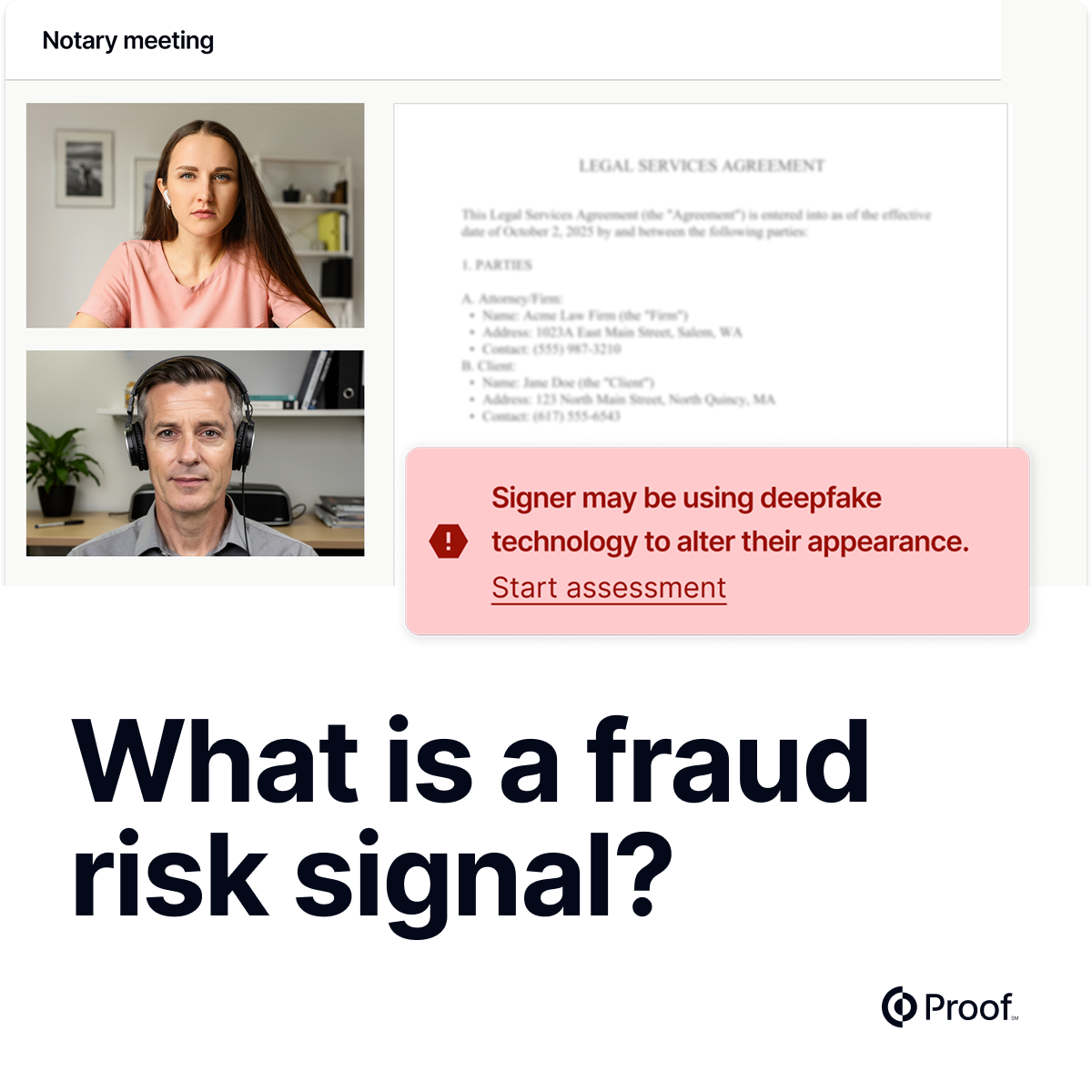
- Deepfakes. Bad actors have attempted to use deepfake technology to impersonate property owners on video calls and during online notarization sessions.
- Stolen identity data. Sophisticated fraudsters use the real owner's Social Security number and driver's license number, making their impersonation harder to detect with standard checks.
The scheme works because the real estate transaction process has no identity checkpoint at the start. A fraudster can move through the listing, contract, and escrow stages without ever being asked to prove they are who they claim to be.
Why the closing table is too late
Historically, sellers have not been asked to produce identification when they initiate a property sale. Listing agents are not required to verify a seller's identity, and they rarely do so voluntarily. Remote transactions make this gap worse: non-owner-occupied properties such as vacant land, vacation homes, and rental properties are frequently owned by people who live in a different state or country. There is no natural in-person checkpoint at the start of these sales.
Here is how the typical transaction unfolds:
- A buyer and seller agree on a purchase and sale contract.
- The contract goes to the title and escrow provider.
- The title company begins collecting information about both parties to support the title exam and manage escrow.
- The seller's identity is verified for the first time at the closing table.
At every stage before closing, the fraudster has moved freely through the process. By the time a signing agent or notary checks an ID, the fraudster only needs to defeat that single checkpoint. A convincing fake ID is often enough. Once the transaction closes, the proceeds are gone.
Red flags that indicate seller fraud
Title companies, listing agents, and escrow officers should treat the following as signals that warrant additional scrutiny:
- The seller is unwilling or unable to meet in person or on video.
- The property is non-owner-occupied (vacant land, vacation home, rental property).
- The seller insists on an unusually fast timeline.
- The seller's contact information does not match public records associated with the property.
- Documents appear to be notarized outside of vetted networks.
- The seller's identification documents look inconsistent or are difficult to verify.
- The property is listed below fair market value with pressure to close quickly.
These red flags are most dangerous when they appear in combination. A remote seller who owns vacant land and wants a fast close is a high-risk profile that warrants identity verification before the listing goes live.
How to verify seller identity before closing
The solution is to insert identity verification at the beginning of the transaction, at the time of listing or when the title company opens escrow. Two points in the workflow are most effective.
At the listing stage. Listing agents can add identity verification to their client onboarding process. This creates the earliest possible opportunity to detect and stop a fraudster before they can even list a property. An agent who verifies the seller's identity upfront removes the risk of investing time in a fraudulent transaction.
When escrow opens. Title companies can require identity verification as part of their standard escrow-opening workflow. This catches fraud before the transaction advances and before any funds are at risk.
Both checkpoints work together. A fraudster who cannot pass identity verification at the listing stage never reaches escrow. A fraudster who slips through the listing stage can still be stopped when the title company opens escrow.
What a seller identity verification workflow looks like
Proof's Identify solution is designed to fit into existing workflows without new code. It deploys as a plug-and-play product that can be added to a company's process in multiple ways.
When a seller receives an Identify request, they complete one or more of the following verification steps:
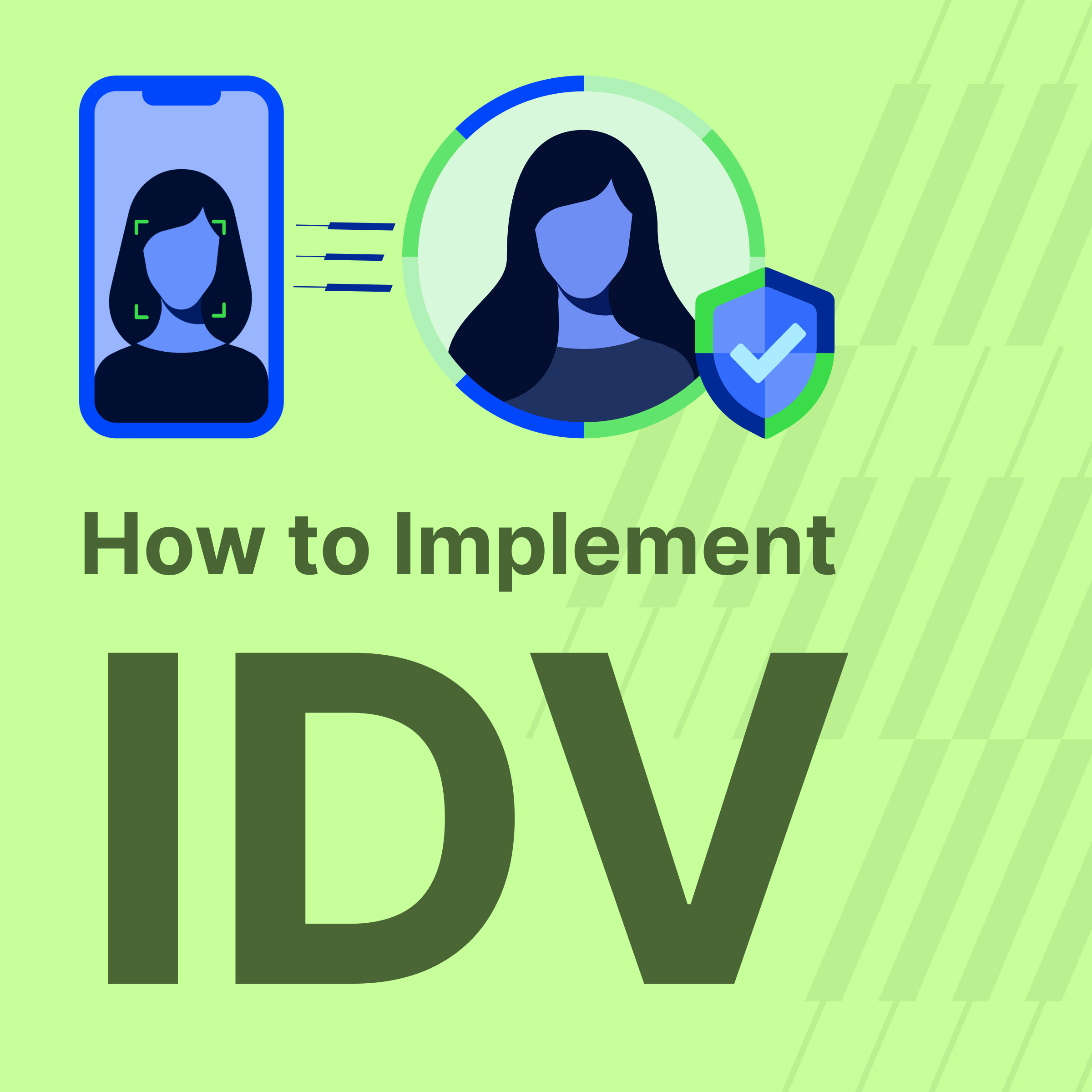
- Credential analysis with biometric facial comparison. The seller captures their government-issued ID and takes a selfie. The system checks the document's authenticity and confirms the face matches the ID.
- Knowledge-based authentication (KBA). The seller answers questions drawn from public and private records that only the real owner should be able to answer.
- NIST IAL2-compliant workflow. For higher-risk transactions, the verification adds additional identification layers to meet the federal standard for identity assurance.
If a user fails automated verification, the workflow escalates to a live trusted fraud agent for review. The outcome is a detailed Proof identity report that documents the verification result and any risk indicators, creating a durable record that protects all parties.
How deepfakes are changing seller fraud
AI-generated deepfakes have raised the threat level for remote identity verification. Fraudsters have attempted to use deepfake video to impersonate property owners during online notarization sessions. A signing agent relying on visual cues alone cannot reliably detect a high-quality deepfake.
This is why biometric verification and liveness detection matter. Proof's Defend layer performs deepfake detection on live video, flagging suspicious sessions for human review before a transaction advances. Visual verification without cryptographic or biometric backing is no longer a sufficient control.
The real estate industry needs to treat deepfake-enabled fraud as a current operational risk, not a future concern. The tools to commit this fraud are available now. The tools to detect it need to be deployed now as well.
Seller fraud prevention best practices for title and listing teams
The following checklist reflects what a defensible seller fraud prevention program looks like in practice:
- Verify seller identity at the time of listing, before the property goes to market.
- Require identity verification when escrow opens, as a standard step in the workflow.
- Use credential analysis with biometric facial comparison, not just knowledge-based questions alone.
- Apply heightened scrutiny to non-owner-occupied properties, including vacant land, vacation homes, and rental properties.
- Flag transactions where the seller is unwilling to complete video verification or appears to be using deepfake technology.
- Maintain a durable identity report for every transaction that documents the verification result and risk indicators.
- Ensure your verification workflow meets NIST IAL2 standards for high-risk transactions.
- Train listing agents to recognize red flags and to treat identity verification as a standard part of client onboarding.
What title companies and listing agents can do right now
The real estate industry has a clear path to eliminating seller impersonation fraud. It does not require a regulatory mandate or a technology overhaul. It requires moving a single step, identity verification, from the end of the transaction to the beginning.
Title companies that use Proof's Identify solution early in the closing workflow stop fraud before it starts. This protects their own company, their underwriters, lenders, buyers, property owners, and agents on both sides of the deal. Listing agents who add Identify to their client onboarding process create the earliest possible detection point, before a fraudulent listing ever reaches escrow.
The closing table is too late. The listing appointment and the escrow opening are the right moments to verify who is selling.
See how Proof Identify works for title companies and listing agents.









































.jpg)



















































.jpg)