How Remote Witnessing Helps Your Customers Plan for Retirement


Updated August 20, 2026
Financial advisors are being asked every day to help clients manage their retirement in a digital-first economy. Consumers are more mobile now than ever before and almost all find that technology has improved access to financial services. So, you might be looking for more ways to use online tools to help meet their needs. Thanks to recent changes at the IRS, enabling remote witnessing to complete spousal consent waivers is a great place to start.
When it comes time to make changes to a retirement plan, either a withdrawal or to name a beneficiary, federal laws exist to protect married couples by requiring spouses to obtain consent before making certain changes to qualified retirement plans.
Recently the Retirement Learning Center Resource Desk at the National Association of Plan Advisors responded to a question from a financial advisor about whether remote witnessing is allowed in a spousal consent waiver.
Here is the Q&A:
A plan participant would like to use an online notary for a spousal consent waiver for a distribution. Is this permitted?
Yes, a properly executed remote spousal consent waiver is permissible and can be used if the terms of the plan document allow for electronic witnessing. A rule, REG–114666–22, proposed by the IRS revised the physical presence requirement for spousal consent waivers in Treasury Regulation 1.401(a)-21(d)(6). Remote witnessing by a notary public or a plan representative are now permissible alternatives.
Thanks to the recent IRS guidance, plan sponsors can now deliver the flexibility their participants have asked for by allowing them to meet with a notary online to complete a spousal consent waiver.
Several tech-savvy retirement plan providers are already leveraging Proof. Proof powers Notarize which helps digitize these transactions and streamline what used to be a process slowed down by in-person notary meetings and paper documents.
Key takeaways
- Remote witnessing for spousal consent waivers is permanently permitted under IRS proposed regulation REG-114666-22, issued December 30, 2022, and plans may rely on it now.
- Two witnessing paths are available: a notary public using live audio-video technology, or a plan representative following five specific procedural requirements.
- The IRS requirements set a compliance floor. Online notarization platforms like Notarize by Proof add identity verification, tamper-evident records, and fraud detection that go well beyond that floor.
- Digitizing the spousal consent workflow reduces Not In Good Order (NIGO) rejections, shortens processing time, and creates a defensible audit trail for every transaction.
- Several retirement plan providers are already using Proof to run compliant remote spousal consent workflows at scale.
Digitizing your spousal consent workflow does much more than improve customer satisfaction
The IRS guidance creates a clear path, but plan sponsors who don't update their workflows are leaving compliance exposure and participant risk on the table.
Several retirement plan providers are already using Proof to digitize these transactions. Notarize by Proof lets participants connect with a notary online in minutes, 24/7, from anywhere, replacing what used to be a process slowed down by in-person meetings and paper documents.

What online notarization adds to your spousal consent workflow
Digitizing your spousal consent workflow with Proof delivers measurable operational gains:
Reduced NIGO scores
Fewer "Not In Good Order" rejections mean fewer costly delays from documents submitted with common errors, and faster resolution when something does need to be corrected.
Stronger fraud prevention
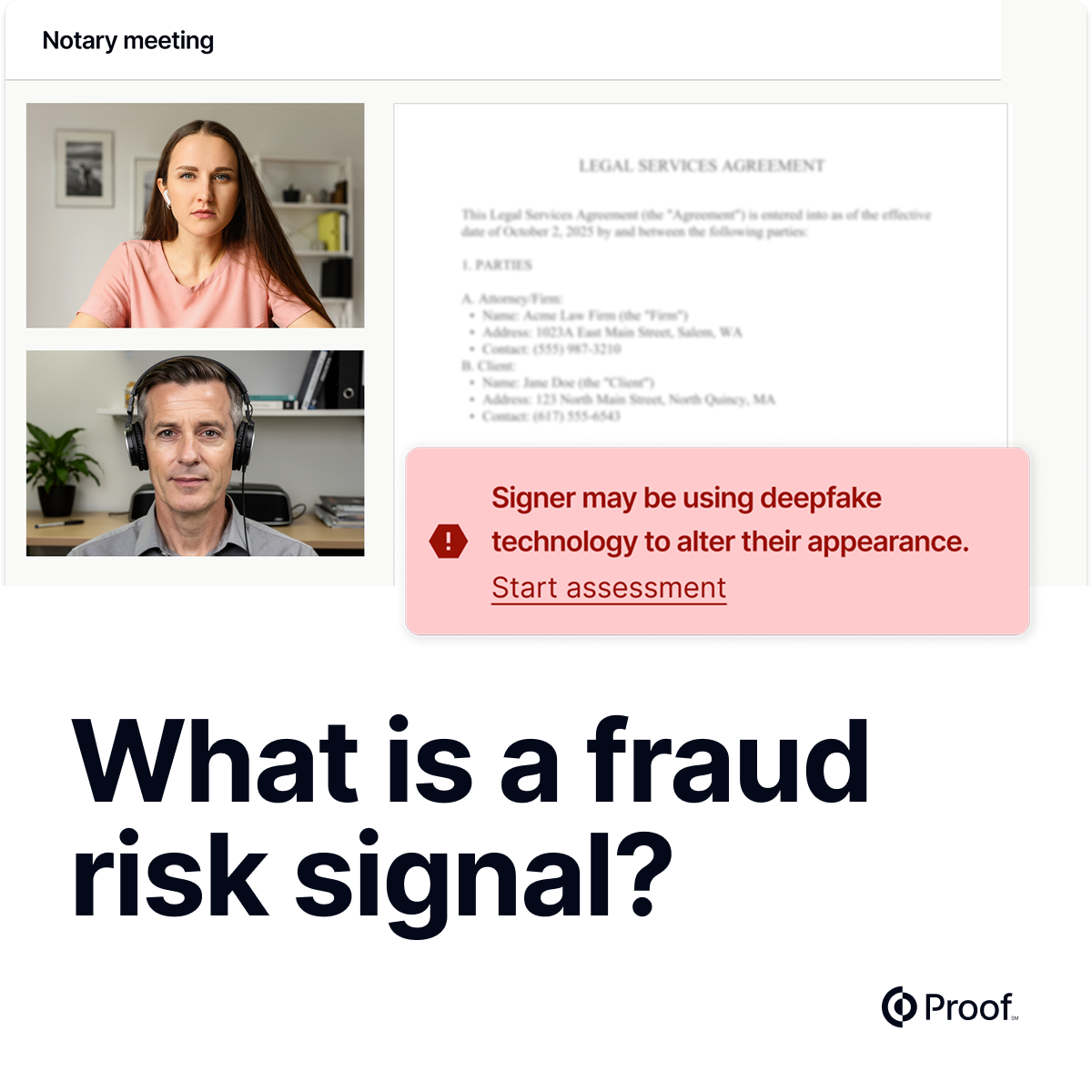
Online notarization uplevels your identity verification workflows, providing a significant improvement over the traditional in-person notary experience. Learn more about how Proof helps you interact with real customers.
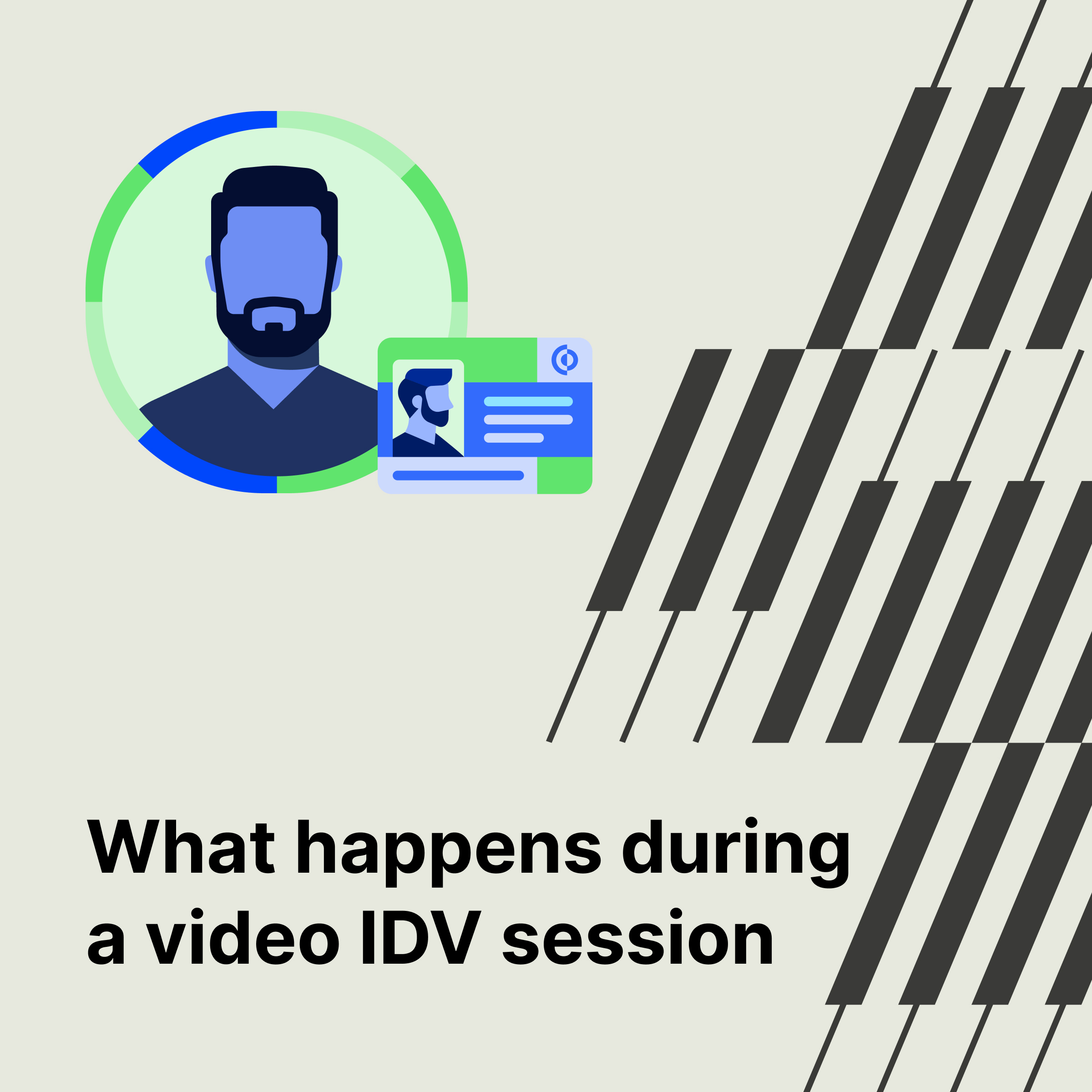
Spouses using Proof to meet with an online notary go through a multi-step identity check that improves on the traditional in-person process. In most cases, a signer will undergo:
- A multi-step identity verification process including knowledge-based authentication (KBA) and credential analysis, which checks the validity of a government-issued ID, with final identity validation by a live notary
- Verification based on the notary's personal knowledge of the signer's identity
- Identity verification by an oath made by a credible witness
Audio-visual recording of the signing session
This recording captures what the signer looked and sounded like when signing the document. It can be reviewed later if there is ever a question about the transaction.
Tamper-evident technology
Document integrity is protected from the moment the session ends. The platform also provides a comprehensive audit trail with the date and time of every signer action.
Notary authority to terminate
The notary can end the session immediately if they suspect fraud or coercion, adding a critical human check to the automated process.
These steps are central to online notarization and were designed to give spouses and retirement plan providers confidence when completing transactions through Proof.
The IRS guidance lays out a series of requirements plan sponsors must meet to onboard remote witnessing. Proof has already partnered with several leading retirement plan providers and has the tools to help your organization meet its compliance needs.
The content provided herein was generated by Proof for general informational purposes only and does not, and is not intended to, constitute legal advice. While we strive to provide accurate content, materials herein may not reflect the most up-to-date information. Always check with your own attorneys and advisors to obtain advice related to specific matters of law and matters requiring legal interpretation.






































.jpg)









































.jpg)