Healthcare Fraud and Medical Licensing: How Identity Verification Stops Fraud at the Door


Updated August 20, 2026
Identity verification in medical licensing is one of the most direct defenses against healthcare fraud. Verifying that providers are who they say they are is the foundation of a trustworthy system, and the gap between credential review and actual identity confirmation is where fraud enters.
Healthcare fraud is an industry-wide crisis that costs tens of billions of dollars every year, according to the FBI. At its core, it is an identity problem: impersonation of doctors, patients, and insurers is the mechanism behind most of the losses. When you cannot prove who is on the other side of a license, a claim, or a prescription, fraud scales.
Fraudsters exploit the full range of potential medical conditions and treatments to operate at scale, spreading false billings across multiple insurers and public programs like Medicare and Medicaid simultaneously. This increases their proceeds while reducing the chance that any single payer catches the pattern. In some cases, they use records of deceased patients to fabricate claims entirely.
The healthcare fraud medical licensing connection is direct: every fraudulent provider who enters the system through a licensing gap becomes a source of ongoing losses. Closing that gap at the point of entry is the most efficient place to stop the problem.
Key takeaways
- Healthcare fraud is fundamentally an identity problem. Impersonation of doctors, patients, and insurers drives tens of billions in annual losses, according to the FBI.
- Fraud charges can trigger medical licensing board action before any conviction occurs. Many boards treat allegations as grounds to open an investigation immediately.
- Strengthening identity verification during the medical licensing process is a front-line defense against fraudulent actors entering the system.
- Proof uses biometric matching, government ID scanning, and AI-driven fraud scoring to confirm that applicants are who they claim to be before a license is issued.
- Licensing boards receive a Proof Identity Report for every verified applicant: a complete, auditable record of every check run, every result returned, and every verification completed.
Fraud in the healthcare system
Patients, impersonators, and organized criminal networks all exploit identity gaps at different points in the system:
- Patients use other people's health insurance, or allow others to use theirs.
- Patients create fake bills for services they did not receive, often using other people's personal information, to bill insurance companies or Medicare.
- Fraudsters use bogus marketing schemes, convincing people to provide their health insurance ID and personal information under false pretenses, to bill for non-rendered services, steal identities, or enroll victims in fake benefit plans.
- People impersonate medical professionals to bill for or obtain health services or equipment without a license.
- People impersonate doctors to collect income from patients, bill insurance companies, or create online personas that generate advertising revenue.
- People steal doctors' personal information, including Social Security numbers, to forge prescriptions for medications like Oxycodone, sometimes by hacking third-party doctor portals.
Prescription fraud takes three primary forms:
- Forgery: Patients forge prescriptions to obtain controlled substances.
- Diversion: Patients sell their prescription medication on secondary markets.
- Doctor shopping: Patients visit multiple providers to obtain redundant prescriptions for the same controlled substances.
The human and financial cost of healthcare fraud
Like real estate fraud, healthcare fraud succeeds because of the amount of money, paperwork, and parties involved. But the financial losses are only part of the story.
Healthcare fraud has a human cost: patients subjected to unnecessary or unsafe medical procedures, medical records compromised by identity theft, and legitimate insurance information used to subsidize fraudulent claims that erode coverage for everyone.
Federal enforcement is intensifying. The DOJ's Health Care Fraud Unit has executed national takedowns in consecutive years, and the pressure on organizations to prove the identity of every provider, patient, and biller is only growing.
Combating healthcare fraud through medical licensing
The most direct way to combat healthcare fraud is at the point of entry: the medical licensing system. Medical licensing ensures that only qualified doctors are allowed to practice medicine. Licensing boards verify the backgrounds and qualifications of healthcare providers before they can practice, and anyone with a history of unethical behavior, including fraud, will not be allowed to practice.
Medical licensing boards also require licensed doctors to follow strict codes of conduct and abide by ethical standards, which serves as a deterrent to fraud. The system is only as strong as the identity verification behind it.
Most healthcare fraud depends on an identity gap: someone pretending to be a licensed provider, a covered patient, or an authorized biller. Closing that gap at the licensing stage means fewer fraudulent actors enter the system in the first place.
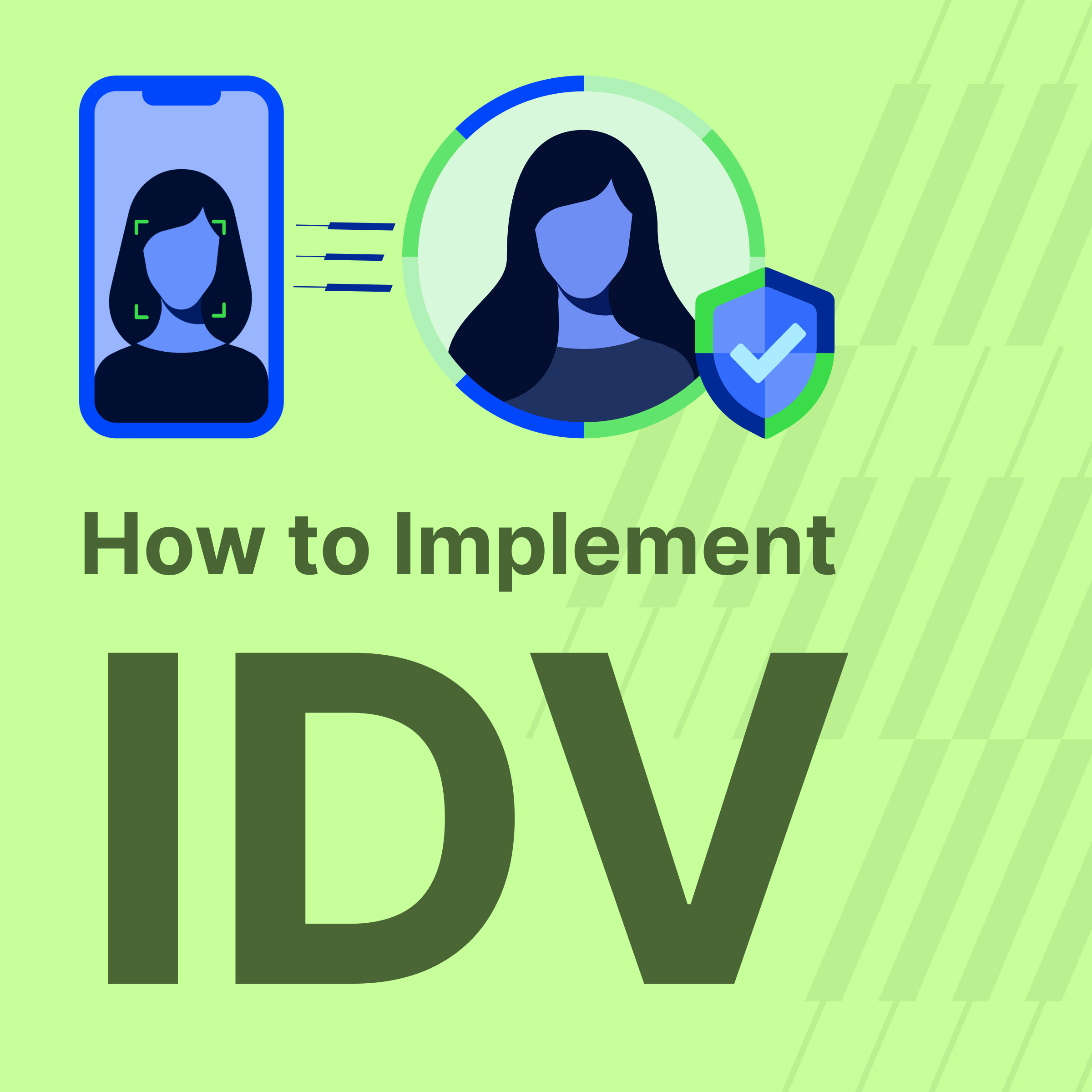
Proof makes the licensing process more secure and more efficient, verifying medical providers online before a fraudulent actor can enter the system. With Proof, your team places a verification link directly in the licensing workflow. Applicants complete the identity check online through the following steps:
- ID scan: Proof scans the applicant's government-issued ID.
- Biometric match: Proof validates that the person in front of the camera matches the person on the ID.
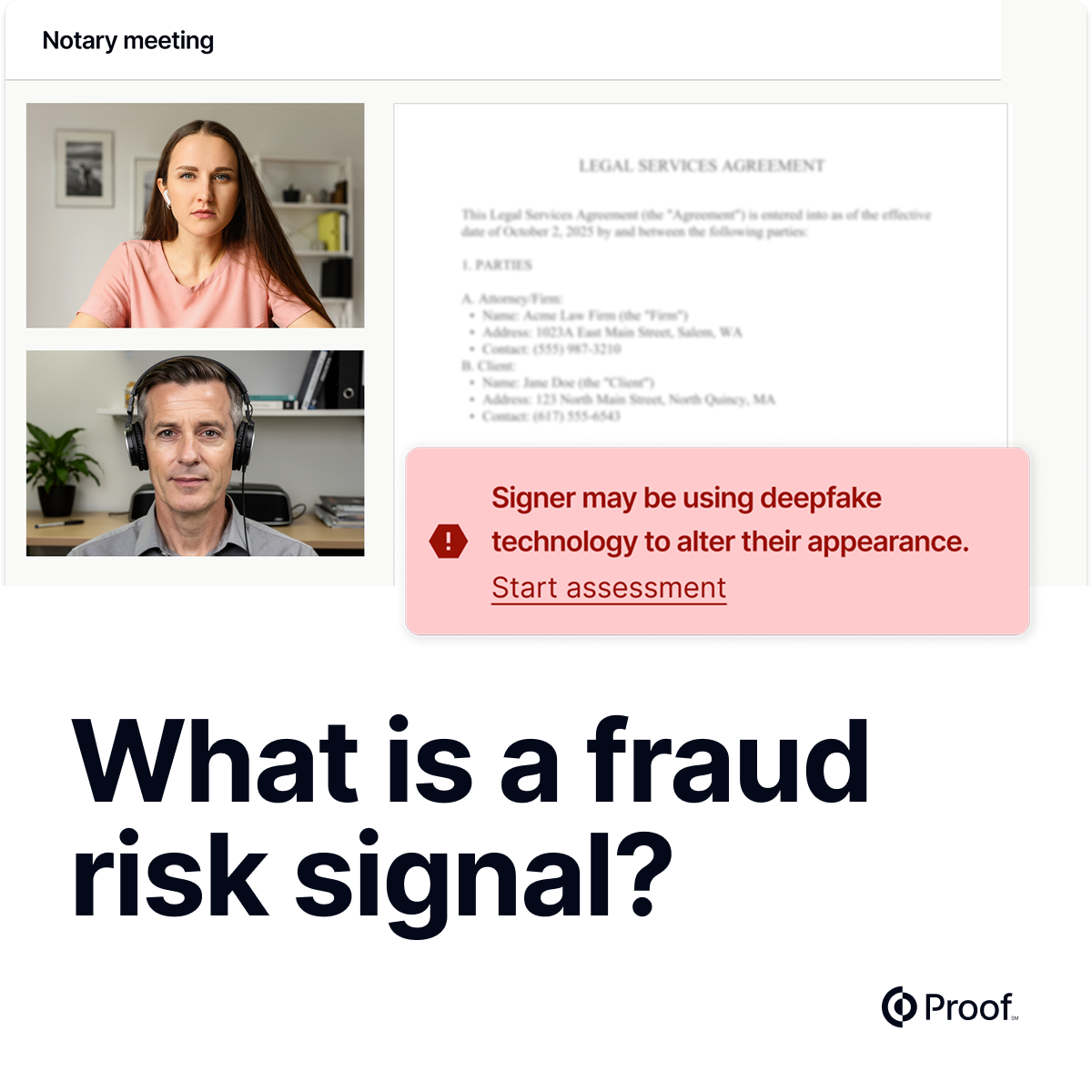
- Fraud scoring: The applicant's information is run through Defend, Proof's AI-driven fraud intelligence layer, which scores identity risk across behavioral signals, document authenticity, and network-level fraud patterns.
- Identity confirmation: If the automated check passes, the applicant signs digitally to confirm their identity.
The licensing board receives a Proof Identity Report: a complete, auditable record of every check run, every result returned, and every verification completed. The organizations that verify identity at every critical moment are the ones that build defensible records and reduce exposure across the entire provider lifecycle.
























.jpg)





































.jpg)