Deepfake Fraud Is Industrialized. Your Verification Stack Needs to Catch Up.


Updated August 20, 2026
Deepfake fraud has crossed a threshold. The tools to fabricate convincing video, audio, and identity documents are cheap, widely available, and improving faster than most defenses can adapt. For any organization that relies on identity verification to protect customers, transactions, or accounts, the question is no longer whether deepfakes will target your workflows. The question is whether your defenses are layered enough to catch them when they do.
Key takeaways
- Deepfake face swap attacks on identity verification systems increased by 704% in 2023, and deepfake fraud caused American companies to lose over $200 million in the first three months of 2025 alone.
- Single-point verification methods cannot stop deepfake fraud. A fraudster who knows which one check they need to pass will optimize their fake to pass it.
- A layered defense requires combining document verification, biometric checks, behavioral signals, device fingerprinting, and human-in-the-loop review to create a system that is difficult to game.
- Human review injects unpredictability into the verification process. A live agent can request something unexpected in real time, which automated deepfakes cannot reliably handle.
- Comparing a current interaction against past behavioral patterns, such as device, location, and timing, surfaces suspicious anomalies that synthetic identities cannot easily replicate.
What is a deepfake?
Deepfake fraud is the use of AI-generated synthetic media, including audio, video, and images, to impersonate a person or fabricate an identity for financial or informational gain. The synthetic content is convincing enough to deceive both humans and automated verification systems.
Most deepfakes are powered by generative adversarial networks (GANs): two AI models working against each other. One model, the generator, creates fake content designed to look as realistic as possible. The other, the discriminator, evaluates whether the output is convincing enough to pass as real. They iterate until the result is nearly indistinguishable from genuine media. The output can be a fabricated video call, a cloned voice, or a forged identity document photo.
The barrier to entry has collapsed. Fraudsters are now paying as little as $15 for a fake ID and using simple desktop software to bypass biometric selfie comparison tests. Free AI tools can clone a voice from under 60 seconds of audio. The scale of the threat is no longer theoretical.
How widespread is deepfake fraud?
The numbers establish the stakes clearly. Deepfake face swap attacks on identity verification systems increased by 704% in 2023, according to SC Media. Deepfake fraud caused American companies to lose over $200 million in the first three months of 2025 alone, with the average cost of producing a single deepfake now under two U.S. dollars.
According to Regula Forensics, over a third of companies will experience deepfake voice fraud, and 29% will be taken in by deepfake video fraud. A 2025 survey of over 300 cybersecurity leaders found that 62% of organizations faced a deepfake cyberattack in the prior year.
These attacks are also underreported. Research from the Center for Humans and Machines found a significant gap between people's confidence in identifying a deepfake and their actual performance. Shame and embarrassment after falling victim reduce the likelihood of disclosure, which makes it easier for attackers to operate undetected and unchallenged.
Real-world cases: the cost of believing what you see
The most instructive deepfake fraud cases share a common structure. A trusted identity, a plausible request, and a verification gap that allowed the fraud to succeed.
In one widely reported case, a finance officer at a multinational paid out nearly $500,000 to scammers during what he believed was a video call with company leadership. Every participant on the call, including the CFO and other colleagues, was a deepfake. The employee had initial doubts after receiving the original email, but the video call resolved them. That resolution was the attack.
In a 2019 case, a U.K.-based energy company lost $243,000 after criminals cloned the CEO's voice using AI, called the finance director, and instructed him to transfer funds to a supplier in Hungary. The fraudsters mimicked the CEO's tone, accent, and cadence precisely enough that the director believed the call was authentic.
In a more recent near-miss, fraudsters impersonated a European automaker's CEO using an AI-generated voice to push a fake acquisition deal. An executive grew suspicious of subtle audio distortions and verified with a personal question, ending the call and the scheme. The difference between a loss and a near-miss was a single moment of friction.
These cases reveal the same structural weakness: organizations trusted what they saw and heard without a verification layer that could confirm the identity behind the interaction.
Types of deepfake fraud targeting organizations
Deepfake fraud takes several distinct forms, each targeting a different point in the transaction lifecycle:
- Executive impersonation: Threat actors use AI to mimic a CEO, CFO, or other authority figure during live video calls or voicemails, instructing finance staff to authorize wire transfers or share credentials.
- Vendor fraud: Attackers pose as a known supplier or partner, typically requesting invoice payment or updated banking information.
- New account fraud: Fraudsters use fabricated video and forged IDs to open financial accounts under synthetic identities.
- Account takeover: Deepfake audio or video is used to impersonate an account holder during account recovery or password reset workflows.
- Biometric bypass: Synthetic faces or voice prints are injected into identity verification systems to pass liveness detection and selfie comparison checks.
- Hiring fraud: Candidates use real-time face swap technology to conduct video interviews as a fabricated identity, gaining access to systems, salary, or sensitive data.
Each attack vector exploits a different assumption: that a face on a screen is real, that a voice on a call is authentic, or that a document photo matches the person presenting it.
Why even trained employees fall for deepfakes
Deepfakes work because they exploit the same cognitive shortcuts that make human communication efficient. When something looks and sounds like a trusted person, the brain defaults to accepting it as real. Questioning that assumption requires a new skill that most people have never had to develop.
Research from Western Sydney University found that when people looked at deepfake images, their brains produced a different electrical signal than when viewing real images. But that signal rarely reached conscious awareness. The detection happened below the surface; the behavior did not follow.
Three psychological mechanisms make deepfakes especially effective in organizational settings:
- Authority bias: A request from a CEO or CFO carries weight that suppresses skepticism, even when something feels slightly off.
- Urgency: Time pressure prevents verification. Attackers manufacture urgency deliberately to shrink the window for independent confirmation.
- Social proof: When multiple participants in a video call appear legitimate, the presence of others reduces individual suspicion.
Training helps, but research consistently shows it has limited effectiveness in preventing people from falling for deepfakes in the moment. Awareness is a starting point, not a complete defense.
How to detect a deepfake in real time
Detection is one layer of defense. It is not sufficient on its own, but knowing what to look for creates opportunities to pause and verify before taking action.
Audio red flags:
- Monotone or flat affect, with speech that lacks normal emotional variation
- Odd pauses or rhythm that feels slightly off from natural conversation
- Absence of background sounds like breathing, throat clearing, or ambient noise
- Repetitive phrasing when the conversation goes off-script
Video red flags:
- Visual jitter or flickering around the face or hairline, especially during movement
- Unnatural blinking patterns, including too little or too much blinking
- Mismatched lip synchronization, particularly at the start or end of sentences
- Blurry or warped edges where the face meets the neck, hair, or background
- Inconsistent lighting or shadows that do not match the environment
Behavioral red flags:
- Extreme urgency combined with a request for money, credentials, or sensitive data
- A demand for secrecy or instructions not to verify through other channels
- Requests for payment via wire transfer, cryptocurrency, or gift cards
- Inability to answer unexpected personal questions or respond to off-script prompts
The critical limitation of detection is that deepfake technology improves continuously. Visual artifacts that were reliable indicators in 2022 are less visible in 2025. Detection buys time. It does not replace verification.
Why detection alone is not enough to stop deepfake fraud
Organizations that rely on detection as their primary deepfake defense are building on a shrinking foundation. Deepfake technology is specifically designed to defeat individual verification methods. A fraudster who knows which single check they need to pass will optimize their fake to pass it.
The detection gap is measurable. Humans correctly identify deepfake videos only 40% of the time. Automated detection tools improve but remain in an arms race with the generation tools they are trying to catch. Biometric Update summarizes the requirement clearly: "Only the combination of authenticity checks, support for electronic documents verification, cross-validation of personal data and ability to re-verify data on the server side can protect you from fraud."
The answer is a layered model that introduces uncertainty at every stage. When a fraudster does not know which combination of signals will be evaluated, engineering a successful attack becomes significantly harder.
How to build a layered defense against deepfake fraud
An effective defense against deepfake fraud combines multiple independent signals, each addressing a different attack vector that a synthetic identity alone cannot defeat.
Layer 1: Document and credential verification
Verify that the identity document presented is genuine, not fabricated. This includes checking document format, security features, and whether the document matches authoritative data sources. Fraudsters paying $15 for a fake ID can pass a visual check. They are harder to pass against a system running 25+ automated checks in under five seconds.
Layer 2: Biometric verification with liveness detection
Compare the face in the submitted selfie against the identity document photo, and confirm that the person is physically present rather than presenting a static image or injected video feed. Liveness detection specifically targets the biometric injection attacks that deepfake tools use to bypass selfie checks.
Layer 3: Device and behavioral signals
Evaluate the trustworthiness of the device being used, the geolocation of the request, the phone number associated with the account, and the behavioral patterns of the user across prior interactions. Comparing a current interaction against past behavior surfaces anomalies that synthetic identities cannot easily replicate. Did this person use this device last time? This location? Are they behaving the way they normally behave?
Layer 4: Multi-signal cross-validation
Check whether the email address is real or fabricated. Confirm whether the phone number is registered to the person claiming it. Verify whether the credit card or financial account matches the stated identity. Not knowing which of these signals will be checked forces a fraudster to guess at how to beat the system, and getting all of them right simultaneously is significantly harder than defeating any one check.
Layer 5: Human-in-the-loop review
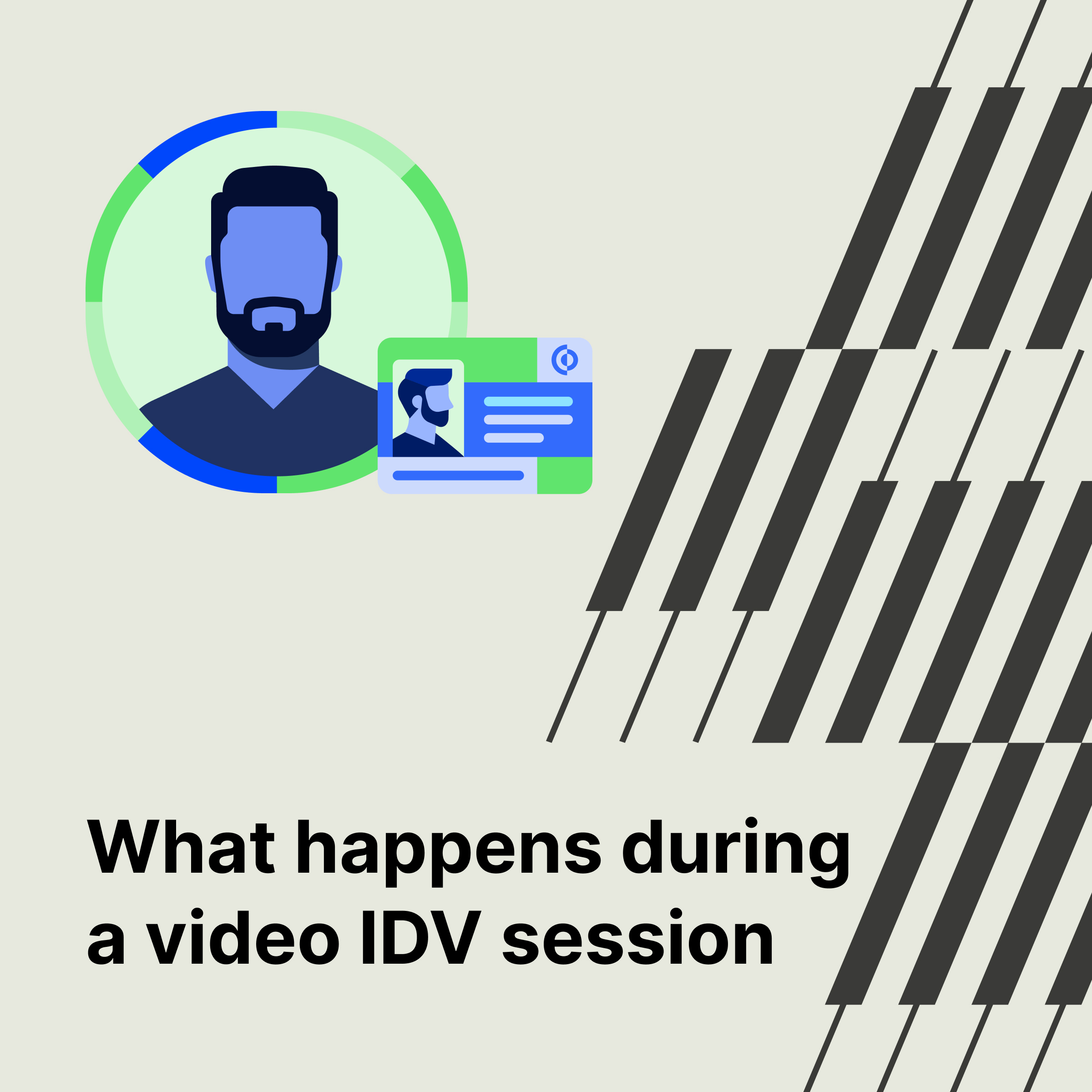
A live agent can inject randomness into an interaction in real time. They can ask an unexpected question, request a second form of verification from a different device, or escalate a transaction before funds move. Deepfakes are optimized for scripted interactions. An agent who goes off-script creates a verification challenge that automated synthetic media cannot reliably handle.
This is the mechanism that makes human review more than a fallback. A trusted agent effectively serves as a CAPTCHA for deepfakes, introducing unpredictability that the technology cannot anticipate.
Layer 6: Dynamic orchestration based on risk
The verification stack needs to adjust based on the use case, the transaction value, the regulatory requirements, and the risk signals present. A low-risk account login requires a different response than a wire authorization or a power of attorney signing. The platform should be able to escalate verification dynamically when signals indicate elevated risk, without applying the same friction to every interaction.
What to do after a suspected deepfake attack
If your organization suspects a deepfake fraud attempt, the immediate priority is to stop the transaction before funds move. Payment rails are getting faster, and the window to recall funds is narrowing.
Steps to take immediately:
- Halt any pending wire transfers, account changes, or authorizations connected to the suspected interaction
- Contact the person who was allegedly on the call through a verified, independent channel, such as a known phone number or in-person confirmation
- Preserve all records of the interaction, including video recordings, call logs, email threads, and any documentation submitted during the process
- Report the incident to your fraud team, legal counsel, and, where appropriate, to the FBI's Internet Crime Complaint Center
On the evidence question: organizations that have cryptographically signed records of their verification interactions are in a materially better position after a fraud event. A signed, identity-bound record of what was verified, when, and by whom becomes defensible evidence in disputes and investigations. Organizations relying on screenshots and call notes are not in the same position.
The regulatory gap organizations cannot ignore
There is currently no federal law that specifically bans deepfakes. The Federal Trade Commission has sought to expand its impersonation rule to cover individuals, and the FCC has banned AI-generated voices in robocalls, but comprehensive federal legislation has not been enacted.
This regulatory gap has a direct operational consequence. Organizations cannot rely on legal deterrence to reduce deepfake fraud attempts. The burden of defense falls entirely on internal controls, verification infrastructure, and the quality of the identity layer protecting each transaction.
The organizations best positioned to absorb this risk are those that have already built layered verification into their workflows, rather than those waiting for regulation to define the minimum standard.
How Proof's layered identity model addresses deepfake fraud
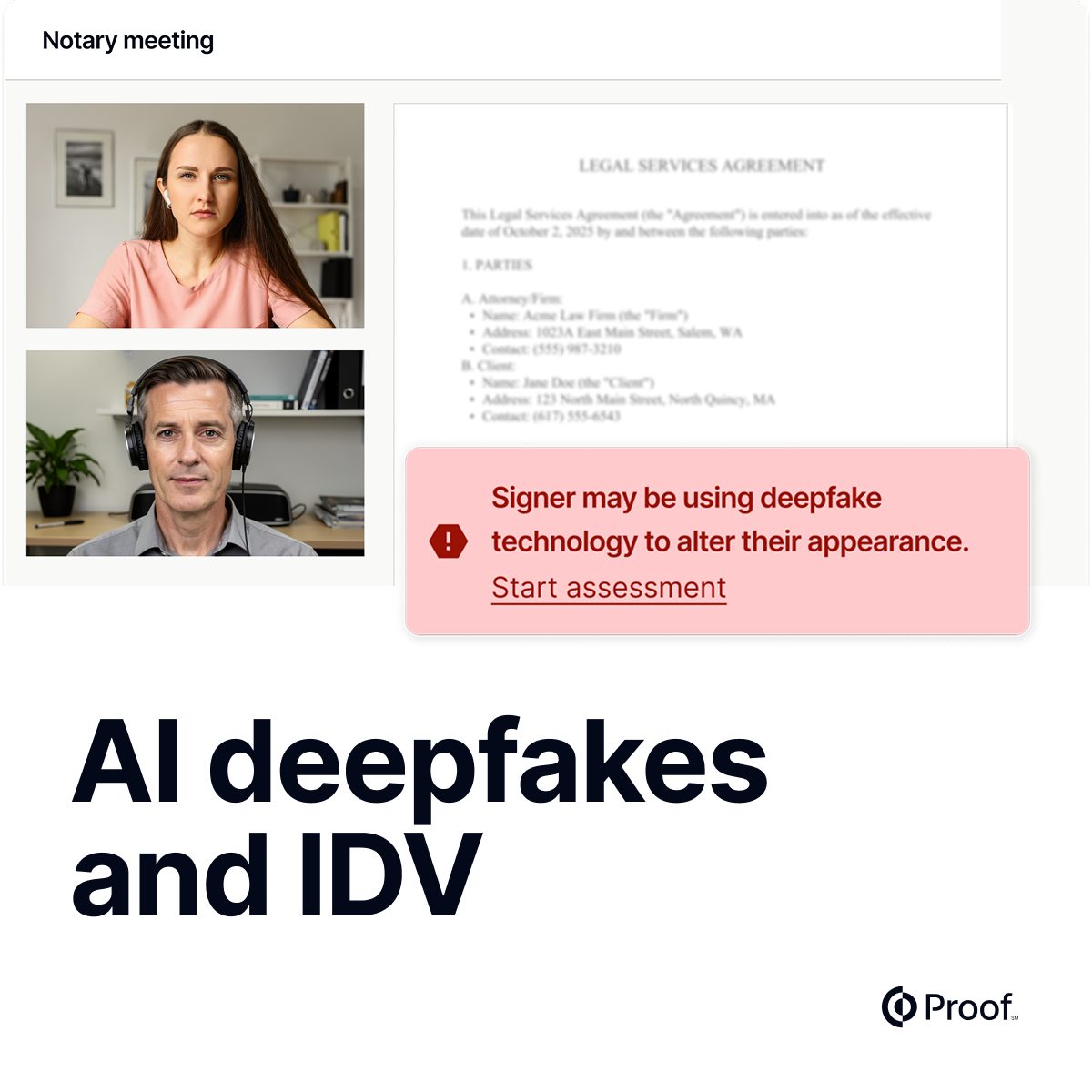
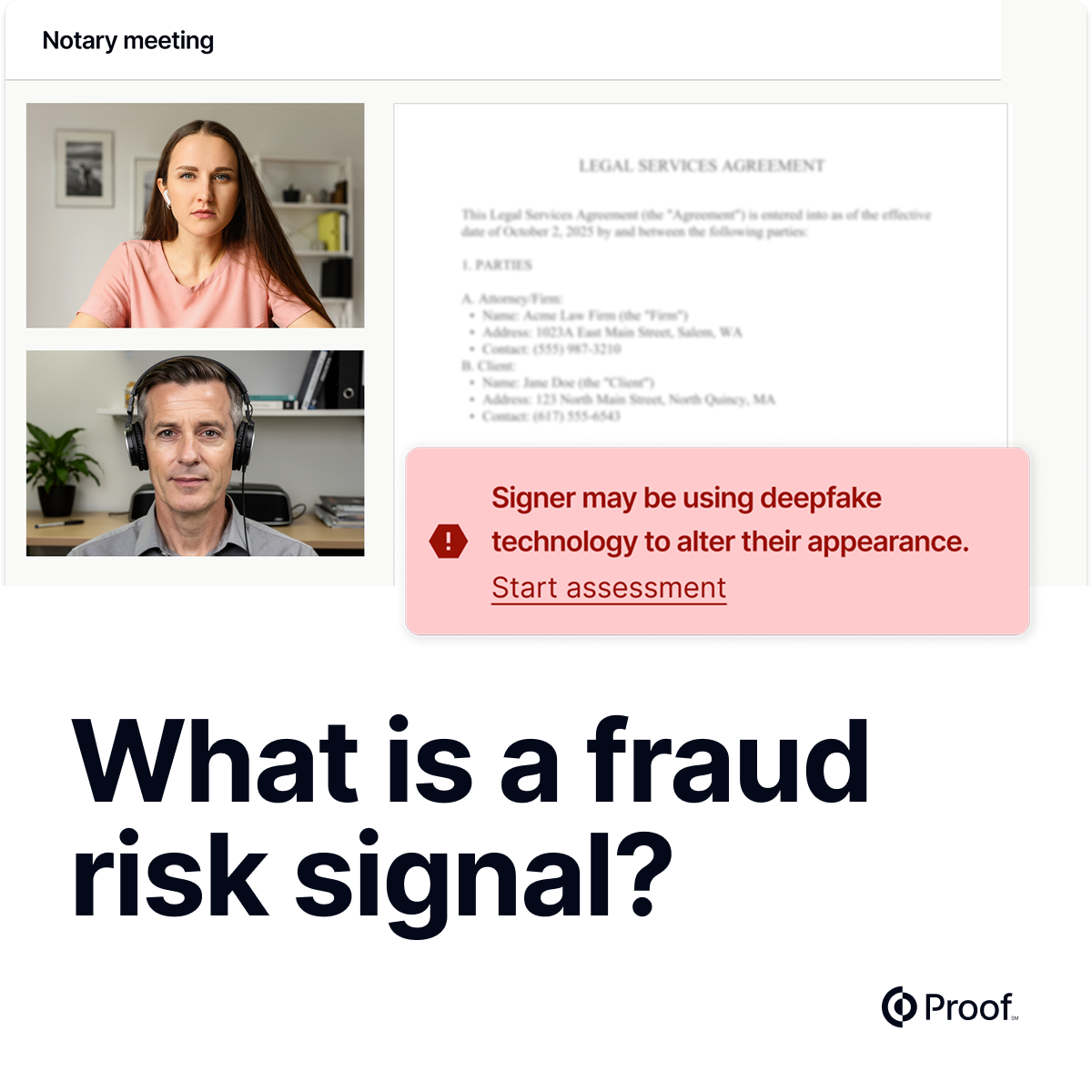
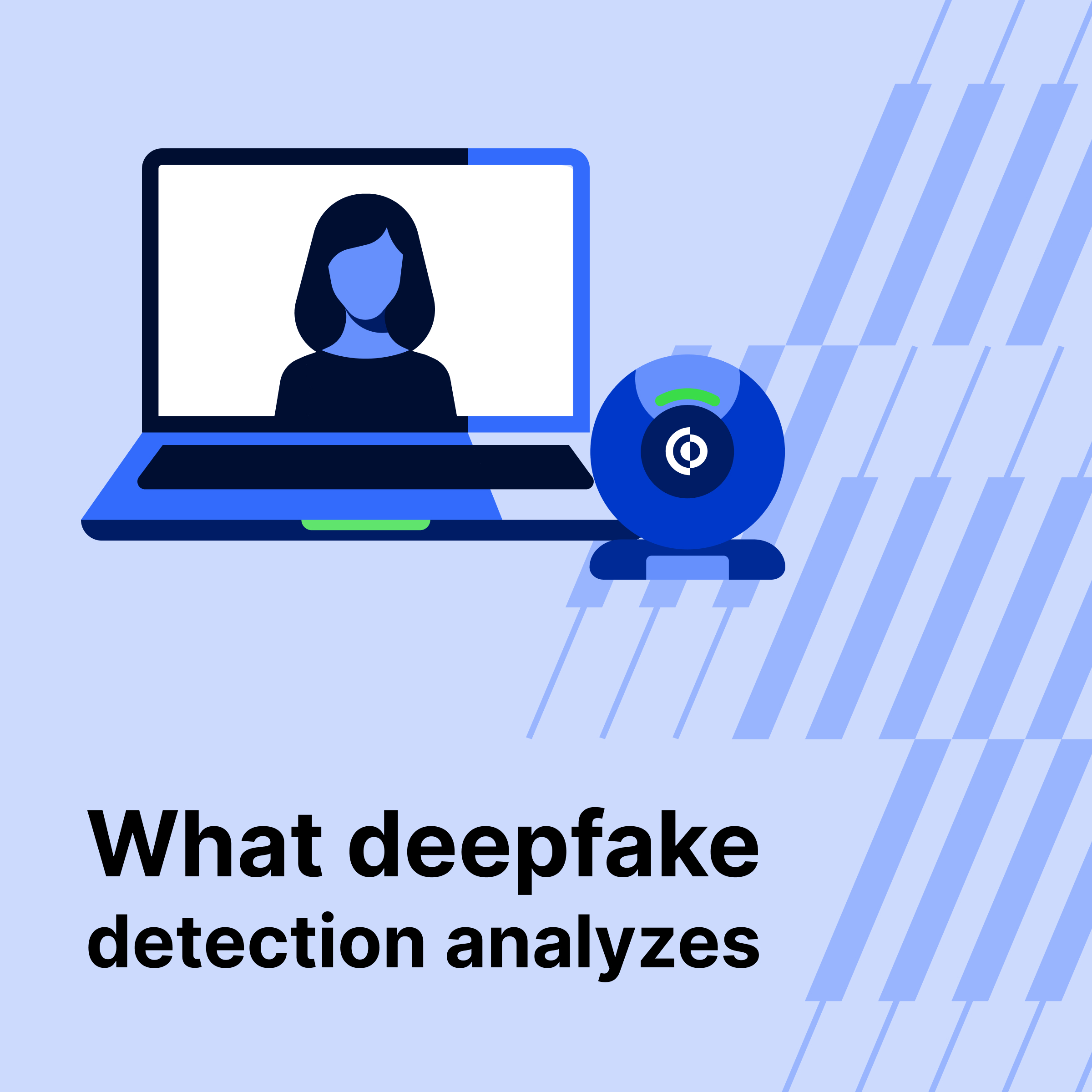
Proof's identity verification platform is built on exactly the layered model described above. It combines document verification, biometric checks, behavioral signals, deepfake detection on live video, and human-in-the-loop review to create a defense that is difficult to game from any single attack vector.
































.jpg)












































.jpg)