Why Banks Need to Offer Digital Consumer Lending


Updated September 4, 2026
Consumer lending is still too slow, too manual, and too exposed to fraud. Borrowers know it. And increasingly, they are choosing lenders who have fixed it.
Digital lending covers the full online process of applying for, approving, and funding a consumer loan without requiring a branch visit or paper-based workflow. For banks and financial institutions, it includes auto loans, personal lines of credit, student loans, and credit cards. These are high-volume, high-stakes transactions. Yet many lenders still run them through processes built for in-branch visits and paper files.
Consumers have already gone digital in nearly every other part of their lives. They expect the same from their lender. The pandemic accelerated that expectation, but it also exposed how far behind most financial institutions really are. Standing still carries real cost. Every day a lender operates on paper-based workflows is a day competitors and fraudsters move faster.
Here is what the shift to digital consumer lending looks like in practice, and where identity verification and fraud controls belong in every step.
Key takeaways
- Borrowers expect end-to-end digital loan experiences, including mobile-friendly applications, real-time communication, and digital signing. Lenders who deliver partial digital processes lose customers to those who deliver complete ones.
- Hybrid loan workflows, where some steps are digital and others are paper-based, create inconsistencies in identity verification, document handling, and record-keeping. Each handoff is a potential point of fraud or error.
- End-to-end digital lending reduces manual errors, lowers overhead costs, and speeds up loan approval times. Lenders can close more transactions with fewer resources.
- Successful digital lending requires integrating online applications, eSignatures, biometric identity verification, and remote online notarization into a connected workflow. Point solutions that address only one step leave the rest of the process exposed.
From in-branch lending to digital consumer lending
For generations, getting a consumer loan meant walking into a branch, sitting down with a loan officer, and working through stacks of paperwork. That model is increasingly incompatible with how borrowers live their lives today.
U.S. consumer loans hit a record in 2021, driven by digital-first lending options. But most financial institutions have not kept pace. Research from the Digital Banking Report in 2020 shows that while 85% of institutions allowed consumers to apply for a loan online, only 66% allowed the entire process to be completed digitally. Fewer still, 46%, supported end-to-end completion on a mobile device.
That gap creates two problems. First, borrowers experience friction and abandon the process. Second, hybrid workflows create inconsistencies in identity verification and document handling that fraudsters exploit.
Traditional vs. digital lending: what actually changes
Traditional lending for most banks involves paper applications, manual data entry, and sequential handoffs between departments. Each step introduces delay, error, and exposure.
Digital lending replaces that sequence with an automated, connected workflow. Instead of re-keying data into multiple systems, an end-to-end loan origination system (LOS) captures information once and moves it through the process automatically. The result is faster decisions, fewer errors, and a consistent identity verification record at every step.
The distinction matters beyond customer experience. With traditional loans, up to 20% of documents are returned due to incomplete data or missing signatures. Digital lending eliminates that because the process will not advance if required fields are incomplete, giving lenders confidence they are always working with complete, accurate data.
Why banks need to modernize loan origination
Lenders face pressure from multiple directions: fintech competitors offering faster approvals, borrowers demanding mobile-first experiences, and fraud that exploits manual verification gaps.
Community banks provide about 60% of all small business loans and more than 80% of agricultural loans, according to the ICBA. But originating those loans takes significant time and resources. National banks and digital-first lenders have more of both. A modern digital lending system helps level the playing field.
The business case is concrete:
- Faster decisions. Automated underwriting and digital document collection reduce approval timelines from days to hours.
- Lower overhead. Digital workflows reduce paper-based costs and free loan officers to focus on new business rather than processing.
- Reduced fraud exposure. Consistent identity verification at every step closes the gaps that paper-based handoffs create.
- Regulatory compliance. Digital platforms provide a complete audit trail and automate disclosure delivery, reducing compliance risk.
What the digital lending process looks like end to end
Digital lending works as a connected sequence of steps, each building on verified data from the previous one.
- Online application. The borrower submits a digital application from any device. Required fields ensure complete data collection. Encryption protects sensitive information in transit.
- Automated credit assessment. The platform checks income, credit history, and risk indicators in real time, often using alternative data sources like transaction behavior alongside traditional credit scores.
- Identity verification. The borrower completes biometric identity verification, including document capture and selfie comparison, to confirm they are who they claim to be. This step is a fraud control, not just a compliance requirement.
- eSignature. The borrower signs loan documents digitally from any device. eSignatures are legally equivalent to wet signatures under the ESIGN Act and UETA, and they eliminate the need for in-branch closing appointments.
- Remote online notarization (RON). For documents that require notarization, borrowers can complete the process via video call using a platform like Notarize, from any device with a camera and audio. RON is now legal in 49 states and the District of Columbia as of 2026.
- Funding and servicing. Approved funds transfer directly to the borrower's account. Repayment tracking and account management continue digitally.
Technologies powering digital consumer lending
Several technologies work together to make end-to-end digital lending possible. Each one addresses a specific point of friction or fraud exposure:
- Online applications move the entire intake process digital. Required fields reduce errors. Encryption protects borrower data. Accessibility across devices means borrowers can apply from anywhere.
- In-app and online messaging speeds up communication between borrowers and loan officers. Questions get answered where the application lives, without switching to email or phone.
- eSignatures replace wet signatures for loan documents. They are legally binding, faster to execute, and eliminate the need for in-person closing appointments. For lenders, they reduce the volume of in-branch visits and accelerate turnaround times.
- Biometric identity verification confirms that the person completing the application is who they claim to be. Document capture, selfie comparison, and liveness detection work together to catch fake IDs and impersonation attempts before they become funded loans.
- Remote online notarization allows borrowers to get documents notarized via video call, from any device, at any time. Platforms like Notarize connect borrowers with commissioned notaries 24/7, with identity verification built into the session. The result is a faster transaction turnaround for lenders and a fully digital experience for borrowers.
- AI-driven fraud detection monitors transactions across channels, flagging behavioral anomalies, synthetic identities, and document forgery in real time. This layer sits underneath the entire workflow, not just at onboarding.
Digital lending trends shaping the industry
The digital lending market is evolving quickly. Several trends are reshaping how institutions compete:
- Automation across the full lifecycle. Loan origination, underwriting, servicing, and collections are increasingly automated. What began as partial digitization has evolved into near end-to-end process automation, reducing operational costs and improving decision consistency.
- Embedded lending. Credit is moving into the platforms where borrowers already operate. E-commerce checkouts, payroll systems, and SaaS platforms are originating loans using proprietary behavioral data. Lenders without embedded distribution strategies face growing competitive pressure.
- AI-powered underwriting. Machine learning models assess credit using alternative data, including transaction history, utility payments, and behavioral signals, expanding access to borrowers who fall outside traditional credit scoring models.
- Mobile-first experiences. Borrowers expect to complete the full loan lifecycle on a smartphone. Lenders that require desktop access or in-branch visits for any step lose applicants to competitors who do not.
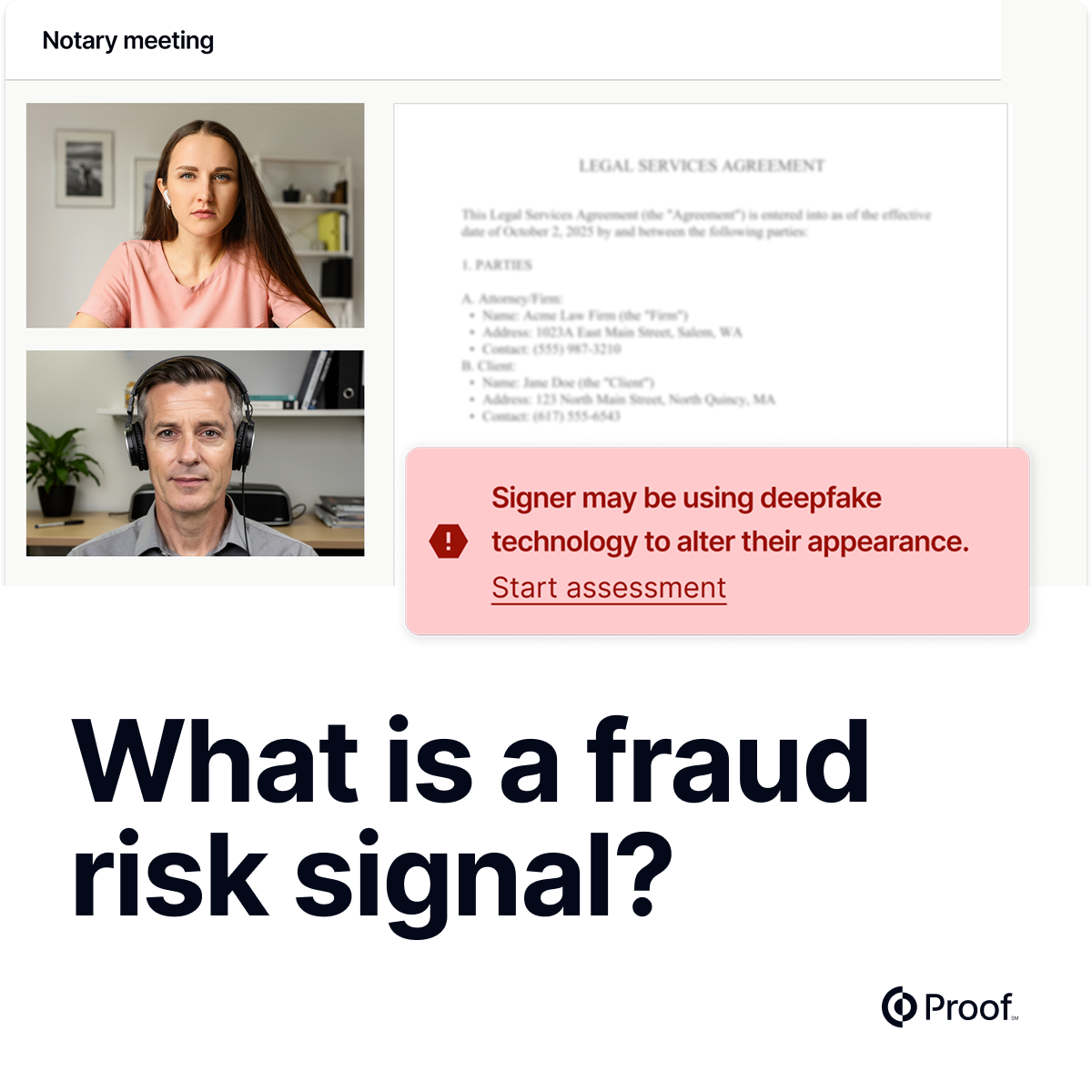
- Fraud as a first-order problem. As digital lending scales, fraud has become more sophisticated. AI-generated identities, deepfake-assisted impersonation, and document forgery are now operational threats, not theoretical ones. Security is no longer a separate function. It is embedded into every transaction and decision.
What lenders gain by going fully digital
Closing the gap between partial and end-to-end digital lending produces measurable results across four areas:
- Improved customer experience. A seamless, end-to-end digital experience enables quicker, more consistent decisions while giving borrowers confidence that their identity and sensitive data are handled securely at every step. That is a trust improvement as much as a user experience improvement.
- Application process optimization. Digitizing the loan process forces institutions to examine every step, from application intake to document collection to final signing. Gaps become visible. Redundancies get eliminated. The result is a leaner, faster, more consistent lending experience.
- Reduced operational costs. Digital lending frees up time previously spent on in-branch loan applications and reduces paper-based costs. Lenders can spend more time finding new borrowers and less time at loan closings, improving profit margins.
- Stronger fraud controls. Moving away from paper-based workflows minimizes fraud risks and improves identity verification consistency across every transaction. A digital audit trail means lenders can demonstrate, not just assert, that a loan was properly authorized.
How to evaluate a digital lending platform
Not all digital lending platforms deliver the same level of security or compliance. When evaluating options, prioritize these criteria.
- End-to-end coverage. The platform should support the full loan lifecycle, from application through signing and notarization, without requiring borrowers to switch systems.
- Identity verification depth. Look for IAL2-certified verification that combines document capture, biometric comparison, and liveness detection, with fallback to live agent review for high-risk transactions.
- Fraud detection integration. Fraud controls should be embedded across every step, not limited to onboarding. The platform should detect synthetic identities, document forgery, and deepfake impersonation.
- eSignature and RON support. Both capabilities should be built into the platform, with compliance enforcement for state-specific RON requirements.
- Audit trail and defensible records. Every authorization should produce a cryptographically signed record that documents who signed, when, and under what verification conditions.
- Integration with existing systems. The platform should connect to your LOS, CRM, and other core systems without requiring a full infrastructure replacement.
Digital consumer lending is on the rise, and improving the digital lending process will help speed up credit decisions, get customers cash sooner, lower costs, and improve decision-making. The lenders who close the gap between partial and end-to-end digital workflows now are the ones who will fund faster, carry less fraud risk, and build the kind of borrower experience that earns repeat business.
See how Proof Identify helps lenders verify borrower identity across the full loan lifecycle.



















.jpg)

































.jpg)