Why Lenders Should Offer eClosings


Updated September 14, 2026
Lenders who haven't moved to digital closings are leaving measurable money on the table. A Marketwise and Notarize study found that full eClosings save lenders up to $444 per loan. That's not a projection. That's documented savings per transaction, compounding across every loan in a portfolio. For lenders evaluating eClosings secured login platforms and digital closing workflows, the business case is already settled. The question is how to get started and what each element of the process actually delivers.
Key takeaways
- Full eClosings save lenders up to $444 per loan, and hybrid eClosings still deliver $153 in savings per loan, according to Marketwise research.
- Lenders don't need to implement a full digital close to see ROI. Every component, from eSignatures to remote online notarization (RON) to eNotes, generates measurable cost and time savings independently.
- A hybrid eClosing is the practical first step: borrowers review and sign most documents digitally in advance, while only a subset of documents require in-person handling.
- Secure eClosing platforms perform identity verification before any document is signed, which reduces fraud exposure and creates a defensible audit trail for every transaction.
- Proof has processed more than $640 billion in real estate transactions, giving lenders a proven infrastructure partner rather than an unproven vendor.
- RON is now legal in 49 states and the District of Columbia, which means geographic eligibility is no longer a barrier for most lenders.
What is an eClosing?
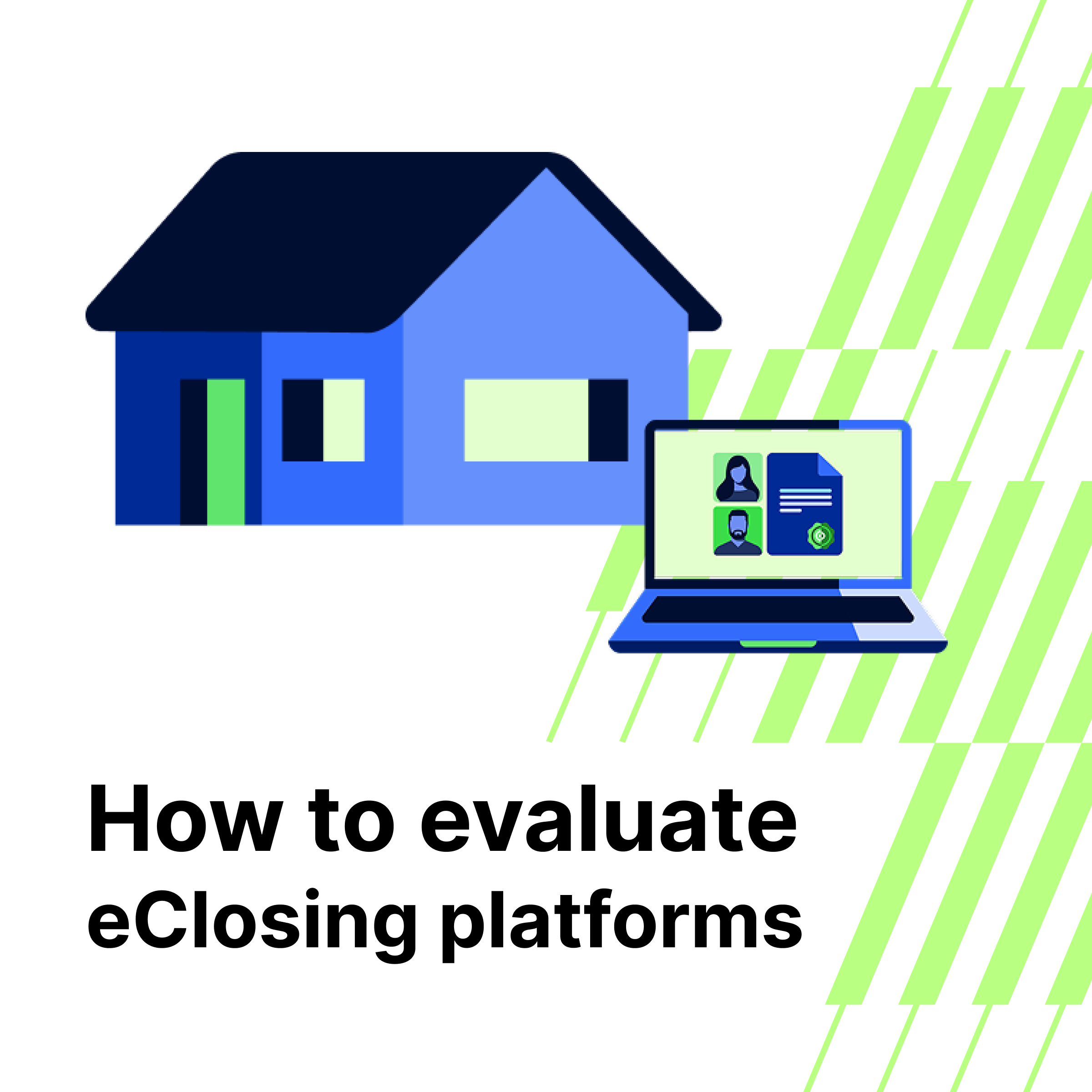
An eClosing is a mortgage closing completed electronically. Borrowers, lenders, and title agents can complete the process from any location using a secure digital platform.
A full eClosing includes five core components:
- Electronic documents: The loan package is sent digitally for review and signing before closing day.
- eSignatures: Legally accepted digital alternatives to wet ink signatures on paper.
- Remote online notarization (RON): A live video session where a commissioned notary verifies identity, witnesses signatures, and notarizes documents electronically.
- eNote: An electronic version of the mortgage promissory note, registered with the MERS eRegistry.
- eRecording:Electronic submission of recorded documents to the county, with approved documents returned digitally.
Not every closing requires all five components. Lenders can implement any combination and still generate ROI.
What is a hybrid eClosing?
A hybrid eClosing is a partially digital closing where borrowers receive and sign most documents electronically in advance, but still meet in person to sign and notarize the mortgage and loan note.
The hybrid model is the most common entry point for lenders new to digital closings. It reduces the volume of documents handled at the closing table, shortens appointment times, and cuts error rates, without requiring the full infrastructure of a RON-enabled close.
Hybrid eClosings save lenders approximately $153 per loan. Add eNote capabilities and that figure rises to $287. Online notarization alone generates $231 in savings. When combined into a full eClosing, the total reaches $444 per loan.
Why lenders should offer eClosings: the ROI breakdown
The savings are real and they are documented. Here is how each component contributes:
- Hybrid eClosing: $153 saved per loan
- Hybrid eClosing with eNote: $287 saved per loan
- Online notarization: $231 saved per loan
- Full eClosing: $444 saved per loan
- Title agent savings: Approximately $100 per loan
Beyond direct cost reduction, eClosings deliver four process improvements that compound across a loan portfolio:
- Faster speed to close: Fewer days from application to funding, because documents are reviewed and signed before closing day.
- Shorter transaction time: Less time per loan means more loans per team member.
- Fewer rework cycles: Missing signatures and incomplete documents are flagged automatically, eliminating the back-and-forth that delays funding.
- Lower error rates: Proof's platform reduces errors by 31% compared to paper-based closings.
These gains matter to borrowers, too. Consumers now expect digital transactions as the default. A homebuyer who can close from their living room is a borrower who is more likely to refer the lender to a friend.
How to get started with eClosings
An important step in enabling eClosings is implementing technology you can trust. The implementation will require sourcing an online closing platform and staying up to speed with how the new, digitized process works.
The best way for lenders to successfully introduce eClosings to their borrowers is with a partner. Platforms like Notarize supply the secure technology, best practices and support that help lenders (and their clients) to have a seamless, online closing experience.
Notarize’s platform enables lenders and their clients to securely complete mortgage closings online, allowing borrowers to eSign and notarize the entire loan package on the platform. With no paper and no need for in-person signing, lenders can offer flexibility and convenience in the closing process — a competitive edge that appeals to today’s homebuyers.
Click here to get access to The ROI of eClosing in Real Estate, a study conducted by Marketwise and Notarize.































.jpg)




































.jpg)