The Benefits of eSignatures for Financial Institutions


Updated September 10, 2026
Bank signature cards are a foundational document in account management, yet most financial institutions still process them on paper. That creates real risk: slow account openings, manual verification errors, and a fraud surface that grows every year as synthetic identity attacks and document forgery become more sophisticated.
This guide covers what bank signature cards are, what information they contain, how they are used in banking workflows, and why electronic signature cards are becoming the standard for institutions that take fraud prevention seriously.
Key takeaways
- A bank signature card is a document that financial institutions keep on file to verify an account holder's identity and authenticate transactions requiring a signature.
- Signature cards record who owns an account, who is authorized to access it, and how many signatures are required for specific transactions.
- Electronic bank signature cards are legally valid across all 50 U.S. states under the E-Sign Act and the Uniform Electronic Transactions Act (UETA).
- Electronic signature cards reduce processing time, eliminate document errors, and create a tamper-evident audit trail that paper cards cannot provide.
- Modern eSignature platforms go further than basic digital signing by embedding identity verification, biometric comparison, and multi-factor authentication directly into the signing workflow.
- Financial institutions that digitize signature card workflows reduce fraud exposure and deliver faster account openings without sacrificing compliance.
What is a bank signature card?
A bank signature card is a record maintained by a financial institution to verify a customer's signature. When an account holder opens a checking or savings account, they sign a signature card. The bank keeps that card on file and uses it to authenticate transactions that require a signature, such as check endorsements and withdrawal slips.
The format has evolved. Many banks and credit unions now generate electronic signature cards through their core banking system or a third-party platform. The purpose remains the same: capture a verified signature and record who is authorized to access the account.
What are bank signature cards used for?
Signature cards serve three core functions in banking operations.
- Establishing account ownership. Every account holder, including joint owners and authorized signers, must have their signature and identifying information on the card. If someone is added or removed from the account, the card is updated to reflect the change.
- Verifying signatures on transactions. When a customer presents a check or withdrawal slip, a teller compares the endorsement against the signature on file. A mismatch can flag potential fraud and halt the transaction before funds move.
- Defining signing authority. For joint personal accounts, the card may indicate that one signature is sufficient. For business accounts, it may require two authorized signatures for withdrawals above a certain dollar amount. The card makes those rules explicit and enforceable at the point of transaction.
What information is on a bank signature card?
Signature cards capture biographical and account-specific data for every authorized signer. Standard fields include:
- Full legal name
- Date of birth
- Home or business address
- Social Security number (for individuals) or Employer Identification Number (for businesses)
- Driver's license number
- Account type and account number
- Specimen signature
- Date the card was signed
All signers must use their full legal name. Nicknames are not permitted. The information on the card is cross-referenced against government-issued identification at the time of account opening to confirm the signer's identity.
Can bank signature cards be signed electronically?
Yes. Electronic bank signature cards are legally valid across all 50 U.S. states. Two federal and state frameworks establish that legal foundation.
The Uniform Electronic Transactions Act (UETA), established in 1999, created legal equivalence between electronic records and paper documents at the state level. New York has not adopted UETA but has its own statute, the New York Electronic Signatures and Records Act (NYESRA), which provides that an electronic signature carries the same validity and effect as a handwritten signature.
The E-Sign Act, passed in 2000 as federal law, resolved conflicts between state laws and established that electronic signatures are enforceable in commerce. Every jurisdiction in the United States now has substantially equivalent standards for electronic signature validity.
The practical result: a signature card signed electronically through a compliant platform carries the same legal weight as one signed with a pen.
Benefits of electronic bank signature cards
Electronic signature cards deliver measurable improvements across the workflows that matter most to banks and credit unions:
- Faster account openings. Customers can sign remotely from any device, eliminating the requirement to visit a branch. For institutions competing with digital-first challengers, that speed is a direct competitive advantage.
- Fewer document errors. Digital platforms enforce required fields before a document can be submitted. Incomplete or illegible signature cards, a common problem with paper, are eliminated at the source.
- Instant signature verification. When a transaction requires signature verification, an electronic card can be retrieved and compared instantly. Paper cards require physical retrieval, photocopying, and manual review, which slows down the transaction and introduces error.
- Regulatory compliance. Signature cards are often a regulatory requirement, and missing or outdated cards can result in compliance findings. Electronic systems can flag cards that are incomplete or past their review date, making it easier to maintain a compliant portfolio.
- Reduced storage and retrieval costs. Paper cards require physical storage, filing systems, and staff time to retrieve. Electronic records are searchable, instantly accessible, and stored securely without physical space requirements.
- Stronger audit trails. According to the American Bar Association, eSignature technology leaves digital trails that document who signed a document, when, and from where. That audit trail is far more defensible than a paper card in the event of a dispute.
The security problem with traditional signature cards
Paper signature cards have a structural weakness that electronic systems can address: signatures can be forged.
A teller comparing a handwritten endorsement against a paper card is making a visual judgment under time pressure. That judgment can be manipulated. Skilled forgery is difficult to detect by eye, and the rise of AI-generated documents has made it easier to produce convincing fake IDs and supporting materials that accompany fraudulent account applications.
Electronic signature cards do not eliminate fraud risk, but they shift the verification burden from visual comparison to cryptographic evidence. Modern eSignature platforms embed identity verification directly into the signing workflow. Before a signer can execute a document, the platform may require:
- Government-issued credential analysis
- Biometric comparison between the signer's face and their ID photo
- Multi-factor authentication
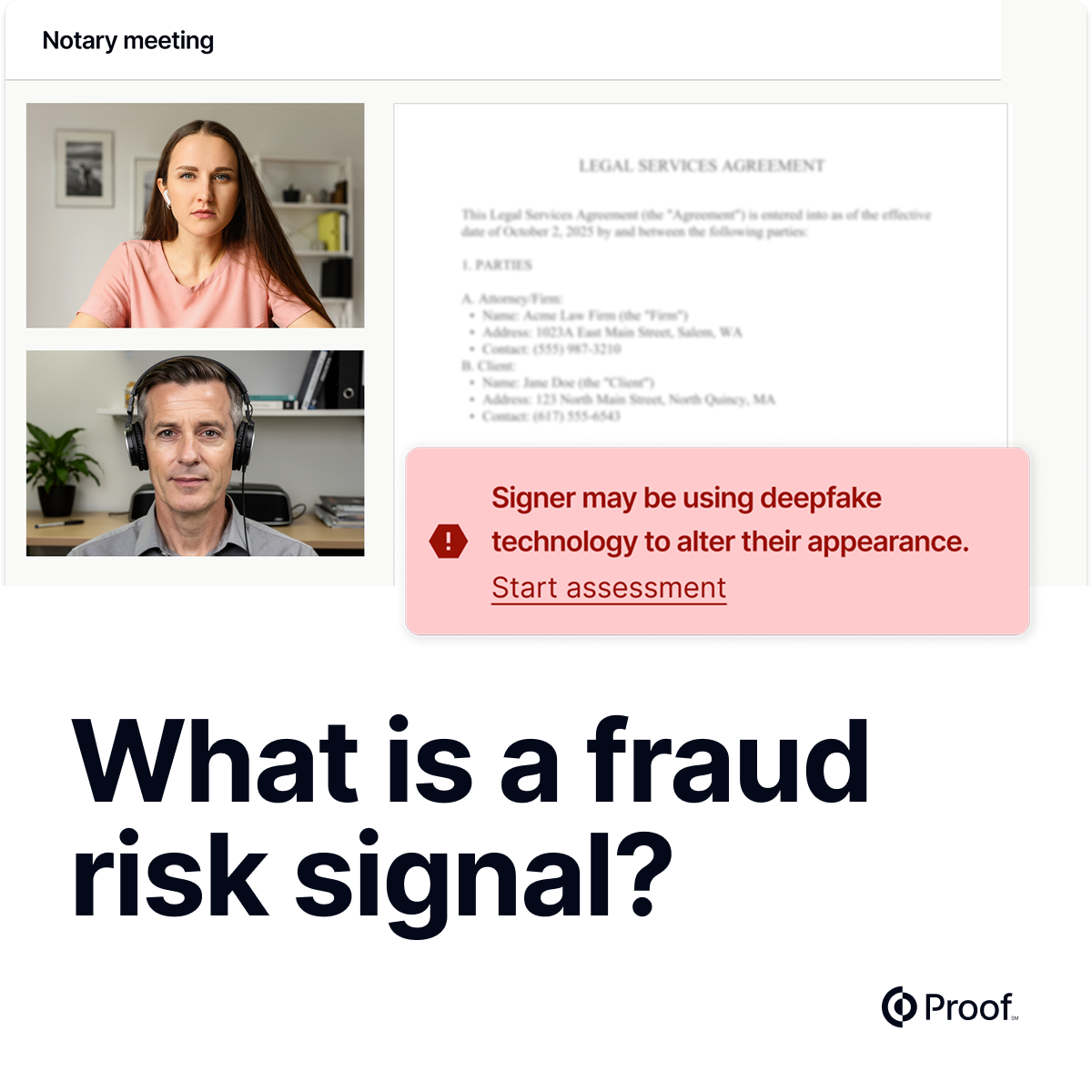
- Liveness detection to confirm a real person is present
The result is a signature that is bound to a verified identity, not just a visual mark on paper. That binding creates a defensible record that holds up in disputes and regulatory examinations.
Signing authority on bank accounts: what institutions need to consider
For banks and credit unions evaluating electronic signature cards, three operational factors deserve close attention.
Risk appetite and cross-state transactions. State law governs electronic signatures, and while UETA and the E-Sign Act create substantial uniformity, edge cases exist. A bank that sells or collateralize loans across state lines should assess whether a hybrid model is appropriate: accepting electronic signatures on documents held internally while requiring additional verification for transactions that cross jurisdictions or involve separate entities.
Authentication standards. The strength of an electronic signature card depends entirely on the identity verification behind it. Traditional methods rely on a Certificate Authority (CA) that independently verifies a customer's identity before signing and produces a digital certificate as proof. Modern platforms go further, embedding biometric comparison, credential analysis, and live identity review directly into the signing flow. Community banks and credit unions can become CAs, but third-party solutions that combine these methods are often a more scalable option.
Document storage and disaster recovery. Compliance extends beyond the signing event. Institutions need clear answers to the following questions before deploying electronic signature cards:
- Where will signed documents be stored, and under what security protocols?
- How will documents be retrieved for audits or legal proceedings?
- What disaster recovery systems are in place, and where are they located?
- Who has access to stored records, and how is that access controlled?
According to NCUA record retention guidelines, signature cards should be retained for the life of the account as part of the permanent account record. Electronic systems need to support that retention requirement with the same reliability as physical storage.
Electronic signature cards for business accounts
Business accounts introduce additional complexity that signature cards must address. A sole proprietor and a corporation with multiple authorized signers have very different needs.
For business accounts, the signature card typically captures:
- The business name and account type
- The Employer Identification Number (EIN)
- The names and signatures of all authorized signers
- The signing authority rules, such as whether one signature or two are required for transactions above a specified dollar amount
When a business adds or removes an authorized signer, a new signature card is required. Electronic systems make that update faster and create a clear record of when the change was made and who authorized it.
For businesses with complex ownership structures or multiple lines of business, electronic signature cards can be integrated with account management platforms to automate the update process and reduce the administrative burden on branch staff.
The case for digitizing core banking workflows
A thriving financial institution relies on customer loyalty and the tools to support customers at scale. Digitizing core services is how banks and credit unions reduce cost, cut fraud risk, and meet customers where they already are: online.

































.jpg)






















































.jpg)