How Mortgage Fraud Is Detected: A Lender's Guide to Catching It Early


Updated September 8, 2026
Mortgage fraud doesn't start at closing. It starts the moment a fraudster touches your process. For every dollar lost to fraud, lenders actually lose $4.40, a figure that keeps climbing. The real cost goes beyond the balance sheet. Lenders lose time chasing recoveries, and they lose customer trust, something far harder to rebuild.
Understanding how mortgage fraud is detected, and where detection breaks down, is the first step toward building controls that hold.
Key takeaways
- Mortgage fraud costs lenders $4.40 for every $1 lost, and the financial damage compounds through repurchase demands, regulatory scrutiny, and reputational harm.
- The two primary fraud categories are fraud for profit (professional or insider schemes) and fraud for housing (borrower-driven misrepresentation), and each requires different detection controls.
- Effective fraud detection runs across the entire loan lifecycle, from application intake through pre-funding review and post-close audit, with the highest-value intervention happening before a loan is sold or insured.
- Multi-factor authentication (MFA), biometric identity verification, and document integrity checks are the core technical controls that stop the most common fraud schemes.
- A zero-trust security posture, applied equally to employees, partners, and borrowers, is the organizational standard that makes detection consistent rather than selective.
- AI-generated documents, synthetic identities, and deepfake video are bypassing legacy detection methods, which means lenders need cryptographically verifiable records, not just metadata checks, to establish defensible proof of authorization.
What is mortgage fraud?
Mortgage fraud is any material misstatement, misrepresentation, or omission relied upon by a lender to fund, purchase, or insure a loan. It can be committed by borrowers, mortgage professionals, appraisers, or insiders working within a financial institution.
As the mortgage process moves online, from loan applications to closings, the attack surface expands. Fraud hits every stage: onboarding, document signing, account access, and closing. Protecting against it requires controls at each one.
Common types of mortgage fraud schemes
Lenders and federal assessors at FinCEN categorize most mortgage fraud into two primary buckets. Knowing which type you're facing determines which detection controls apply.
Fraud for profit
Fraud for profit typically involves professional criminals or insiders at a credit union, bank, or real estate company who exploit their access and knowledge. Common schemes include:
- Creating fictitious loans to embezzle funds from a mortgage transaction
- Stealing millions through coordinated insider schemes
- Synthetic identity fraud: combining real and fabricated information to create a new identity that passes standard checks
- Credit washing: filing false identity theft claims to "recoup" assets that were never legitimately held
- Data theft targeting lender databases to steal personally identifiable information (PII) for resale or direct use
Fraud for housing
Fraud for housing is driven by borrowers who misrepresent their financial situation to qualify for a loan they couldn't otherwise obtain. Common schemes include:
- Income fraud: overstating earnings, submitting altered pay stubs, or misrepresenting self-employment income
- Occupancy fraud: claiming a property will be a primary residence to access lower rates and higher loan-to-value ratios
- Straw buyer schemes: using a third party with better credit to obtain a mortgage on behalf of the true buyer
- Down payment fraud: disguising a loan of down payment funds as a gift
The OCC identifies several additional schemes that target homeowners directly, including foreclosure rescue scams that charge upfront fees with false promises, loan modification scams that collect payment without delivering results, and predatory lending that buries abusive terms in complex documents.
Why mortgage fraud is harder to detect in 2026
Legacy detection methods were built for a world where fraudsters submitted paper documents and showed up in person. That world is gone.
AI-generated documents can now replicate the visual formatting, fonts, and metadata of legitimate pay stubs, bank statements, and tax returns with enough fidelity to pass standard automated checks. Synthetic identities, built from fragments of real PII combined with fabricated details, pass knowledge-based authentication (KBA) because the underlying data is technically accurate. Deepfake video technology allows fraudsters to impersonate borrowers during live verification calls with increasing realism.
The result: controls that worked three years ago are no longer sufficient. Detection must evolve to match the threat.
How mortgage fraud is detected
Mortgage fraud is detected through a layered combination of document verification, identity authentication, data cross-referencing, and behavioral analysis, applied at multiple points across the loan lifecycle.
No single check catches every fraud type. The lenders who catch fraud early run several verification methods simultaneously and treat inconsistencies as signals requiring escalation, not administrative errors to be explained away.
Red flags in borrower and property data
The most reliable early signal of mortgage fraud is inconsistency. Legitimate borrowers produce consistent information across documents. Fraudsters rarely do.
Fannie Mae's Financial Crimes team maintains an extensive list of red flags that underwriters and QC teams should treat as escalation triggers. Key signals include:
- Social Security number discrepancies within the loan file
- Address conflicts across bank statements, tax documents, and employment records
- The same phone number listed for both the borrower and employer
- Employer addresses that resolve to a P.O. box rather than a physical location
- Verifications completed on weekends or holidays, or on the same day they were ordered
- Documentation with deletions, correction fluid, or numbers that appear "squeezed" due to alteration
- Significant differences between stated income and expected earnings for the reported occupation
- Unsigned or undated applications
- Excessive automated underwriting system submissions on a single file
A single red flag may have an innocent explanation. Multiple red flags on the same file signal a pattern that warrants deeper review.
Identity verification methods that detect fraud
Identity authentication is one of the most effective tools for stopping mortgage fraud before it advances. Strong identity verification confirms that the person submitting a loan application is who they claim to be, before any documents are processed or funds are committed.
Effective identity verification for mortgage workflows includes:
- Credential analysis: automated checks that verify the authenticity of a government-issued ID, including security features, barcode data, and document formatting
- Biometric comparison: matching a live selfie against the photo on the submitted ID to confirm the same person is present
- Liveness detection: confirming that a biometric submission comes from a live person, not a photograph or deepfake video
- Knowledge-based authentication (KBA): dynamic questions drawn from credit and public records that only the true identity holder should be able to answer
- Multi-factor authentication (MFA): requiring a second verification step, such as a PIN or a link sent to a separate device, to confirm access to a secondary personal account
MFA is now considered a baseline best practice by regulators including the Financial Services Regulatory Authority of Ontario (FSRAO), which explicitly cites it in its guidance on detecting and preventing mortgage fraud.
For high-risk transactions, such as uploading identity documents, sharing sensitive account information, or notarizing documents, additional authentication layers are required. Lenders who rely on a single verification checkpoint at onboarding leave every subsequent interaction unprotected.
Document integrity and tampering detection
Document fraud has become more sophisticated. Manual review alone misses the signs.
Effective document integrity checks include:
- Automated scanning for pixel tampering, font inconsistencies, and metadata anomalies in submitted files
- Cross-referencing document data against independent sources, such as IRS income verification, payroll databases, and employer confirmation calls
- Reviewing original documents rather than copies wherever possible
- Flagging formatting patterns that don't match the issuing institution's known templates
The FSRAO requires licensees to confirm that information presented by parties is consistent across different reliable forms and documents, to review original or certified copies, and to contact employers directly to verify employment. These aren't optional best practices. They are regulatory minimums.
Technology and fraud detection tools
Data-driven verification tools extend what manual review can catch. Lenders who combine experienced human review with automated fraud detection identify suspicious activity earlier in the process, before loans reach investors or insurers.
Key verification areas where technology adds detection value:
- Property ownership records: confirming ownership history and transaction activity against public records
- Occupancy validation: evaluating whether occupancy claims align with commuting distance, utility data, and insurance records
- Property history analysis: identifying unusual transfer patterns or valuation anomalies
- Network-level fraud signals: surfacing patterns across multiple transactions that indicate coordinated fraud schemes rather than isolated incidents
- Behavioral risk scoring: analyzing device, location, and session behavior for signals that don't match the claimed identity profile
Fannie Mae's Desktop Underwriter (DU) system surfaces potential red flag messages when it detects inconsistencies, including frozen credit accounts, modified property addresses, and excessive submission counts on a single file. These automated signals are designed to trigger human review, not replace it.
The role of live identity agents
When automated checks fail or produce ambiguous results, live identity verification provides a second layer of defense.
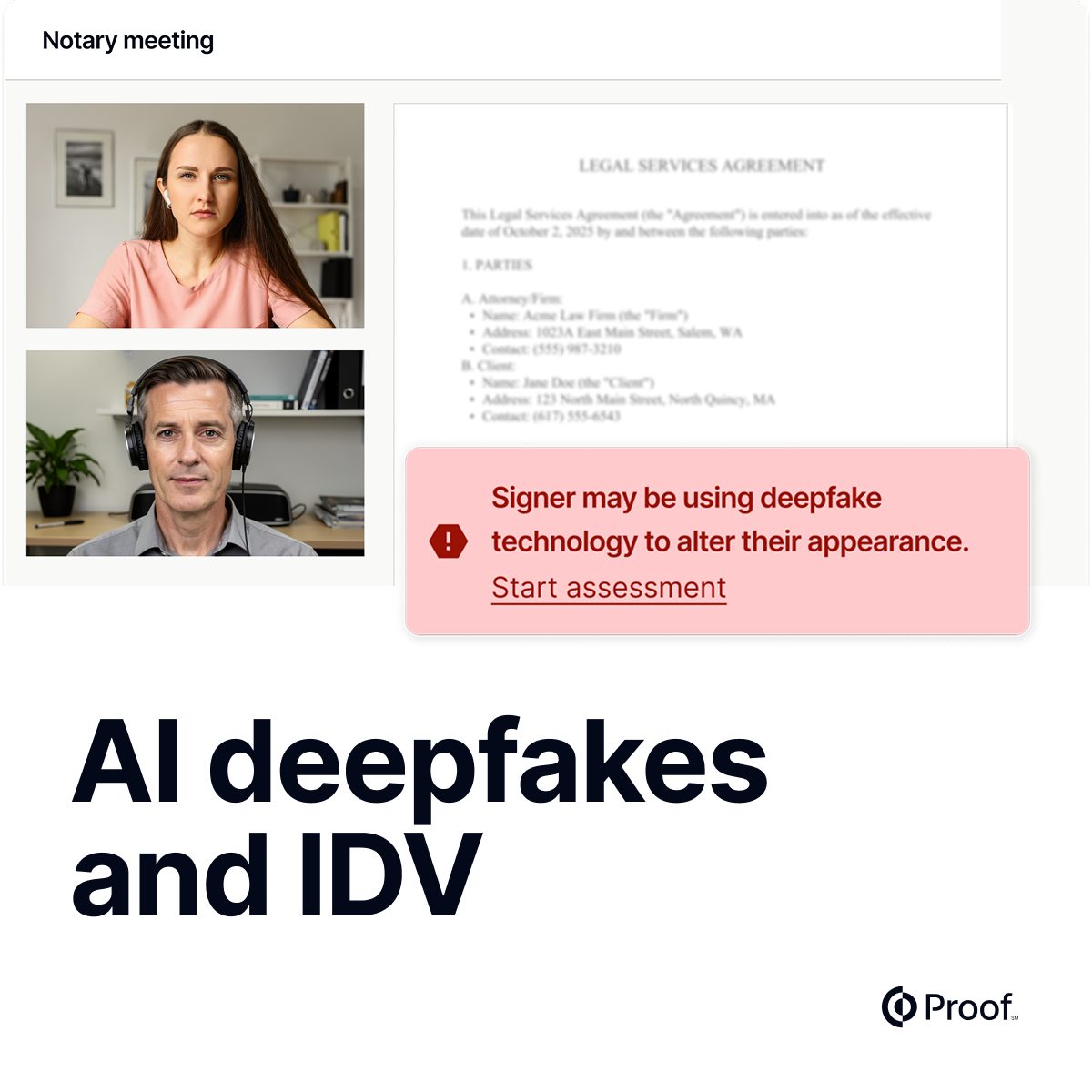
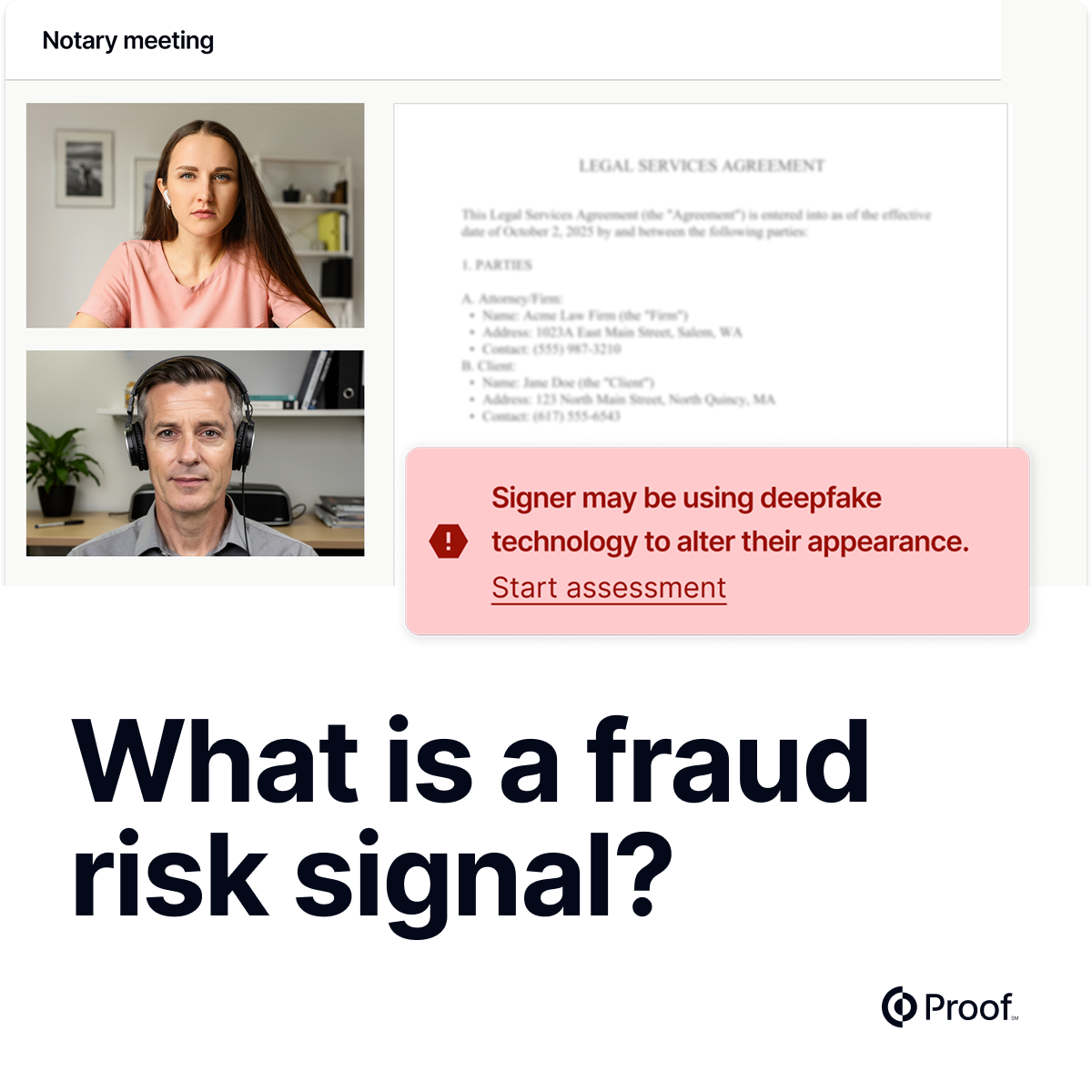
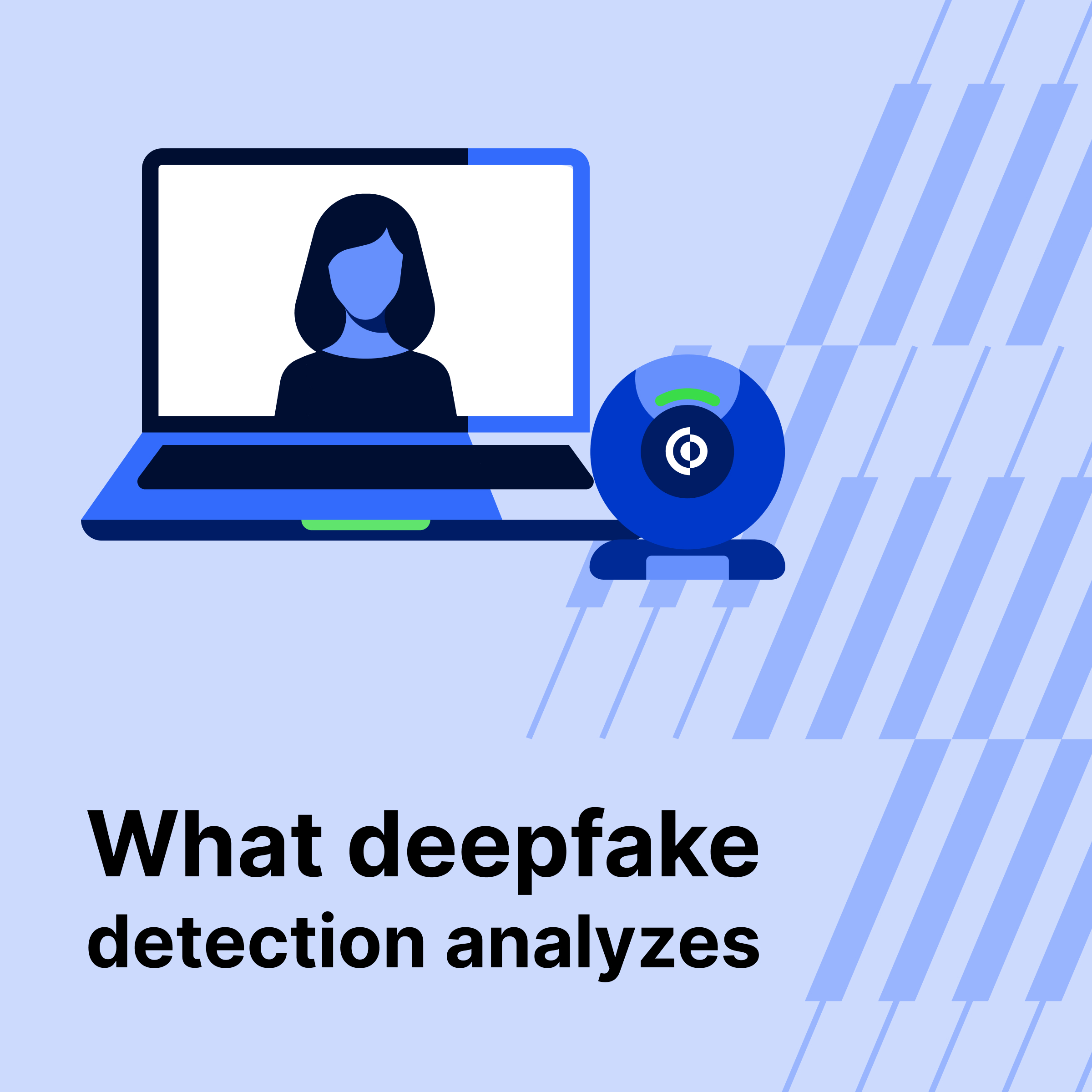
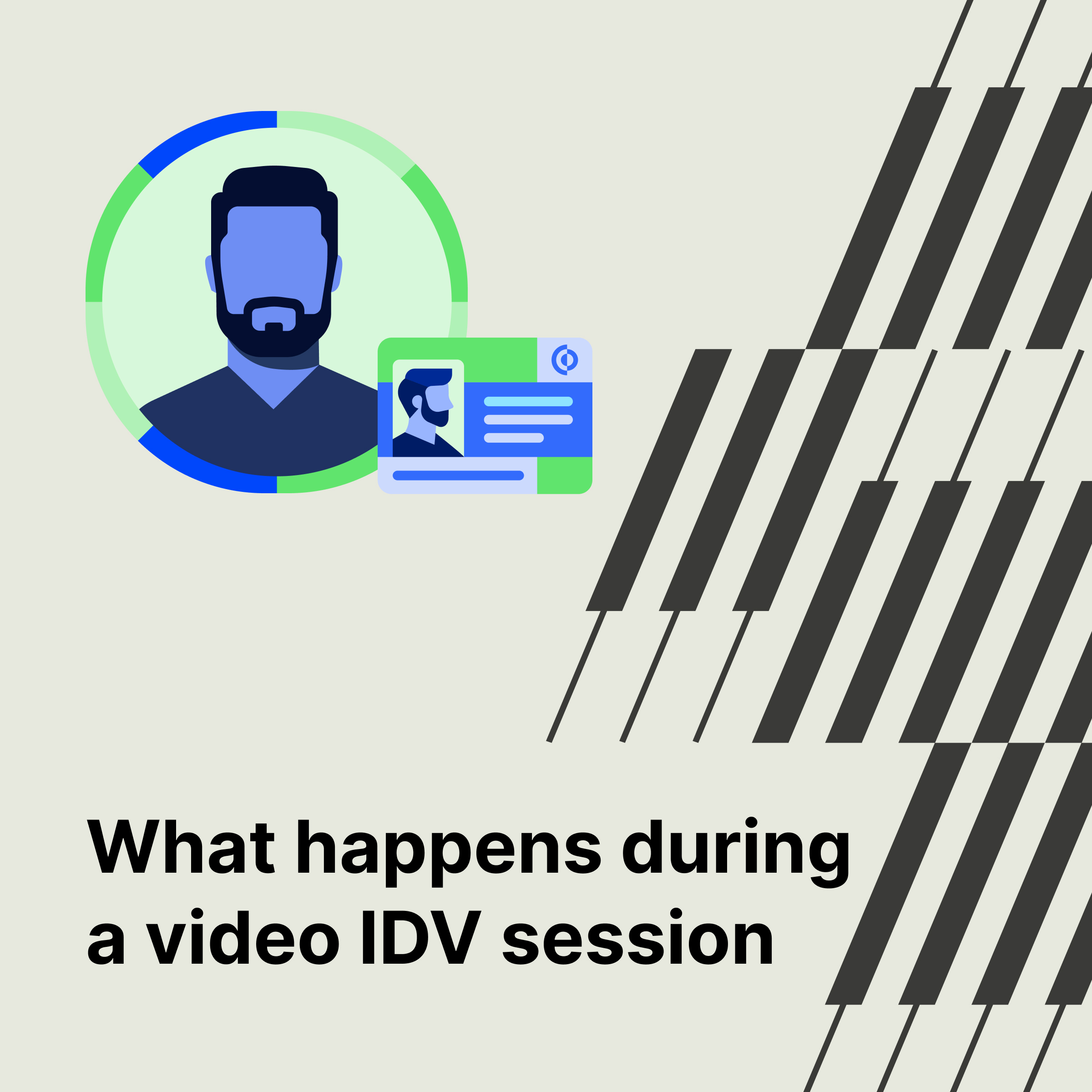
A live agent conducting a video-based verification session can observe behavioral cues, ask clarifying questions, and apply judgment that automated systems cannot replicate. Deepfake detection technology, applied during live video sessions, flags synthetic video inputs in real time. The session is recorded, creating a defensible audit trail that documents exactly what verification occurred and when.
This human-in-the-loop model is particularly important for high-value transactions where the cost of a missed fraud event, a repurchase demand, a regulatory finding, or a wire loss, far exceeds the cost of the additional verification step.
When detection happens: pre-funding review vs. post-close audit
The timing of fraud detection determines its value. Detection before a loan is sold or insured is recoverable. Detection after the fact is expensive.
At application intake, most information is self-reported and unverified. This is where misrepresentation enters the file. It is also where the most impactful detection work happens, because the loan is still recoverable.
During pre-funding quality control, lenders validate documentation, confirm identity and employment independently, assess occupancy legitimacy, and identify misrepresentation while the loan can still be corrected or rejected. Pre-funding review is the highest-leverage point in the fraud detection lifecycle.
Post-close audits catch fraud that slipped through earlier controls, but by this point the loan may already be sold to the secondary market. Repurchase demands, insurance rescissions, and investor disputes follow. The cost of post-close detection is significantly higher than the cost of pre-funding prevention.
Lenders who build robust detection into the earliest origination stages achieve stronger asset quality, reduced repurchase exposure, and greater investor confidence.
Building a fraud prevention program that creates defensible records
Detection is necessary. Defensibility is what protects you when fraud is disputed.
A fraud prevention program that creates defensible records requires controls at every stage of the workflow, not just at onboarding. Every authorization event should produce a verifiable record that documents what verification occurred, who performed it, and when.
Key elements of a defensible fraud prevention program:
- Mandate controls from the top. When leadership explains why new fraud prevention measures are being implemented, and that they apply equally to employees, partners, and clients, adoption is higher and consistency is greater.
- Adopt a zero-trust posture. A zero-trust security protocol assumes that any party, whether an employee, client, or partner, could represent a security risk. This doesn't mean treating everyone as a suspect. It means applying security controls consistently across all parties rather than selectively.
- Require MFA for every employee and partner. The same authentication standards that apply to borrowers should apply internally. Insider fraud is a documented threat. Consistent controls close that gap.
- Verify all documents. Every document submitted in a mortgage transaction should be verified against independent sources before it is accepted as accurate.
- Create cryptographically signed records. In an environment where AI-generated documents can pass visual inspection and metadata checks, the only reliable proof of authenticity is a cryptographic signature tied to a verified identity. These records are tamper-proof and provide the audit trail that regulators, investors, and insurers require.
Warning signs to watch for across the full workflow
Fraud signals appear at every stage of the mortgage process, not just at application. Lenders should maintain awareness of these indicators throughout the loan lifecycle:
- Promises to modify or refinance a mortgage in exchange for an upfront fee
- Unsolicited offers to help avoid foreclosure or secure a new loan at rates that seem too good to be true
- Pressure to sign documents immediately, without time to read or review them
- Requests for personal or financial information outside of a secure, verified process
- Borrowers who are unwilling or unable to answer basic questions about the property being mortgaged
- Third parties who appear to be directing the borrower's responses or decisions
Any of these signals warrants escalation. Fraud prevention works best when it starts before fraud happens, with a strong plan that can both detect potential fraud and deter fraudsters before they get too far.
Proof Identify and Proof Defend give lenders the identity verification and fraud intelligence layer to catch misrepresentation at the point of application, before it becomes a repurchase demand. See how Proof Identify works.





































.jpg)












































.jpg)