How To Scale eClosings: A 7-Step Checklist for Mortgage Lenders


Updated August 20, 2026
Scaling eClosings is one of the most consequential operational decisions a mortgage lender can make right now. Going digital is straightforward. Closing one transaction remotely is a proof of concept. Closing thousands of them consistently, compliantly, and without a proportional increase in headcount is a different problem entirely.
Lenders who have committed to digital-first closing workflows are closing faster, at lower cost, and with fewer errors. Lenders who are still running pilots or waiting for broader adoption are losing ground to competitors who already have the muscle memory.
In a HousingWire webinar called "Crack the Code to Scaling eClose," industry leaders shared hard-won lessons on what it actually takes to scale digital closings. The panel included Terri Davis, GM of real estate at Notarize, Angie Colon, director of engineering at Rocket Mortgage, and Whitney Vogt, director of strategic initiatives at Guaranteed Rate.
The numbers from these organizations show what is possible at scale:
- Rocket Mortgage has completed more than 1.3 million eClosings and now digitizes at least some portion of more than half of their closings.
- Guaranteed Rate has used remote online notarization (RON) closings for at least 40% of all refinances and has closed RON refinances in 38 states.
Key takeaways
- Scaling eClosings requires redesigning the closing process from the ground up, not digitizing the existing paper-based workflow step by step.
- Rocket Mortgage's 1.3 million eClosings demonstrate that digital closing programs work at enterprise volume when built with clear objectives and stakeholder alignment from the start.
- Lenders who default to eClosing and allow customers to opt out rather than opt in see significantly higher adoption rates.
- Moving out of pilot mode quickly is critical: employees who close digitally only occasionally never build the operational fluency needed to handle volume.
- Proactive communication with every stakeholder, including loan officers, title agents, attorneys, and borrowers, reduces friction and prevents the confusion that stalls adoption.
- A sign-ahead experience, where borrowers review and sign documents before closing day, cuts closing meeting times and eliminates missed signatures.
The basics
What is an eClosing?
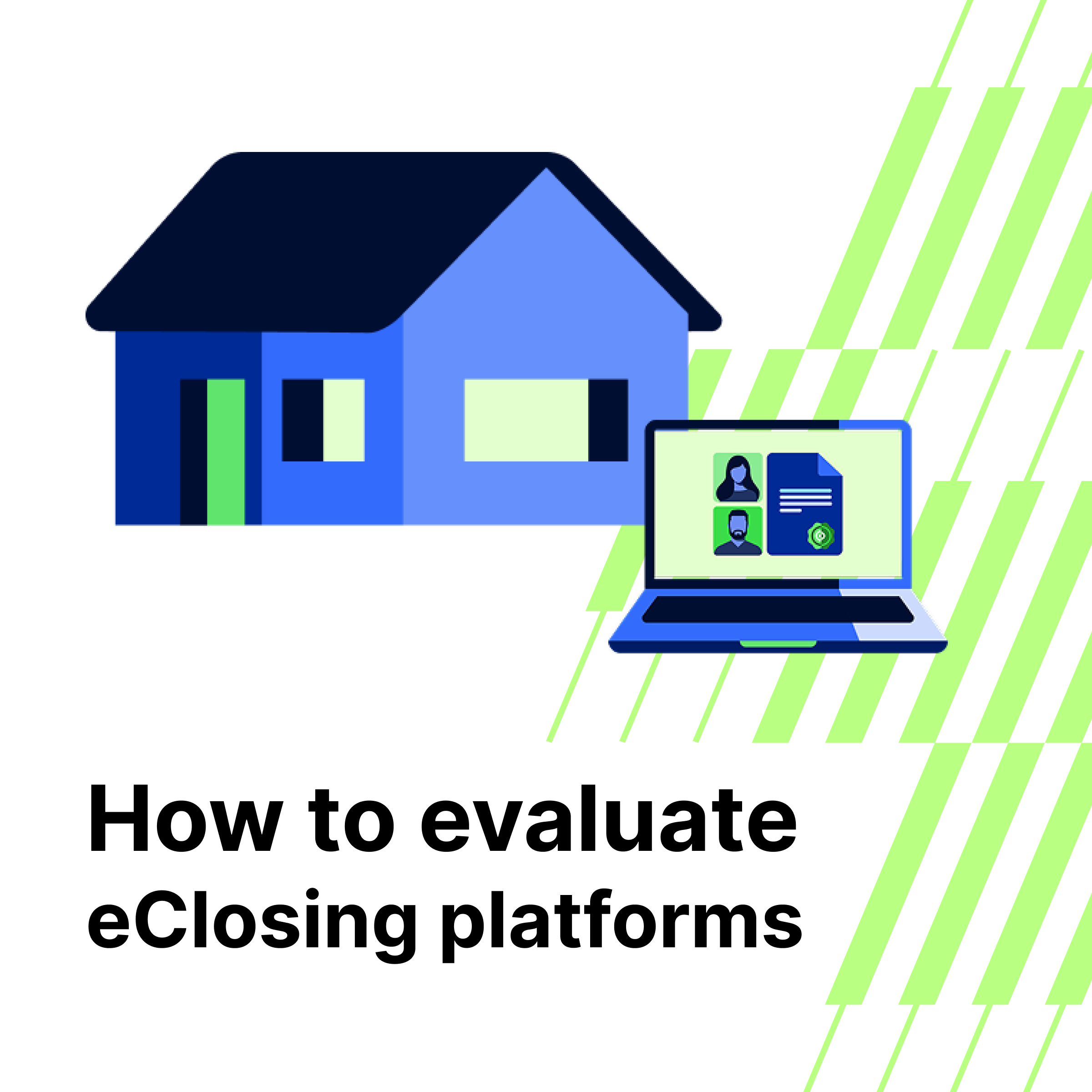
An eClosing is a mortgage closing process in which some or all of the closing documents are signed electronically. Fully digital eClosings — including those that use remote online notarization (RON) — allow borrowers to complete the entire process online from any location. Hybrid eClosings combine electronic document signing with some in-person components. The degree of digitization depends on the lender's platform and applicable state laws.
What is remote online notarization (RON)?
Remote online notarization (RON) is a process that allows a borrower to meet with a commissioned notary via a live audio-video session online. The notary verifies the signer's identity through knowledge-based authentication and ID verification, then witnesses the signing of documents digitally. The entire session is recorded and produces an audit trail. RON is now authorized in most U.S. states, and its adoption has expanded significantly since 2020.
The checklist
Here are seven steps for scaling eClosings — tested at volume, and built to last.
- Start with a fresh mindset. Colon said that many people believe making the change to eClosings is about digitizing the existing closing process. That's the wrong way to approach it. Rocket Mortgage isn't digitizing their normal closing processes — they redesign the way they do closings so they can use technology in the most efficient way. The best eClosing software platforms support the full lifecycle — pre-closing document management, the signing ceremony itself, and post-closing delivery — so think end-to-end, not step-by-step.
- Set clear objectives and identify all stakeholders. Rocket Mortgage set specific goals for their eClosing program and continually checked progress to make sure they were headed in the right direction. By bringing everyone in the organization into the goal-setting process, they earned buy-in from the top down for the best ideas around automating and digitizing. Colon recommends starting with small goals and building with scaling in mind.
- Communicate proactively with all stakeholders. People are often uncomfortable with change when they don't know what to expect. Provide detailed communication about who is responsible for which parts of the process so everyone involved feels prepared. Colon said that in the beginning, clients didn't fully understand the RON process and were often surprised when a notary showed up to sign documents in a hybrid eClosing. Modern eClosing platforms help here too — they give all parties visibility into what documentation has been prepared and what's still needed before closing day.
- Invest in knowledge and training for key employees. Organizations should designate a person or small team to be responsible for redesigning and implementing the eClosing process. Vogt said that because so many people are involved in a closing — loan officers, attorneys, title agents, client signers — it's critical to have someone to answer questions and troubleshoot issues. The organization should provide both the eClosing software and training for employees so they can effectively track operations and truly understand the process.
- Move out of pilot mode quickly. Many lenders begin eClosing with a small pilot program but stay in that limited mode too long instead of trusting what they've tested. When employees only do something occasionally, they don't build the muscle memory needed to overcome the nerves. Vogt cautioned that by staying in pilot mode, lenders hurt their change management process.
- Allow customers to opt out instead of requiring an opt in. By defaulting to eClosing and allowing customers to opt out, those who are truly uncomfortable can use the traditional, in-person method. Those who are just uncertain may be more likely to stay with the proposed process rather than making an active decision to opt out.
- Consider offering a sign-ahead experience. Many lenders that use a hybrid eSign process provide documents ahead of time, which helps eliminate missed signatures and ensures all parties have the information they need before closing day. While the final closing may still include an in-person component, this approach can significantly reduce the time needed to complete it.
The mortgage industry is at a crossroads. Lenders can either capitalize on eClosing and a digital-first approach or stay stuck in the manual process of in-person closings. By designing an eClosing process that is scalable for large volumes, your organization can lead the industry instead of lagging behind.



















.jpg)


































.jpg)