

Online notarization for spousal consents: Everything you need to know
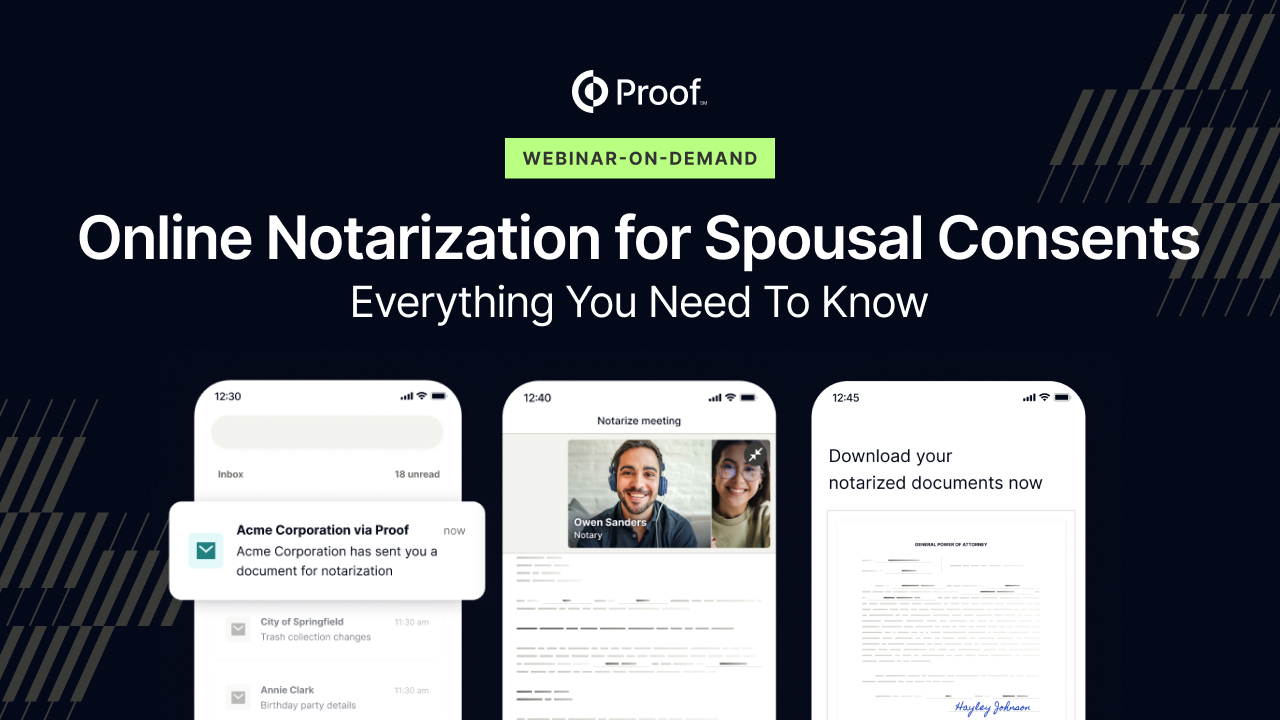
The physical-presence requirement for spousal consents is the subject of IRS proposed regulations, and what those regulations put in its place is a set of conditions. Implementations succeed or fail on the conditions. A platform that delivers live video and skips the rest produces consents that are technically defective, which is a problem you discover much later than you would like.
Join our discussion with leaders from TIAA and The SPARK Institute on what the regulations require and how to implement against them. You will leave knowing:
- IRS proposed regulations address in-person witnessing for spousal consents by attaching conditions to the remote session rather than removing the witnessing requirement.
- A compliant remote consent requires live audio-video contact, verified identity of the consenting spouse, an authorized remote notary, and a retained recording.
- Remote online notarization and ordinary video conferencing are not interchangeable here, since only RON produces the notarial record and retention the guidance contemplates.
- Plan sponsors and recordkeepers remain responsible for the validity of the consent, which turns the platform's identity assurance into a compliance question.
Meet our speakers

James Fulgenzi

Tim Rouse

Brad Abeles
Register now


Access the webinar
By clicking the button, you agree to the General Terms and acknowledge the Privacy Policy. You also agree to be contacted at the email provided for marketing and public affairs purposes.
Want to learn more?
Request a chat with our team!