
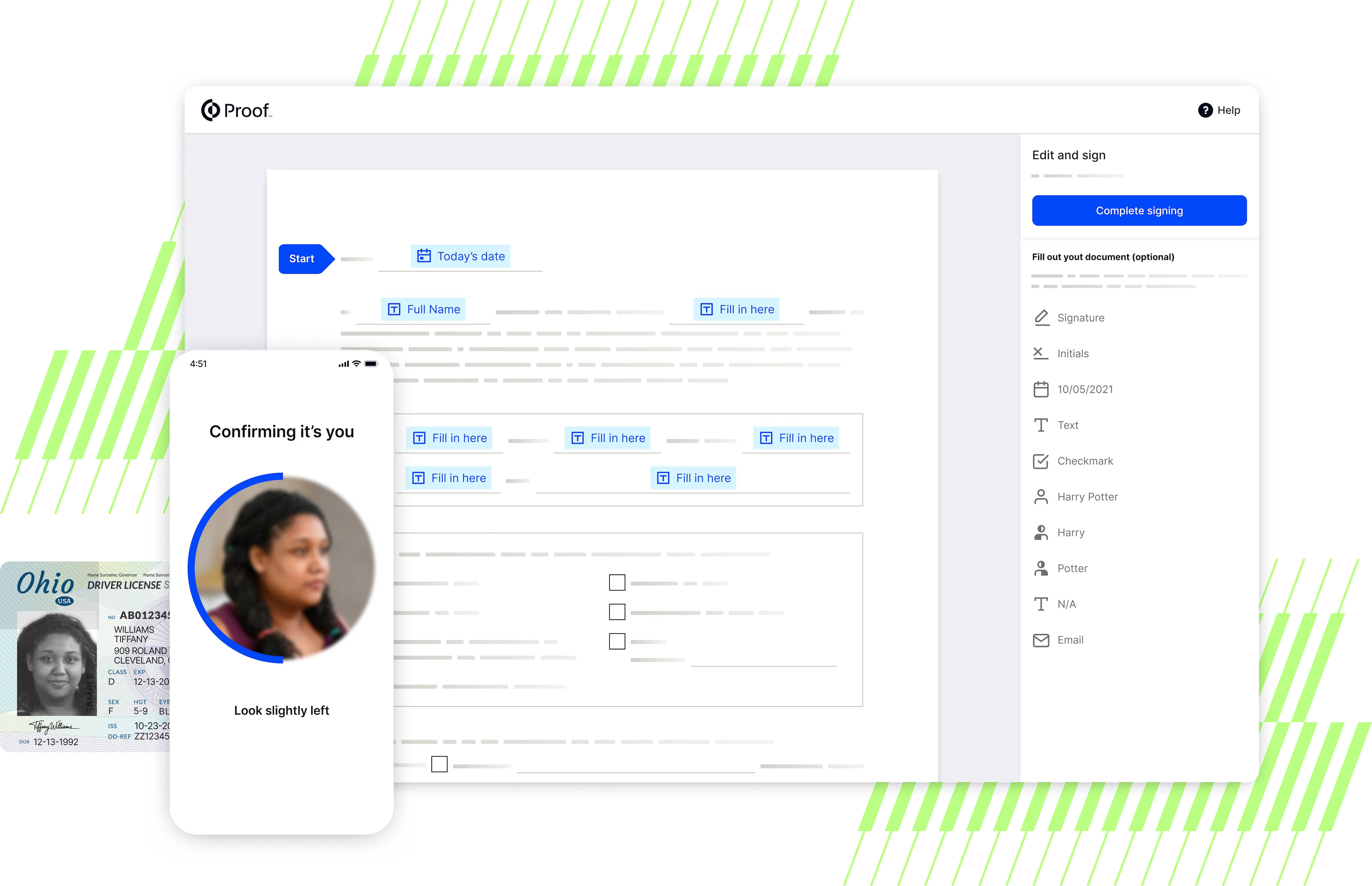
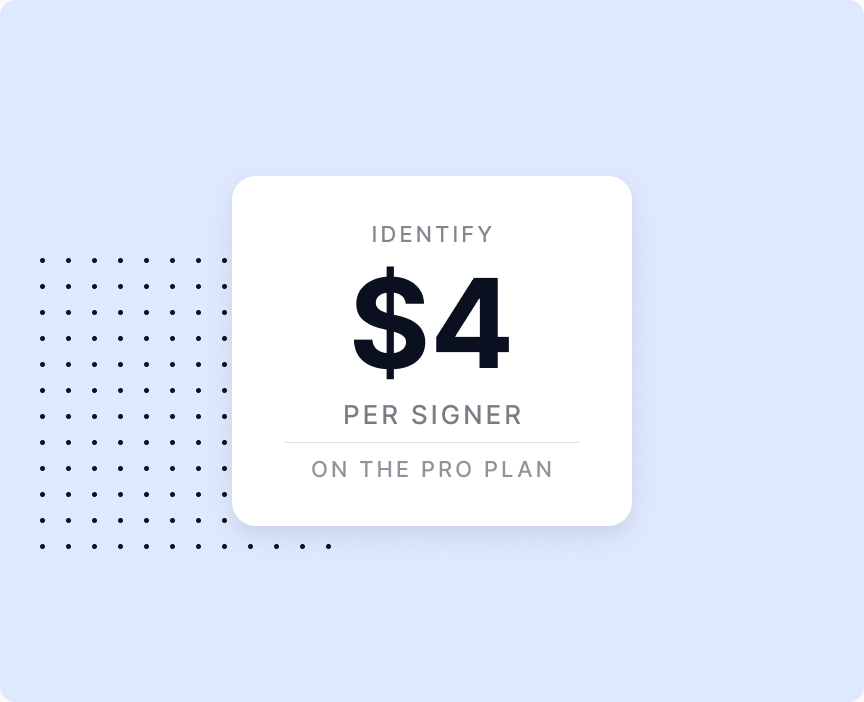
With Proof, identity verification comes on a published plan, assured at IAL2, with trained humans standing behind the checks software can't finish. Because high-value agreements are where an ID check has to hold.




Why teams switch to Proof
.png)
How does Proof compare to Adobe Acrobat Sign?


The notarization inside Acrobat Sign already runs on Proof
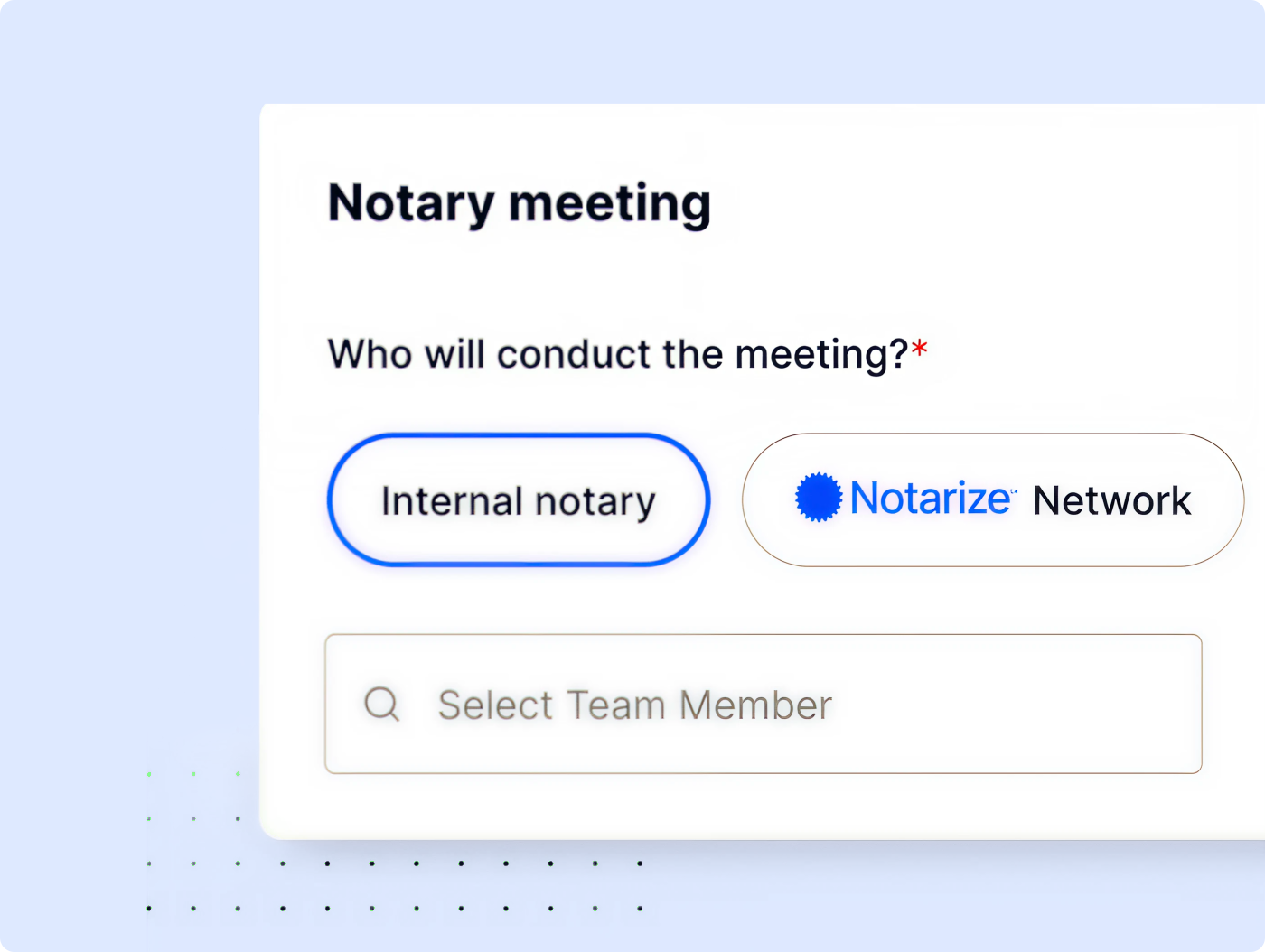
Adobe's integration documentation states that Acrobat Sign "has partnered with Proof (formerly Notarize) to provide online notarization services," with entitlements "obtained directly from Proof." Proof owns and operates that network: thousands of vetted notaries, with calls answered in under one second. For organizations already routing notarization to Proof, the question is what the signing side gains by running elsewhere.
Scope is what an auditor reads
Kantara's registry names Proof's certified service, Identity Assured E-Sign, with its assurance level and expiry on the public record. Adobe describes Acrobat Sign Solutions for enterprise as HIPAA ready and FDA 21 CFR Part 11 ready, with its own footnote placing compliance responsibility on the customer. For organizations in regulated industries, credential scope is what gets examined.
Certifications that show up in audit reviews
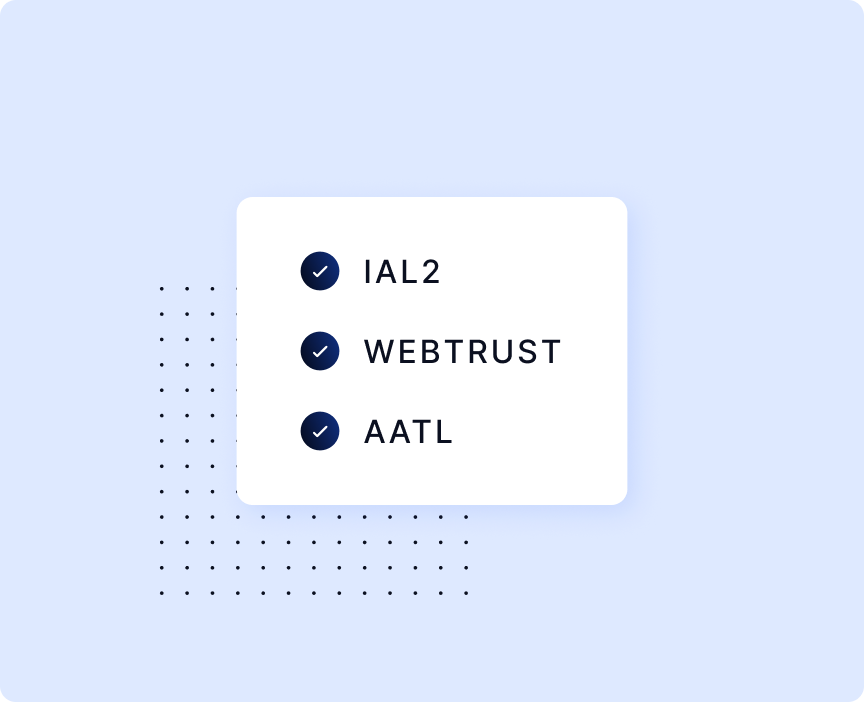
IAL2 from Kantara is the identity assurance credential that regulated industries increasingly look for. Proof holds it — can Adobe Acrobat Sign say the same?

Frequently asked questions
We're standardized on Adobe for documents. Why move eSignature?
Most teams move the agreements where they would have to show who signed: loan documents, beneficiary designations, powers of attorney, account changes, contracts above their risk threshold. On Adobe, verifying those signers is a per-attempt add-on and knowledge-based authentication sits on Enhanced plans. Proof runs verification in front of the signature and produces an Identity Report on every transaction, so the evidence exists before anyone asks for it.
Acrobat Sign already integrates with Proof. Why buy Proof directly?
The integration covers on-demand notarization. Adobe's documentation describes the partnership, scopes it to Acrobat Sign Solutions, and states that entitlements are purchased directly from Proof. Proof lists an Adobe eSign integration on its Premium plan. What the integration leaves on the table is Proof's IAL2-approved identity verification inside the signing flow itself, which runs on Proof.
How do we get started?
Proof's EasyLinks are no-code. You configure a link in minutes and share it in your product, on your site, or in an email, and every click opens a new transaction. For deeper integration, the API is available on Premium and above. Proof's implementation team handles transitions from Adobe.