
The Best Software for High-Security Digital Signatures
Standard e-signatures were built to replace paper. They weren't built to stop fraud. When AI can generate fake IDs and forge documents at scale, capturing a signature isn't enough — you need to prove the identity behind it.
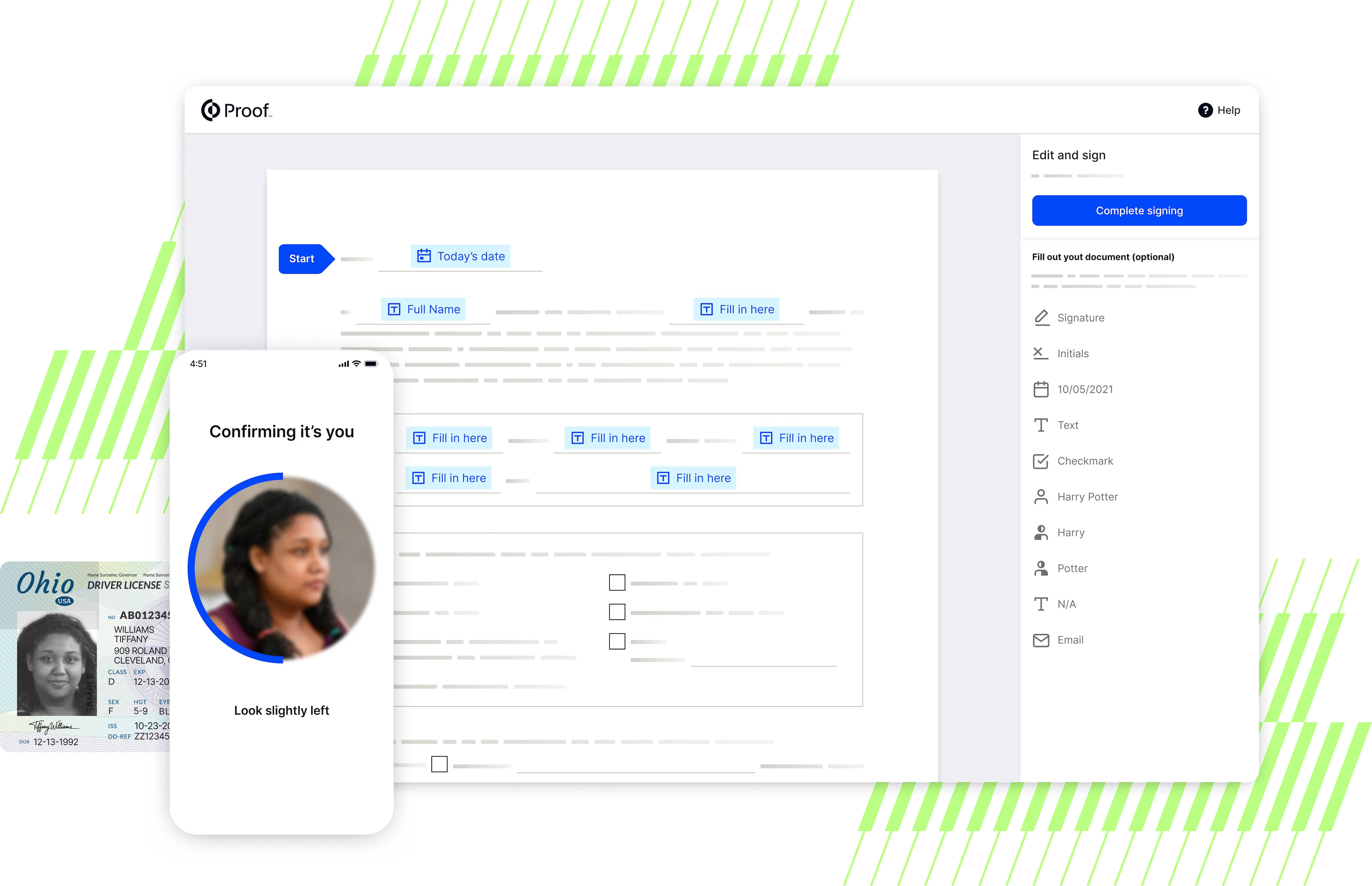
The difference between an e-signature and a high-security digital signature
Most e-signature platforms confirm someone clicked "sign." High-security digital signatures go further: they cryptographically bind a verified identity to the document. Alter it after signing and the record shows it. Dispute who signed and there's proof.
That distinction matters anywhere a signature carries legal or financial weight.
What to look for

Identity assurance level
Look for NIST IAL2 —biometric matching, government ID verification, and liveness detection. An email link is not identity verification.

Cryptographic binding
The signature must be mathematically tied to the signer's identity and document content. Any post-signing alteration should be immediately detectable.

Active fraud monitoring
Static logs capture what happened. Active monitoring catches forged credentials, deepfakes, and behavioral anomalies as they occur — passive logging isn't enough.

Audit-ready records
Every signing action should produce a tamper-evident record producible in a dispute or audit without relying on the vendor to certify it.

Third-party certifications
SOC 2 Type II, WebTrust, and IAL2 from the Kantara Initiative reflect independent validation, not self-reported claims.

Notarization support
For documents requiring a notary seal, the platform should handle it natively. A disconnected workflow breaks the identity record and creates audit trail gaps.
How platforms compare
Feature | Proof Sign | Legacy eSign tools |
|---|---|---|
Identity Verification (IDV) |  Built in (ID scans, selfie match, KBA) |  Not included |
Fraud Detection | Behavioral and identity risk signals | Not included |
Remote Online Notarization | Seamlessly integrated | Requires third-party |
EasyLinks (No-Code Signing) | Yes | No |
Mixed Workflows (eSign, Trusted Referee, and Notarization) | Yes | No |
Signer Presence & Liveness Detection | Yes | No |
Audit Trail & Compliance Logs | Detailed, real-time |  Basic logging |
Multi-Org + Brand Management | Built in | Complex setup |
Committed to the highest standards
Proof adheres to strict security standards and regulations thoroughly validated by third-party assessors. We are committed to the protection of customer data and accessibility.


Frequently Asked Questions
What's the difference between a digital signature and an electronic signature?
An electronic signature captures consent— a click, a typed name, a drawn signature. A digital signature uses cryptography to bind that signature to the signer's identity and the document's exact contents. Not all e-signature platforms produce digital signatures in the cryptographic sense.
Do high-security digital signatures hold upin court?
Yes, when the underlying identity verification and record-keeping meet legal standards. Proof's records are tamper-evident and include a complete audit trail of the identity verification method used, which supports legal defensibility in disputes.
What industries require high-security digital signatures?
Financial services, healthcare, real estate,insurance, and government workflows commonly require higher assurance. Butany organization facing document fraud orprocessing high-value authorizations benefits from moving beyond standard e-sign.